


Reviewed by a Koukyuu Takkenshi (宅地建物取引士)
Fact-checked against current Japanese real-estate law, tax rules, and market data by a nationally licensed specialist who oversees luxury transactions across Minato, Shibuya, and Chiyoda. In Japan, a Takkenshi is legally required to sign off on every property transaction, and about 15% of candidates pass the exam each year.
The Yokohama Minato Mirai Manyo Club (横浜みなとみらい 万葉倶楽部) operates 24 hours daily, 365 days annually, drawing natural hot spring water from Yugawara and Atami 70 kilometers southwest. For foreign buyers evaluating Greater Tokyo luxury real estate, the facility exemplifies a specific category of amenity: large-scale thermal infrastructure that anchors residential value in secondary urban centers without requiring Tokyo ward residency.
The Manyo Club Model: Volume, Access, and Thermal Authenticity
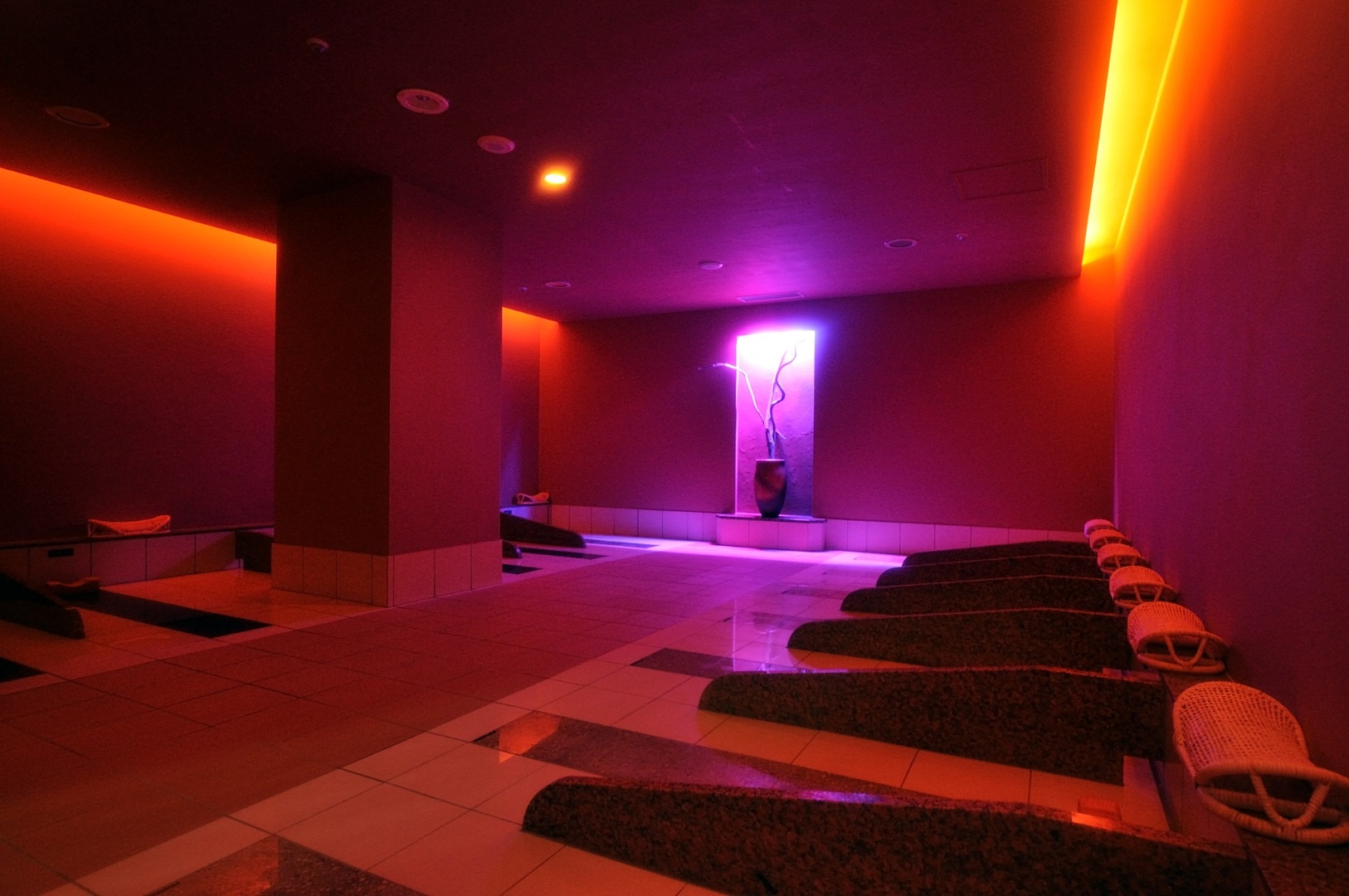
Opened in 2006 and renovated in phases through 2024, the eight-story facility occupies 6,500 square meters in the Minato Mirai 21 district. The building contains 13 distinct bath types, including rooftop open-air pools with direct sightlines to the 112.5-meter Cosmo Clock 21 Ferris wheel, the world’s largest clock-faced observation structure. Natural sodium-chloride spring water arrives via tanker truck daily from Yugawara Onsen, maintaining source temperature of 67°C before dilution to usable ranges.
Entry operates on a tiered fee structure: ¥2,750 for weekday adult day-spa admission, ¥3,300 weekends and holidays, with overnight packages starting at ¥12,100 including private tatami rooms and yukata rental. The facility added 32 renovated guest rooms in 2023, bringing total accommodation capacity to 104 units. These figures matter for property valuation because Manyo Club functions as both destination amenity and de facto extended-stay infrastructure for visitors, reducing pressure on nearby hotel stock.
The rooftop foot bath garden, accessible without full admission purchase, creates a public thermal interface unusual in Japanese urban development. This 360-degree observation platform, heated to 40°C year-round, generates consistent foot traffic and extends dwell time in the Minato Mirai commercial district. For residential investors, such programmed public space correlates with sustained retail rent stability and lower commercial vacancy rates compared to comparable Yokohama submarkets.
Minato Mirai Fixed Asset Tax: The 60-Meter Threshold
Nishi Ward land valuations for the Minato Mirai area reached ¥7.89 million per tsubo (坪単価) in fixed asset tax assessments as of January 2026, a 9.1% year-over-year increase. This valuation method, distinct from market transaction prices, directly determines annual 固定資産税 (koteishisanzei, the fixed asset tax on real property) obligations for condominium owners. The standard rate is 1.4% of assessed value, with residential land receiving partial exemptions on portions below 200 square meters.
Tower mansions present a specific calculation complexity. Buildings exceeding 60 meters in height trigger 階層別専有床面積補正率 (kaisoubetsu senyuu shoumen seki hoseiritsu, floor-level correction rates) that increase assessed value by approximately 10% for upper floors. A 45th-floor unit in The Towers Minato Mirai, for example, carries proportionally higher tax burden than identical floor plans below the threshold. Annual fixed asset tax on Minato Mirai tower condominiums currently ranges ¥200,000 to ¥600,000, with post-reduction spikes at years 5 and 7 when initial exemptions expire.
New construction receives 50% fixed asset tax reduction for five years, extended to seven years for 長期優良住宅 (chouki yuuryou juutaku, certified long-term quality housing). This creates a predictable cliff: taxes double upon expiration, affecting net operating income calculations for rental investors and carrying costs for owner-occupiers. The Brillia Tower Ikebukuro 2901 listing illustrates comparable tower-mansion tax dynamics in Tokyo’s 23 wards, where base rates apply without the Minato Mirai-specific waterfront premiums.
Thermal Amenities and Residential Pricing: Correlation vs. Causation
Academic literature on Japanese property markets consistently identifies railway proximity and floor area ratio as primary price determinants, with lifestyle amenities operating as secondary or tertiary factors. Yet in Minato Mirai, the concentration of programmed leisure infrastructure, including Manyo Club, Yokohama Arena, and the 2024-expanded Pacifico convention complex, creates a district-level effect distinct from incremental amenity value.
Transaction data from REINS (the national MLS operated by the Real Estate Information Network) shows Minato Mirai tower mansions commanding 12–15% price per square meter premiums over comparable Yokohama Station-area properties, despite inferior direct rail connectivity to Shibuya and Shinjuku. The differential persists through market cycles, suggesting buyer segmentation: Minato Mirai attracts purchasers prioritizing bay views and consolidated leisure access over commute minimization.
For foreign buyers, this segmentation carries visa and tax implications. Japan’s 经营管理签证 (keiei kanri visa, business manager visa) requires documented office premises and investment scale, but residential proximity to international convention infrastructure supports visa renewal narratives emphasizing Japan-based business activity. The Manyo Club’s 24-hour operation and multilingual reception capacity similarly signal district accessibility for non-Japanese residents, a soft factor in resale liquidity.
Access Economics: Tokyo Comparison
Minato Mirai Station connects to Tokyo’s Yamanote Line circuit via 32-minute express service to Shibuya, or 27 minutes to Shinjuku via the Tokyu Toyoko and Fukutoshin lines. This places the district at the outer edge of acceptable commute parameters for Tokyo-based executives, comparable to Denenchofu or Seijo in travel time but with superior commercial density at the destination.
The Manyo Club’s specific location, 650 meters from Minato Mirai Station, sits within the 10-minute walking threshold that Japanese rental marketing treats as “station proximity.” For comparison, high-end Tokyo onsen facilities like Oedo Onsen Monogatari in Odaiba or Spa LaQua in Tokyo Dome City require transit connections rather than pedestrian access, embedding friction that Manyo Club’s integrated location eliminates.
Overnight accommodation at Manyo Club, with rates 40–60% below equivalent Minato Mirai hotels, creates arbitrage opportunities for investors maintaining pied-à-terre arrangements. The facility’s 2019-added private bath rooms (family baths, 家族風呂) allow non-guests to reserve enclosed thermal space by the hour, functioning as flexible hospitality infrastructure without hotel licensing requirements.
Foreign Buyer Positioning: Tax Residency and Furusato Nozei
Manyo Club participates in Yokohama City’s ふるさと納税 (furusato nozei, hometown tax donation) program, offering bath and meal vouchers as return gifts for donations exceeding ¥10,000. For foreign residents establishing Japanese tax residency, this mechanism reduces effective municipal tax burden while converting obligations into usable amenities. The program requires residency and income tax filing in Japan; non-resident property owners do not qualify.
This distinction matters for purchase structuring. Foreign buyers maintaining non-resident status face 10.21% withholding on gross rental income and limited mortgage availability, typically 50–60% loan-to-value from major banks versus 80–90% for permanent residents. The City Tower Ikebukuro West Gate 1502 and comparable Tokyo listings often attract buyers prioritizing mortgage leverage over amenity proximity, a trade-off that Minato Mirai’s thermal infrastructure does not fundamentally alter.
Yokohama municipal government projects Minato Mirai 21 district population doubling to 19,000 by 2030, driven by 6,000 additional residential units in the 2024–2028 pipeline. This supply influx may compress rent growth and resale velocity for existing stock, though the district’s constrained land envelope limits downside risk compared to greenfield developments in Kawasaki or Chiba.
The Tokyo Alternative: Amenity Density and Tax Efficiency
Minato-ku, Tokyo, offers no equivalent large-scale onsen facility. Thermal bathing in the 23 wards operates through sento (public bathhouses) at ¥500–¥800 admission, hotel day-spas at ¥3,000–¥8,000, or private residence baths. This amenity gap partially explains the 23 wards’ concentration of ultra-high-net-worth buyers in detached residences with custom thermal infrastructure, such as the ¥1.2 billion Kita-Aoyama properties with private onsen wells.
For buyers at the ¥300 million threshold evaluating Tokyo versus Yokohama positioning, the calculation involves trade-offs between municipal tax rates, amenity access, and resale liquidity. Minato-ku’s resident tax (住民税, juuminzei) applies 10% flat rate on prior-year income, identical to Yokohama’s rate, but fixed asset tax assessments run higher due to land scarcity. The Oasis City Kinshicho 1002 listing demonstrates how Tokyo’s eastern wards offer lower entry points with comparable transit connectivity but reduced amenity concentration.
Koukyuu represents buyers seeking distinguished Tokyo residences in Shibuya-ku, Chiyoda-ku, and Minato-ku, focused exclusively on transactions of ¥300 million and above. A licensed 宅建士 (takken-shi, Japan’s licensed real-estate transaction specialist) personally handles every stage of the engagement, from the first consultation to the signing, a continuity most Tokyo agencies do not offer. Book a private consultation).