


Reviewed by a Koukyuu Takkenshi (宅地建物取引士)
Fact-checked against current Japanese real-estate law, tax rules, and market data by a nationally licensed specialist who oversees luxury transactions across Minato, Shibuya, and Chiyoda. In Japan, a Takkenshi is legally required to sign off on every property transaction, and about 15% of candidates pass the exam each year.
A ¥480 million condominium in Minato-ku sold in March 2026 now sits at the center of a defect liability dispute that illustrates how Japanese courts treat buyer inspection obligations. The purchaser, a Singapore-based fund manager, discovered post-closing water infiltration in the 34th-floor unit. The Tokyo District Court ruled in April 2026 that the buyer’s reliance on a 20-minute video tour, rather than a professional building condition survey, constituted insufficient diligence. The seller bore no liability for defects visible to a qualified inspector.
This case reflects a structural shift in Japanese real estate law. The 2020 Civil Code (民法) amendments, fully applicable to all contracts concluded from April 1, 2020 onward, shortened statutory defect liability from 10 years to 5 years for structural elements and 2 years for non-structural components. Simultaneously, judicial precedent has elevated buyer responsibility. Foreign purchasers of luxury Tokyo properties now operate in a legal environment where professional inspection is not merely prudent, but increasingly expected as a condition of enforceable warranty claims.
The As-Is Contract and Its Consequences
Japanese residential transactions predominantly employ 現状有姿契約 (contracts acknowledging current condition). Under this framework, the seller discloses known defects through the 重要事項説明書 (juuyou-jikou-setsumei, the statutory pre-contract disclosure document) mandated by the Real Estate Brokerage Act (宅地建物取引業法, Article 35). The seller has no obligation to disclose defects of which they were unaware. The buyer assumes responsibility for discovering inspectable conditions.
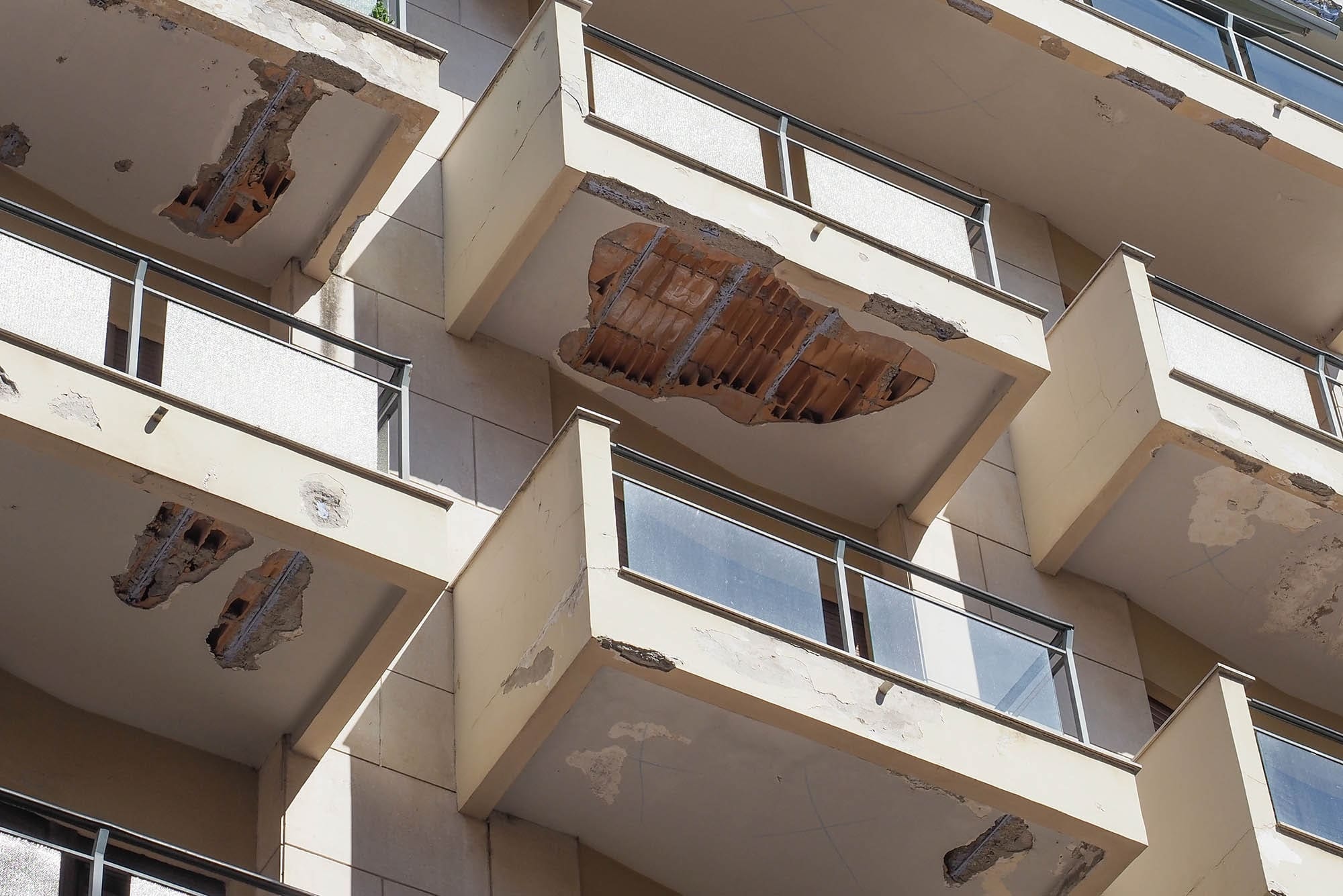
The Supreme Court (最高裁判所) has issued multiple rulings establishing that buyers who fail to conduct reasonable inspections may be barred from claiming defects discoverable through ordinary diligence. The 2024-2025 judicial trend in Tokyo and Osaka district courts has particularly targeted sophisticated buyers of high-value properties. A March 2025 Osaka ruling held that a purchaser of a ¥220 million Hiroo residence should have retained a 建築士 (architect) to assess visible concrete spalling, given the property’s age and price tier.
For foreign buyers, this creates specific vulnerability. Language barriers do not excuse inspection failures. Courts have consistently held that buyers with access to professional representation, including licensed transaction specialists, are subject to the same diligence standards as domestic purchasers. The expectation extends to verification of 管理組合 (kanri-kumiai, the management association) financial health, 長期修繕計画 (long-term repair plans), and 修繕積立金 (shuuzentsumitatekin, repair reserve fund) adequacy, all of which are documents the buyer must proactively request and review.
What Professional Inspection Covers
Japan lacks mandatory licensing for home inspectors, creating quality variation that sophisticated buyers must navigate. The most credible assessments come from 国土交通省認定 建物状況調査技術者 (MLIT-certified Building Condition Survey Technicians) or members of the 日本ホームインスペクターズ協会 (JHI, Japan Home Inspectors Association), which maintains voluntary certification standards.
For properties at ¥300 million and above, a comprehensive inspection typically engages three specialists:
- 建築士 (architect): Structural assessment, seismic compliance verification, concrete condition
- 設備士 (facility engineer): Mechanical, electrical, and plumbing systems evaluation
- 司法書士 (judicial scrivener): Title verification, 登記 (touki, legal title transfer records), and encumbrance review
Structural inspection for Tokyo luxury properties focuses on specific vulnerabilities. RC (reinforced concrete) construction from the 1980s and 1990s frequently exhibits concrete spalling and rebar corrosion. Buildings constructed before 1981 require verification of 新耐震基準 (post-revision seismic standards) compliance, either through original design documentation or retrofit certification. Waterproofing assessment covers roof, balcony, and basement conditions, with particular attention to buildings that have undergone major repair cycles.
Mechanical systems inspection addresses elevator age and maintenance contracts, water supply pipe material (with lead pipe replacement status per Tokyo Metropolitan Government schedules), and electrical ampacity. Units above 100 square meters typically require 200A+ service for modern luxury appliance loads. The 東京水道局 (Tokyo Waterworks Bureau) extended certain lead pipe replacement deadlines into 2026, creating ongoing verification obligations for buyers in specific districts.
Environmental factors receive heightened scrutiny in tower condominiums. Upper floors in super-high-rise buildings (200 meters+) experience perceptible sway during typhoon conditions. Railway proximity assessment covers JR山手線 (Yamanote Line), 東京メトロ (Tokyo Metro) lines, and 首都高速 (Metropolitan Expressway) noise and vibration. Air quality analysis considers highway proximity PM2.5 exposure and elevation-dependent pollen concentrations.
Management Association Records as Inspection Priority
For マンション (manshon, freehold condominium) purchases, management association documentation constitutes a critical inspection domain. Japanese law mandates 長期修繕計画 (30-year long-term repair plans) under the Act on Promotion of Long-Term Quality of Buildings (建築物の長期優良化に関する法律, Article 6). Buyers must review minimum three-year records of:
- 修繕積立金 (repair reserve fund) balance and monthly contribution adequacy
- 大規模修繕履歴 (major repair history) with contractor documentation
- 未納管理費 (unpaid management fees) ratio, which affects immediate buyer obligations
Reserve fund inadequacy represents a particularly insidious risk. A Minato-ku tower built in 2007 currently faces a ¥180 million special assessment for façade repair after years of underfunding. The buyer who completed purchase in January 2026 without reviewing reserve projections now shares this liability proportionally. Management association financial health directly impacts post-purchase carrying costs and should inform offer pricing.
Remote Inspection Limitations and Foreign Buyer Protocols
Video tours, 3D walkthroughs, and virtual reality presentations have proliferated since 2020. These tools serve preliminary screening purposes. They do not satisfy Japanese judicial standards for due diligence in defect liability disputes.
Foreign buyers unable to travel for physical inspection should execute a 委任状 (power of attorney) authorizing a local representative to conduct inspection on their behalf. This representative should possess technical competence or retain inspection professionals directly. Time zone coordination for live virtual walkthroughs with local agents provides supplementary verification but does not replace physical assessment.
Documentation protocols for cross-border enforcement require particular attention. All inspection findings should be notarized and apostilled for potential foreign court use, particularly given the shortened 5-year defect liability window. Contractual inspection contingency clauses (検査条件付き) are not standard in Japanese practice and must be negotiated explicitly through the buyer’s licensed transaction specialist.
2026 Regulatory Developments Affecting Inspection
The デジタル庁 (Digital Agency) 2025 initiative mandates standardized digital format for 重要事項説明書 by 2026, enabling automated translation support. Legally binding documents remain Japanese-only, but improved accessibility reduces information asymmetry for foreign buyers.
Climate risk disclosure requirements expanded in 2026. Tokyo Metropolitan Government’s ゼロエミッション東京戦略 (Zero Emission Tokyo Strategy) now requires 建築物エネルギー消費性能表示制度 (BELS, Building Energy-efficiency Labeling System) certificates for sales of existing buildings exceeding 2,000 square meters in aggregate. This affects luxury tower units in larger developments, with energy performance ratings becoming standard disclosure items.
The 2020 Civil Code amendments continue generating judicial interpretation. A pending Supreme Court case concerning a Shibuya-ku property purchased in 2021 may clarify the boundary between seller disclosure obligations and buyer inspection responsibilities. The ruling, expected in late 2026, will influence transaction practices for properties throughout the defect liability period.
Practical Inspection Protocol for ¥300M+ Properties
Buyers should structure inspection across three phases. Pre-offer review covers REINS (the national MLS operated by the Real Estate Information Network) listing details, 登記簿謄本 (touki-bouhon, certified title records), and preliminary management association document requests. Physical inspection occurs between price agreement and 手付金 (tetsuke-kin, earnest money deposit) payment, typically 10% of purchase price. Final verification addresses any conditions discovered during physical inspection before contract execution.
For tower condominiums, inspection should occur at multiple times of day. Morning assessment verifies commute-period noise from nearby infrastructure. Evening inspection evaluates residential noise transmission and lighting conditions. Weather-dependent factors, including drainage patterns and window condensation, require observation during or immediately following rainfall.
Professional inspection reports should be integrated into contractual documentation. Sellers of luxury properties increasingly accept inspection contingency clauses when presented by qualified buyers with financing pre-approval. The negotiation leverage exists, but requires early positioning by a licensed transaction specialist with established market relationships.
Koukyuu is a private buyer’s advisory for distinguished Tokyo residences in Minato-ku, Shibuya-ku, and Chiyoda-ku, focused exclusively on transactions of ¥300 million and above. A licensed 宅建士 (takken-shi) personally handles every stage of the engagement, from the first consultation to the signing, including professional inspection coordination and management association document review. Book a private consultation).