


Reviewed by a Koukyuu Takkenshi (宅地建物取引士)
Fact-checked against current Japanese real-estate law, tax rules, and market data by a nationally licensed specialist who oversees luxury transactions across Minato, Shibuya, and Chiyoda. In Japan, a Takkenshi is legally required to sign off on every property transaction, and about 15% of candidates pass the exam each year.
Meguro Ward recorded a 13.68% year-on-year increase in official land prices for 2026, pushing the ward average to ¥1,841,734 per square meter according to the National Land Price Survey released March 2026. This places Meguro 9th nationally among all municipalities and 11th among 1,375 surveyed areas, a notable ascent for a district that foreign buyers often overlook in favor of Minato-ku’s more internationally branded addresses. The surge reflects sustained demand from domestic professionals and a gradual reorientation of foreign capital toward neighborhoods offering comparable connectivity at lower absolute entry points than Azabu or Hiroo.
Land Value Architecture: Station Premiums and Residential Zones
The 2026公示地価 (kouji-chika, the official land price survey published annually by the Ministry of Land, Infrastructure, Transport and Tourism) reveals sharp stratification within Meguro Ward. Jiyugaoka Station commands the highest land values at ¥3,414,000 per square meter, followed by Ebisu Station at ¥3,224,000. These figures exceed the ward average by 85% and 75% respectively, reflecting the concentration of retail, dining, and professional services around these transport nodes.
Nakameguro Station recorded ¥2,451,666 per square meter, a 14.27% increase from 2025, while Meguro Station itself registered ¥2,335,454. The gap between Jiyugaoka and Meguro Station, approximately 47% on a per-square-meter basis, illustrates how station-specific amenities and line connectivity translate directly into land price premiums. Jiyugaoka’s position on the Tokyu Toyoko Line provides direct access to both Shibuya and Yokohama’s Minato Mirai district, a dual-city commute pattern increasingly valued by senior professionals.
Residential zone pricing diverges further from station vicinities. Kamimeguro (上目黒) recorded ¥3,680,000 per square meter in 2026, surpassing even Jiyugaoka’s station-front figure. This anomaly reflects the neighborhood’s designation within the 城南五山 (Jonan Gozan, the five hills of southern Tokyo), a cluster of low-rise luxury enclaves including Hanabusayama and Chojamaru where height restrictions preserve privacy and sight lines. Aobadai (青葉台) registered ¥2,592,000, while Shimomeguro (下目黒) reached ¥2,220,000.
For foreign buyers evaluating entry points, these figures establish a clear hierarchy. The ¥60.88 million per tsubo (坪単価, the standard Japanese unit of 3.305 square meters used in domestic transaction documents) ward average masks a range from approximately ¥36 million per tsubo in peripheral zones to over ¥120 million in Kamimeguro’s most exclusive addresses. This spread creates strategic opportunities for buyers prioritizing either appreciation potential or immediate prestige, but rarely both simultaneously.
Tax Obligations: The Non-Resident Burden
Property ownership in Meguro Ward triggers several tax obligations that apply uniformly regardless of residency status. The Tokyo Metropolitan Bureau of Taxation confirms that metropolitan taxes, including fixed asset tax and city planning tax, apply to all property owners with assets in Tokyo as of January 1 each year. This includes non-residents, non-citizens, and entities domiciled overseas.
Fixed asset tax (固定資産税, kotei-shisan-zei) is assessed at 1.4% of the taxable standard, which typically runs 60-70% of market value for residential properties. The calculation incorporates significant reductions for residential land: a 1/6 reduction on the first 200 square meters, and 1/3 on any portion exceeding that threshold. For a 150-square-meter residential plot in Aobadai assessed at ¥250 million, the taxable base reduces to approximately ¥41.7 million, yielding an annual obligation of roughly ¥584,000 rather than the ¥3.5 million that would apply without the residential reduction.
City planning tax (都市計画税, toshi-keikaku-zei) adds up to 0.3% on properties within designated urbanization promotion areas, which includes most of Meguro Ward. Residential land receives parallel reductions: 1/3 on the first 200 square meters, 2/3 on additional area. The combined annual burden for a typical foreign-owned residence in Nakameguro generally ranges between ¥400,000 and ¥1.2 million depending on lot size and building specifications.
Real estate acquisition tax (不動産取得税, fudosan-shutoku-zei) applies at the moment of purchase. The standard rate is 3% of assessed value, reduced to 0.3% for qualifying residential properties through 2026 under current 軽減措置 (tax reduction measures). Registration license tax (登録免許税, touroku-menkyo-zei) for ownership transfer is similarly reduced from 2% to 0.3% for residential buildings, with mortgage registration at 0.1% versus the standard 0.4%.
These reductions are not automatic. Buyers must file specific documentation with the Tokyo Metropolitan Government within prescribed deadlines, typically 60 days from acquisition for the real estate acquisition tax reduction. Foreign buyers without Japanese language capability or domestic legal representation frequently miss these windows, paying standard rates that increase closing costs by ¥2-5 million on transactions above ¥300 million. This administrative risk is one reason some buyers engage specialized advisory services where licensed transaction specialists manage documentation directly.
Transaction Mechanics: Closing Costs and Professional Fees
Total closing costs for pre-owned properties in Meguro Ward typically range 6-10% of purchase price, compared to 3-6% for new construction where developer incentives and simplified registration processes apply. This differential significantly affects buyer strategy, particularly for those comparing renovated vintage properties against new tower mansions.
Brokerage fees (仲介手数料, chukai-tesuuryou) are capped by statute at (purchase price × 3% + ¥60,000) plus consumption tax. On a ¥500 million acquisition, this yields ¥15.06 million plus tax, or approximately ¥16.57 million at current rates. Some agencies negotiate downward on high-value transactions, though the statutory cap prevents excessive variation.
Judicial scrivener fees (司法書士報酬, shihou-shoshi-houshuu) for registration processing range ¥80,000-¥200,000 depending on complexity. Transactions involving corporate buyers, overseas wiring arrangements, or non-standard title structures command the upper end. Stamp duty (印紙税, inshi-zei) scales with contract value: ¥10,000 for transactions below ¥10 million, rising to ¥200,000 for contracts exceeding ¥5 billion.
For foreign buyers specifically, additional costs include certified translation of foreign registration documents (¥30,000-¥80,000 per document), notarization of overseas signatures (variable by jurisdiction), and potential currency hedging expenses for purchases funded from non-yen accounts. The aggregate of these ancillary items frequently reaches ¥1-3 million on transactions above ¥300 million.
The 重要事項説明 (juuyou-jikou-setsumei, the statutory pre-contract disclosure meeting) represents a critical procedural checkpoint. Japanese law mandates that sellers or their agents disclose 35+ specific items including title defects, lease encumbrances, and natural hazard risks. For foreign buyers, this meeting often occurs with simultaneous interpretation, extending duration and requiring advance preparation of bilingual documentation. The quality of this disclosure process varies substantially by agency, with implications for post-purchase dispute risk.
Micro-Location Analysis: Nakameguro, Jiyugaoka, and the Station Periphery
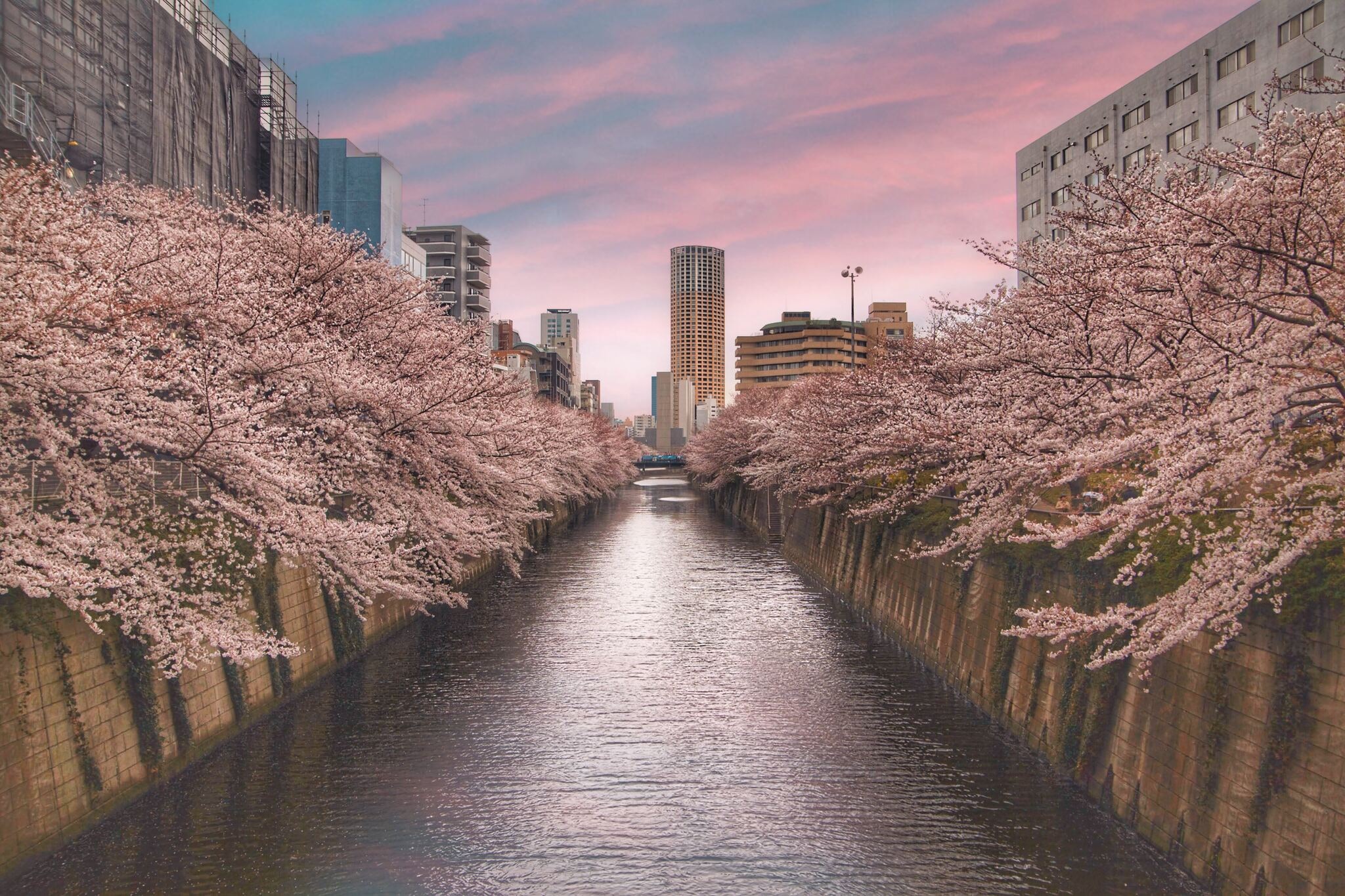
Nakameguro’s identity has shifted substantially over the past decade. The district centered on Meguro River has evolved from a residential backwater into a creative industry hub, with advertising agencies, design studios, and venture capital offices occupying converted warehouse spaces near the water. This commercial infiltration has compressed residential supply, driving the 14.27% land price appreciation recorded in 2026.
The seasonal premium for riverside properties peaks during cherry blossom weeks in late March and early April, when tourism and event activity disrupts normal residential patterns. Buyers evaluating Nakameguro addresses should assess whether this periodic intensity aligns with their lifestyle preferences. Properties on the eastern bank, closer to Daikanyama, generally command 15-25% premiums over comparable units on the western bank toward Ikejiri-Ohashi.
Jiyugaoka presents a different profile. The station vicinity functions as a regional retail center with substantial daytime population inflow, creating urban energy that some buyers find appealing and others consider excessive. The residential zones south of the station, toward Okusawa and Kuhonbutsu, transition rapidly into quieter family-oriented streets with larger lot sizes and lower building coverage ratios. These peripheral zones within Jiyugaoka’s address offer the station’s connectivity without its commercial intensity.
Yutenji (祐天寺), one station east of Nakameguro on the Tokyu Toyoko Line, remains underweighted in foreign buyer attention. The neighborhood lacks the brand recognition of its western neighbors but offers comparable housing stock at 20-30% lower land values. For buyers prioritizing space over address prestige, Yutenji’s 10-minute connection to Shibuya and substantial greenery represent underexploited value.
The 城南五山 enclaves, including Hanabusayama and Chojamaru near Meguro Station, operate as a distinct market segment. These areas restrict building heights to preserve sight lines toward Mount Fuji, creating permanent scarcity for new construction. Available inventory consists primarily of vintage detached houses and low-rise condominiums built during the 1980s asset bubble. Buyers in this segment trade contemporary building standards for locational irreplaceability, a calculation that has historically rewarded patience.
Connectivity Infrastructure and Commute Patterns
Meguro Station serves four lines: JR Yamanote Line, Tokyu Meguro Line, Tokyo Metro Namboku Line, and Toei Mita Line. This configuration provides direct access to Shibuya (4 minutes), Shinjuku (12 minutes), Roppongi (9 minutes via Namboku Line), and Otemachi (17 minutes via Mita Line). The Otemachi connection is particularly significant for finance and legal professionals, offering single-seat access to Tokyo’s primary business district without Yamanote Line congestion.
Nakameguro Station offers two-line service: Tokyo Metro Hibiya Line and Tokyu Toyoko Line. The Hibiya Line provides direct Roppongi access (6 minutes) and continues to Ginza and Ueno. The Toyoko Line offers the corridor’s fastest Yokohama connection, reaching Minato Mirai in 27 minutes. This dual orientation, toward both central Tokyo and the Kanagawa satellite city, supports a professional demographic with split work patterns.
Ebisu Station, on the ward’s northern boundary, adds JR Yamanote and Saikyo Line service with direct Shinjuku access in 6 minutes. The station’s integration with Yebisu Garden Place, a mixed-use development with substantial foreign resident population, creates a self-contained sub-market with distinct pricing dynamics.
For buyers evaluating properties between these nodes, walking distance thresholds significantly affect resale liquidity. Addresses within 8 minutes of station gates maintain broad market appeal; those beyond 12 minutes face constrained demand except in the 城南五山 premium segment where automobile dependency is assumed. This 8-minute rule is less rigid than in peripheral wards, reflecting Meguro’s higher baseline affluence, but remains a useful heuristic for acquisition planning.
The completion of Shinagawa Station’s expansion, scheduled for 2030, will introduce additional connectivity via the Linear Chuo Shinkansen. While the direct impact on Meguro Ward remains limited, the broader southern Tokyo rail network enhancement may redistribute demand patterns, potentially compressing the premium currently commanded by Yamanote Line adjacency.
Comparative Positioning: Meguro Against Adjacent Wards
Meguro Ward’s 2026 land price appreciation outpaced Setagaya Ward (11.2%) and Shinagawa Ward (9.8%), though it trailed Minato Ward’s 15.4% surge. This positioning reflects Meguro’s intermediate status: more affordable than the central three wards (Minato, Chiyoda, Shibuya), more appreciated than the outer ring (Setagaya, Suginami, Nerima).
For foreign buyers specifically, Meguro offers a regulatory environment identical to Minato-ku, with no additional restrictions on non-resident ownership or usage. The ward’s foreign resident population, approximately 4.2% of total residents as of January 2026, is lower than Minato-ku’s 8.7% but higher than Setagaya’s 2.9%. This intermediate foreign presence creates neighborhood familiarity without the enclave effects that some buyers find limiting in Roppongi or Hiroo.
Tax rates are standardized across Tokyo’s 23 wards, eliminating fiscal incentives for ward selection. The meaningful variables are land price levels, transaction volume, and professional service availability. Meguro’s transaction volume for properties above ¥300 million increased 23% year-on-year in 2025, according to REINS (the national MLS operated by the Real Estate Information Network) data, indicating deepening market liquidity for the segment foreign buyers typically target.
Koukyuu is a private buyer’s advisory for distinguished Tokyo residences in Minato-ku, Shibuya-ku, and Meguro-ku, focused exclusively on transactions of ¥300 million and above. A licensed 宅建士 (takken-shi, Japan’s licensed real-estate transaction specialist) personally handles every stage of the engagement, from the first consultation to the signing. book a private consultation).