


Reviewed by a Koukyuu Takkenshi (宅地建物取引士)
Fact-checked against current Japanese real-estate law, tax rules, and market data by a nationally licensed specialist who oversees luxury transactions across Minato, Shibuya, and Chiyoda. In Japan, a Takkenshi is legally required to sign off on every property transaction, and about 15% of candidates pass the exam each year.
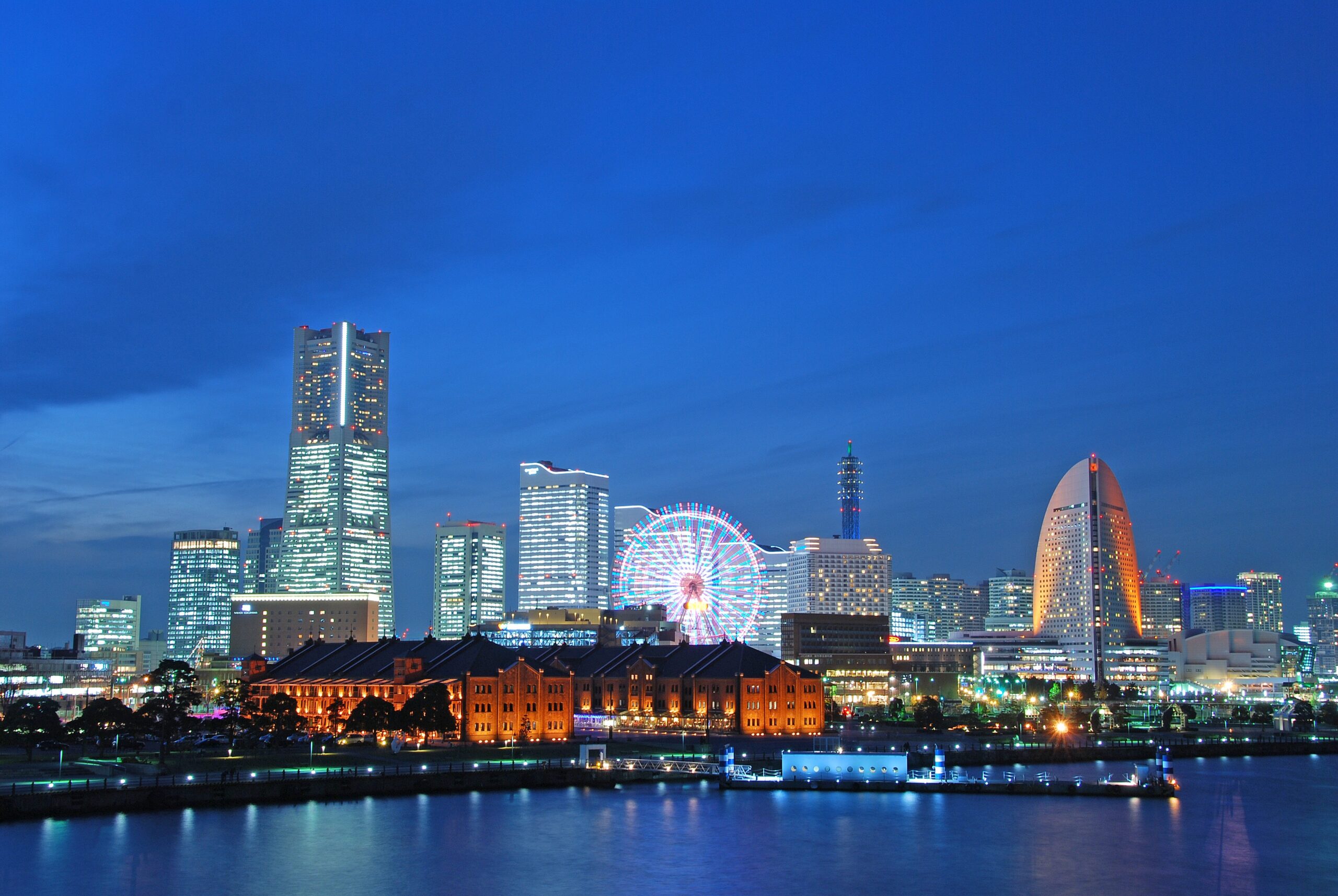
Commercial land in Minato Mirai 3-chome reached ¥3.75 million per square meter in the 2026 kouji chika (公示地価, the official land price announcement published annually by the Ministry of Land, Infrastructure, Transport and Tourism), a 9.97% year-on-year increase that outpaced central Tokyo’s rate of appreciation. The figure places MM21 among Japan’s most expensive development zones outside the capital’s 23 wards, yet investors continue to compete for remaining parcels. The driver is not speculative residential demand. It is a specific, measurable convergence: 3 million annual visitors to K Arena Yokohama, a 2.5% office vacancy rate supporting premium business rates, and the scheduled 2025-2027 development of Blocks 60 and 67 for mixed-use hotel configurations.
The 2026 Land Price Structure and What It Signals
The 2026 kouji chika data reveals a stratified market across the MM21 district. Minato Mirai 4-chome registered ¥3.41 million per square meter, up 10.0% year-on-year. Takashima 2-chome near Yokohama Station East, by comparison, reached ¥1.45 million per square meter with a sharper 14.17% gain, reflecting the station’s west-east integration projects.
These numbers matter for hotel development feasibility. At ¥3.75 million per square meter, a 1,000-square-meter parcel in Minato Mirai 3-chome carries a land cost of ¥3.75 billion before construction, financing, or soft costs. For context, this exceeds the per-square-meter pricing of several Tokyo fringe wards while remaining below Azabu, Aoyama, or Omotesando benchmarks.
The fixed asset tax (固定資産税, kotei shisan zei) assessment for Minato Mirai commercial land in 2026 stands at ¥8.68 million per tsubo, equivalent to approximately ¥2.62 million per square meter. This represents a 9.1% increase from 2025. The assessed value typically runs at 70% of the kouji chika, with the applied tax rate at 1.4% plus an additional 0.3% urban planning tax (都市計画税, toshi keikaku zei) in designated zones.
For a developer acquiring a 3,000-square-meter site, annual property tax obligations would approximate ¥110-120 million before building depreciation schedules or special exemptions. These are not marginal costs. They determine whether a project targets luxury positioning with extended-stay premiums, or efficiency-focused business hotel economics at 25-30 square meter average room sizes.
Demand Architecture: K Arena, MICE, and Corporate Headquarters
The 20,000-capacity K Arena Yokohama, which opened in 2023, generated approximately 3 million visitor arrivals in its first operational year. The venue’s programming, concentrated on international artists and domestic arena-scale acts, creates predictable compression in surrounding hotel supply. Event nights see occupancy spikes of 40-60 percentage points above baseline, with rate premiums of 2.5x to 4x standard corporate rates.
Pacifico Yokohama, the convention and exhibition complex adjacent to the MM21 core, provides the counter-cyclical demand layer. The facility hosted 127 conferences and trade exhibitions in 2024, with delegate accommodation typically booked 90-180 days in advance at contracted corporate rates. This MICE (Meetings, Incentives, Conferences, Exhibitions) base stabilizes revenue during entertainment calendar gaps.
The third demand pillar is corporate headquarters concentration. Nissan, Fujifilm, Kyocera, Murata Manufacturing, and LG Japan maintain primary or significant secondary offices in MM21. The district’s office vacancy rate of 2.5% as of January 2025, with average rents at ¥4,500 per square meter per month, indicates sustained demand for business traveler accommodation. These are not transient tourists. They are repeat-visit accounts with negotiated annual rates, predictable cancellation patterns, and midweek peak occupancy.
Development Pipeline and Scarcity Mechanics
The MM21 master plan, originally conceived in the 1980s, allocated specific blocks for hotel use. Most have been developed. The remaining inventory includes Blocks 60 and 67, designated for full-scale development from 2025 onward with hotel use anticipated within mixed-use configurations. These parcels represent the final significant hotel development opportunities within the district’s original boundaries.
The Hilton Garden Inn Yokohama Minato Mirai, which opened in April 2026 with 232 guestrooms centered on 27-square-meter units, illustrates the current development template. The property targets the efficiency segment with 24-hour self-service retail, compact fitness facilities, and rate positioning 35-40% below the InterContinental Yokohama Grand and Mitsui Garden Hotel Yokohama Minatomirai PREMIER.
This stratification, luxury at the waterfront tower properties and select-service in the interior blocks, suggests market maturity rather than saturation. The risk is not insufficient demand. It is simultaneous delivery. If Blocks 60 and 67 both commence hotel construction within the same 18-month window, the temporary supply surge could compress rates for 24-36 months before demand growth absorbs additional inventory.
Tax and Depreciation Structures for Hotel Operations
Hotel building depreciation follows the National Tax Agency (国税庁, kokuzei-chou) schedules for reinforced concrete structures. The statutory useful life is 47 years for straight-line depreciation, or 24 years for declining balance methods. This distinction matters for cash-flow planning. A ¥5 billion hotel construction cost, depreciated over 47 years, generates approximately ¥106 million in annual depreciation expense. The 24-year declining balance method front-loads this deduction, with first-year depreciation exceeding ¥200 million.
For foreign investors, the tax treatment of rental income and capital gains depends on residency status and acquisition structure. Non-resident individuals face 20.42% withholding on gross rental income, with the option to file final tax returns at progressive rates if beneficial. Corporate structures, including tokutei mokuteki kaisha (特定目的会社, special purpose companies) or Godo Kaisha partnerships, allow depreciation pass-through and loss carryforward, though compliance costs and reporting obligations increase proportionally.
Hotel ownership alone does not qualify for the Business Manager visa (経営・管理ビザ, keiei kanri visa). Active operational involvement, including employment of Japanese staff, demonstrated revenue generation, and business plan submission, is required. Passive real estate investment requires alternative visa pathways or operational partnerships with licensed hotel management companies.
Foreign Acquisition: Direct Ownership and Operational Partnerships
Foreign nationals face no legal restriction on direct land ownership for hotel development in Minato Mirai. The practical constraints are financing, language, and operational licensing. Japanese banks extend construction financing to foreign developers on case-by-case basis, typically requiring 40-50% equity contribution, personal guarantees, and demonstrated hospitality sector experience.
Alternative structures include joint ventures with domestic hotel operators, sale-leaseback arrangements with institutional investors, and REIT participation. The Japan Hotel REIT Investment Corporation and other listed vehicles hold properties in Yokohama, though MM21 exposure is limited compared to Tokyo and Osaka portfolios.
For investors comparing MM21 to central Tokyo, the relevant benchmark is not absolute land price but development yield. At ¥3.75 million per square meter land cost, plus construction at ¥800,000-1,200,000 per square meter for mid-tier hotel specifications, total development cost approaches ¥1.8-2.2 million per square meter of gross floor area. Achievable room rates of ¥25,000-35,000 for standard rooms and ¥45,000-65,000 for suites, at stabilized 75-80% occupancy, support gross operating margins of 35-42% before management fees and debt service.
The Yokohama Station Integration Factor
The 2026 land price data for Takashima 2-chome, at ¥1.45 million per square meter with 14.17% annual appreciation, signals a broader market recognition. Yokohama Station’s west and east sides are integrating into a unified central business district, with the former Yokohama City Hall site designated for Star Resort luxury hotel and office development. This expansion creates a “Greater Yokohama Central” district that extends MM21’s catchment area without diluting its brand positioning.
For hotel investors, the implication is location flexibility. Properties within 800 meters of Minato Mirai Station command premium rates for the waterfront address. Properties at Yokohama Station East, with superior transit connectivity to Shibuya (26 minutes) and Shinagawa (18 minutes), may achieve similar occupancy at 15-20% lower rate points. The optimal strategy depends on target guest segment: leisure and entertainment demand concentrates in MM21; business and transit-oriented demand concentrates at Yokohama Station.
Koukyuu represents buyers seeking distinguished Tokyo residences in Minato-ku (港区), Shibuya-ku (渋谷区), and Chiyoda-ku (千代田区), focused exclusively on transactions of ¥300 million and above. A licensed 宅建士 (takken-shi, Japan’s licensed real-estate transaction specialist) personally handles every stage of the engagement, from the first consultation to the signing, a continuity most Tokyo agencies do not offer. Book a private consultation).