


Reviewed by a Koukyuu Takkenshi (宅地建物取引士)
Fact-checked against current Japanese real-estate law, tax rules, and market data by a nationally licensed specialist who oversees luxury transactions across Minato, Shibuya, and Chiyoda. In Japan, a Takkenshi is legally required to sign off on every property transaction, and about 15% of candidates pass the exam each year.
A 136-year-old 古民家 (kominka, traditional Japanese farmhouse) in Kai City, Yamanashi, listed at ¥49.8 million in early 2026. A fully renovated Edo-period structure in Minobu-cho on 21,931 square metres of land, sold at ¥12 million. A 20-square-metre micro-lot in Koto-ku, Tokyo, marketed as a traditional property at ¥29.8 million, almost certainly 再建築不可 (saiken-chiku fuka bukken, a property that cannot be demolished and rebuilt under current law). These three listings, all active or recently closed in 2026, define the range of what “traditional houses for sale in Japan” actually means in practice, and they illustrate why foreign buyers require a precise framework before approaching this market.
The category spans genuine architectural heritage, rural land plays, and urban legal anomalies. Treating them as a single asset class is the first mistake to avoid.
What a Traditional Japanese House Actually Is
The term covers several distinct property types, each with different legal and structural implications. Understanding the distinctions is essential before any site visit.
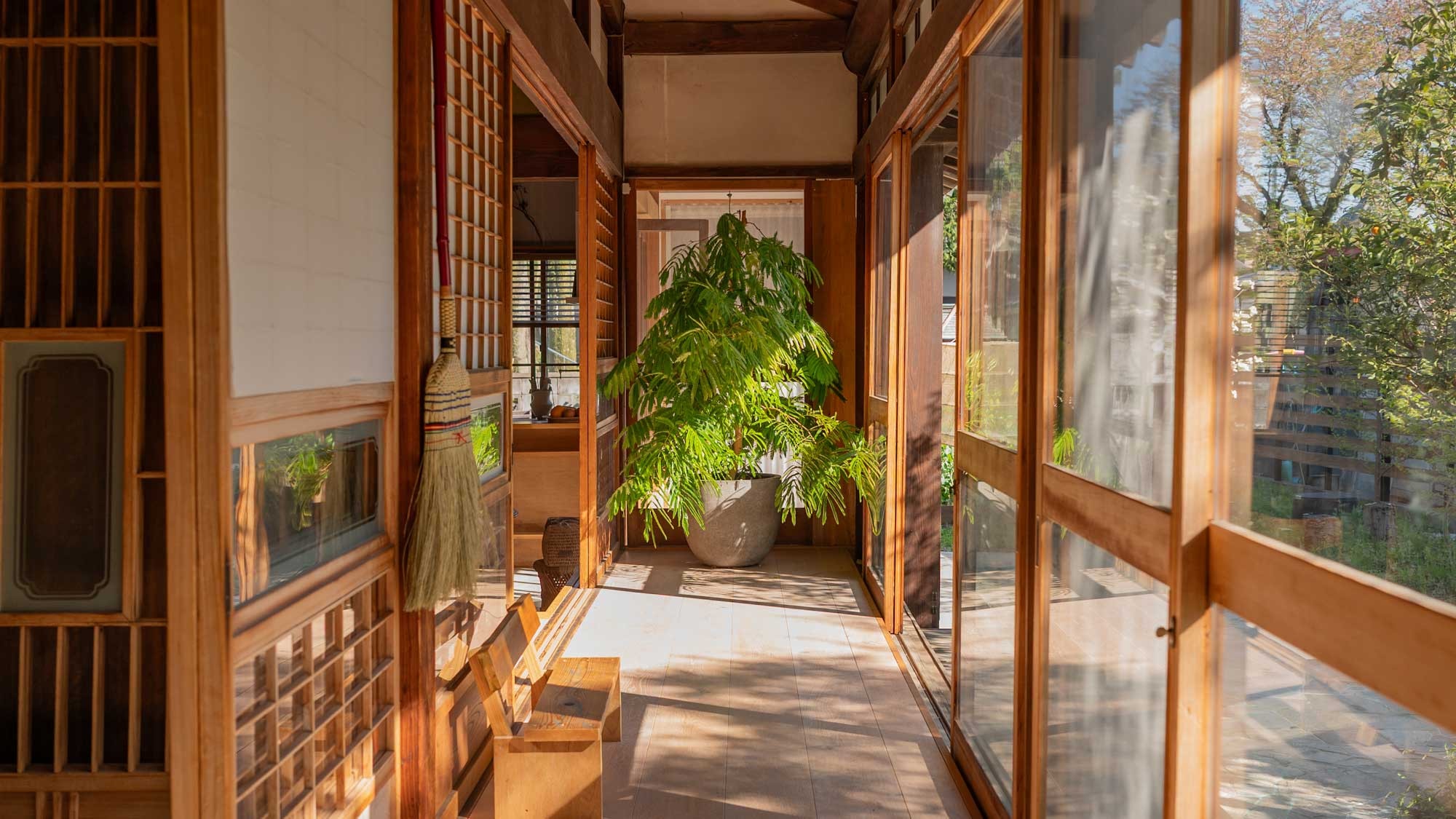
古民家 (kominka) refers broadly to traditional farmhouses and rural dwellings, typically constructed using 伝統構法 (dentō kōhō), the traditional timber-frame method. Authentic dentō kōhō buildings use 石場建て (ishiba-date) construction, where structural columns rest on stone bases rather than fixed concrete foundations. This allows the structure to absorb seismic energy through controlled movement. The walls are 土壁 (tsuchikabe), earthen plaster applied over bamboo lattice, repairable section by section. A large central pillar called the 大黒柱 (daikoku-bashira) carries the primary load. These buildings are typically 80 to 200-plus years old. 町家 (machiya) are traditional urban townhouses, most associated with Kyoto but found throughout Japan’s historic city cores. They run narrow and deep on their lots, with a street-facing commercial or living space and a rear garden. Machiya are generally constructed in the same dentō kōhō tradition but adapted to dense urban plots.Both types fall outside the scope of the 新耐震基準 (shin-taishin kijun, the New Seismic Standard enacted in 1981), which governs modern construction. This has direct consequences for permitting, renovation financing, and insurance. The 国土交通省 (Kokudo Kōtsū-shō, Ministry of Land, Infrastructure, Transport and Tourism) has been developing updated assessment guidelines for traditional timber buildings since 2022, but as of April 2026 the permitting pathway for dentō kōhō structures remains more complex than for standard post-1981 construction.
For a broader overview of how these categories fit within Japan’s wider residential typology, the Koukyuu guide to types of Japanese houses covers the full spectrum from machiya to modern 分譲マンション (bunjō manshon, freehold condominium units).
The Price Spectrum in 2026: What the Market Actually Shows
Active listings from January through April 2026 reveal a market segmented sharply by location and legal status.
Genuine kominka with architectural heritage value are overwhelmingly located outside Japan’s major urban centres. The Yamanashi listings are representative: the Kai City property at ¥49.8 million offers 180 square metres of floor space on 1,948 square metres of land, with its Meiji-era 石場建て structure intact. The Minobu-cho property, approximately 200 years old and fully renovated, closed at ¥12 million on a 21,931-square-metre parcel that includes mountain forest. Its annual 固定資産税 (koteishisan-zei, fixed asset tax) was listed at ¥28,100, illustrating how low rural assessed values run relative to purchase price.
Urban listings described as “traditional” require more scrutiny. The Koto-ku, Tokyo property at ¥29.8 million sits on approximately 20 square metres of land, placing it at roughly ¥1.49 million per square metre for the land component alone. At that lot size, the property almost certainly cannot meet the road-frontage requirement under 建築基準法第43条 (Kenchiku Kijun-hō Dai-43-jō, Building Standards Act Article 43), making it 再建築不可. That classification is not a minor footnote. It means the structure can be renovated but cannot be demolished and rebuilt. Japanese banks will not provide mortgage financing on most 再建築不可 properties, and resale liquidity is materially constrained.
For foreign buyers accustomed to European or North American heritage property markets, the price points may appear modest. They are, and the reasons are structural. Renovation costs for a dentō kōhō building requiring specialist craftspeople, seismic assessment, and earthen-wall repair can reach ¥20 million to ¥50 million on top of the purchase price, depending on condition and scale. The Minobu-cho property’s ¥12 million price reflects a fully renovated state; unrenovated equivalents in comparable rural locations often list below ¥5 million.
Portals such as KORYOYA and Heritage Homes Japan aggregate rural kominka and machiya listings across prefectures, and are useful for calibrating what renovation-required versus move-in-ready pricing looks like across different regions.
Legal and Structural Due Diligence: The Six Checks That Cannot Be Skipped
Foreign buyers of traditional Japanese houses face a due-diligence checklist that differs substantially from what applies to a standard urban マンション (manshon, Japanese usage for a freehold condominium) purchase. The following six items are non-negotiable.
1. 再建築不可確認 (Rebuildability confirmation). Before any offer, confirm whether the property fronts a road of at least 4 metres in width as required by Building Standards Act Article 43. If it does not, the property is 再建築不可. This check is conducted against municipal road maps and must be done by a qualified professional, not taken on faith from listing descriptions. 2. 耐震診断 (Taishin shindan, seismic assessment). Pre-1981 structures require an independent seismic assessment. For dentō kōhō buildings, a standard structural engineer cannot certify the building. You need a specialist in traditional timber-frame construction, a category with a limited number of qualified practitioners in Japan. Without a seismic assessment, most renovation loan products are unavailable, and obtaining the 耐震基準適合証明書 (taishin kijun tekigō shōmeisho, seismic compliance certificate) required for certain tax deductions is impossible. 3. 伝統構法構造計算 (Structural calculation for traditional-method buildings). This is a separate requirement from the seismic assessment and applies specifically to dentō kōhō structures. Engage a specialist architect early. The permitting process for renovation work on these buildings involves the local 建築主事 (kenchiku shushi, building confirmation officer) and may require a peer review by a designated third-party body. 4. 農地・山林付帯確認 (Agricultural and forest land confirmation). Many rural kominka parcels include 農地 (nōchi, farmland) or 山林 (sanrin, forest land). Transferring ownership of farmland requires approval from the local 農業委員会 (nōgyō iinkai, Agricultural Committee) under the Agricultural Land Act. Forest land over a certain area requires prefectural notification. Neither process is automatic, and both add time and complexity to closing. 5. 固定資産税評価証明書 (Fixed asset tax valuation certificate). Obtain this document from the relevant municipality before signing. It establishes the assessed value used to calculate acquisition tax, annual holding costs, and registration tax. For a Meiji-era rural kominka, the assessed value may be a fraction of the purchase price, which is advantageous. For an urban property, the gap narrows. 6. 非居住者源泉徴収 (Hijūusha gensen chōshū, non-resident withholding). If you purchase a property from a non-resident seller, you are legally required to withhold 10.21% of the purchase price under 所得税法第161条 (Shotoku-zei-hō Dai-161-jō, Income Tax Act Article 161) and remit it to the tax authority. The buyer is the withholding agent. This is a procedural obligation that catches foreign buyers off guard; it must be planned for at the contract stage, not at closing.For buyers considering traditional properties in Kyoto specifically, the Koukyuu guide to buying a house in Kyoto as a foreign national covers the machiya market and its city-specific preservation ordinances in detail.
The Tax Framework Foreign Buyers Must Understand Before Signing
Japan imposes four distinct taxes on real estate transactions, each calculated on a different basis. The figures below are current as of April 2026.
固定資産税 (Koteishisan-zei, fixed asset tax): The annual holding tax, levied by the municipality at a standard rate of 1.4% of the assessed value. For rural kominka, assessed values are low; the Minobu-cho property’s ¥28,100 annual bill on 21,931 square metres of land demonstrates this. Urban properties carry meaningfully higher assessments. This tax is paid annually regardless of residency status. 都市計画税 (Toshi-keikaku-zei, city planning tax): Up to 0.3% of assessed value, applied only within 市街化区域 (shigaika kuiki, urbanisation promotion zones). Properties in Kai City and most other designated urban areas carry this tax in addition to fixed asset tax. 不動産取得税 (Fudōsan shutoku-zei, real estate acquisition tax): A one-time tax of 3% of assessed value for residential land and buildings, at the reduced rate currently in effect through March 2027 under the 租税特別措置法 (Sozei Tokubetsu Sochi-hō, Special Taxation Measures Act). For buildings over 50 years old without a seismic compliance certificate, the standard deduction for new or quasi-new buildings does not apply. Obtaining the 耐震基準適合証明書 before closing can materially reduce this liability. 登録免許税 (Tōroku-menkyo-zei, registration and license tax): 1.5% of assessed value for residential property ownership transfer, also at the reduced rate through March 2027. This is paid at 登記 (touki, the transfer of legal title recorded at the Legal Affairs Bureau).One exit-side tax deserves attention from day one of ownership planning. Non-resident sellers of Japanese real estate face withholding at 10.21% of the gross sale price under Income Tax Act Article 161, as noted above. If you purchase as a non-resident and later sell as a non-resident, your buyer will withhold this amount. The actual capital gains tax owed may be lower, requiring a tax return to reclaim the difference, but the cash-flow impact at exit is real. Engage a 税理士 (zeirishi, licensed Japanese tax accountant) with non-resident real estate experience before signing the purchase contract, not after.
Inheritance planning is equally important. Japan-sited real estate is subject to 相続税 (sōzoku-zei, inheritance tax) regardless of the residency status of the decedent or heir. The 国税庁 (National Tax Agency) amended its rules on overseas assets in April 2024, narrowing the scope of foreign assets taxable for non-residents, but Japan-located property remains fully within scope. A kominka inherited by a non-resident heir with no Japan ties still triggers Japanese inheritance tax obligations.
Government Policy: How the 2023 Vacant House Law Changes the Calculus
The 空き家対策特別措置法 (Akiya Taisaku Tokubetsu Sochi Hō, Special Measures Act on Vacant Houses), amended and strengthened in December 2023, has materially changed the holding-cost equation for neglected traditional properties.
Under the amended law, municipalities can designate a neglected kominka as a 特定空き家 (tokutei akiya, designated vacant house) and remove the 住宅用地特例 (jūtaku-yōchi tokurei, residential land tax reduction) that normally reduces fixed asset tax to one-sixth of the standard rate for small lots. Losing this reduction can multiply annual holding costs by a factor of six. The practical effect is to pressure owners of deteriorating traditional properties to sell, renovate, or demolish, which has increased the supply of kominka coming to market in rural municipalities.
Some municipalities pair this pressure with incentive frameworks. Minobu-cho in Yamanashi, for example, offers 移住・定住祝金 (ijū/teijū iwakin, migration and settlement grants) to buyers who relocate and register residency in the town. Grant amounts and eligibility criteria vary by municipality and change periodically; confirm current terms directly with the relevant municipal office before factoring any subsidy into your purchase calculus.
For buyers who want to understand the full legal and financing framework before approaching a traditional property purchase, the complete guide to buying property in Japan as a foreign national covers mortgage access, visa status implications, and the 重要事項説明 (juuyou-jikou-setsumei, the statutory pre-contract disclosure meeting) that every buyer must attend before signing.
Where Traditional Houses Fit Within a High-Net-Worth Portfolio
For most foreign HNW buyers, traditional houses for sale in Japan occupy a specific and limited role in a broader Japan real estate strategy. They are not liquid assets. Resale markets for kominka outside major tourist corridors are thin, and the buyer pool for a heritage property requiring specialist maintenance is narrow by definition. Renovation timelines of 12 to 24 months are common for properties in original condition.
Where they make sense is as primary or secondary residences for buyers with a genuine connection to a specific region, as cultural preservation projects for buyers with long Japan horizons, or as hospitality assets in areas with strong inbound tourism demand. Kyoto machiya converted to boutique guesthouses represent the most developed version of this model, though Kyoto’s preservation ordinances add another layer of regulatory complexity.
The Tokyo-area “traditional house” listings, by contrast, are almost uniformly land plays or renovation projects on constrained urban lots. The ¥29.8 million Koto-ku listing is a representative example: the architectural heritage value is minimal, the lot is too small to rebuild on, and the investment thesis rests entirely on land price appreciation in the 23 wards. That is a legitimate strategy, but it has nothing to do with traditional architecture.
Buyers whose primary interest is a distinguished Tokyo residence, rather than a rural heritage property, will find that the relevant market sits in neighborhoods such as Nishi-Azabu (西麻布), Minami-Aoyama (南青山), and Shirokane (白金), where detached houses on rebuildable lots transact well above ¥300 million and where the due-diligence framework is materially different from the kominka checklist above. At that level, the continuity of professional oversight across every stage of the transaction matters considerably. Koukyuu is a private buyer’s advisory focused exclusively on transactions of ¥300 million and above in neighborhoods including Roppongi Hills, Azabudai Hills (麻布台ヒルズ), and Kita-Aoyama (北青山), where a licensed 宅建士 (takken-shi, Japan’s licensed real-estate transaction specialist) personally handles every stage of the engagement, from initial consultation through negotiation, due diligence, and signing.
Koukyuu represents buyers seeking distinguished Tokyo residences in Nishi-Azabu, Roppongi Hills, and Azabudai Hills, with a hard transaction floor of ¥300 million and a licensed 宅建士 personally present at every stage, from the first consultation to the signing of the 登記 transfer documents. To begin a private conversation, book a private consultation).