


Reviewed by a Koukyuu Takkenshi (宅地建物取引士)
Fact-checked against current Japanese real-estate law, tax rules, and market data by a nationally licensed specialist who oversees luxury transactions across Minato, Shibuya, and Chiyoda. In Japan, a Takkenshi is legally required to sign off on every property transaction, and about 15% of candidates pass the exam each year.
The 2026 official land price survey (公示地価, kouji-kachi) published March 18 places Takanawa district at ¥3.89 million per square meter, a 16.85% annual increase that exceeds growth rates in Azabu, Hiroo, and Roppongi. This marks the third consecutive year of double-digit appreciation and positions Takanawa as the fastest-appreciating residential zone in Minato Ward (港区, Minato-ku).
Two Takanawas: Shirokane West and Gateway East
Takanawa district contains two distinct investment profiles separated by the Takanawa Tunnel approach. The western zone, anchored by Shirokane-Takanawa Station (白金高輪駅), maintains the quiet residential character that earned it 白金 (Shirokane, “white gold”) status alongside neighboring Shirokanedai. The eastern zone, rebranded around Takanawa Gateway Station since 2020, is now completing its transformation with the March 28, 2026 opening of Takanawa Gateway City.
Land prices reflect this divergence. Residential plots near Shirokane-Takanawa Station trade at ¥2.16–2.24 million/m², up approximately 15% year-over-year. Commercial land near JR Shinagawa Station commands ¥7.75 million/m², with the district’s highest-priced site at Takanawa 3-25-22 recording 18.32% annual appreciation [tochidai.info, March 2026].
The Shirokane side offers established embassy proximity. Eighty-two of Minato Ward’s 153 national embassies operate within the broader Takanawa-Shirokane corridor, creating consistent demand for executive housing stock. Properties here rarely appear on public REINS listings; transactions flow through private networks with 3–6 month marketing periods typical for units above ¥200 million.
Takanawa Gateway City introduces a different supply dynamic. The 2026 completions include MIMURE retail (28,000m² GLA), MoN Takanawa cultural facility, and the TAKANAWA GATEWAY CITY RESIDENCE tower, with move-ins beginning April 2026. The residential component targets domestic corporate transferees and foreign executives on medium-term postings, a demographic that prefers furnished flexibility over ownership. For investors, this creates a bifurcated market: historic Shirokane for capital preservation, Gateway East for rental yield on new stock.
2026 Tax Obligations for Foreign Property Owners
Foreign buyers in Takanawa face the same tax structure as Japanese nationals, with one critical distinction in inheritance treatment. The annual holding costs break down as follows:
固定資産税 (kotei-shisan-zei, Fixed Asset Tax): 1.4% of assessed value. Assessments typically run 70–80% of market value, meaning effective rates of approximately 0.98–1.12% on current prices. On a ¥300 million Takanawa residence, annual Fixed Asset Tax ranges ¥2.94–3.36 million. 都市計画税 (toshi-keikaku-zei, City Planning Tax): 0.3% for urbanization promotion areas. Takanawa district qualifies. Combined with Fixed Asset Tax, total annual property tax burden runs 1.28–1.42% of market value. 相続税 (souzoku-zei, Inheritance Tax) merits particular attention for foreign buyers. Japan taxes worldwide assets for domiciled residents: 永住権 (eijuuken, permanent residency) holders or those with over 10 years of residence. Non-residents face taxation only on Japan-situs assets. The 2026 tax reform outline maintained the 配偶者控除 (haigusha-koujo, spousal deduction) and 小規模宅地等の特例 (shoukibo-takuchi-tokurei, small-scale residential land relief), which can reduce taxable land value by 50–80% for qualifying heirs [国税庁, 2026年度税制改正大綱].Rental income faces 20.42% withholding for non-residents without permanent establishment, though tax treaty rates may apply. The Japan-US treaty reduces this to 10% for most investment income; the Japan-UK treaty to 15%. Depreciation schedules for reinforced concrete manshon (マンション, freehold condominiums) run 47 years for structures built after April 1998, or 1.5–2.0% annually for tax purposes.
Infrastructure and Access: The Namboku-Mita Advantage
Shirokane-Takanawa Station sits at the intersection of two subway lines that define executive mobility in Tokyo. The Tokyo Metro Namboku Line reaches Nagatacho in 7 minutes, directly serving the National Diet and Kasumigaseki government district. The Toei Mita Line reaches Hibiya in 10 minutes, with through-running to Saitama that expands commuter catchment for rental properties.
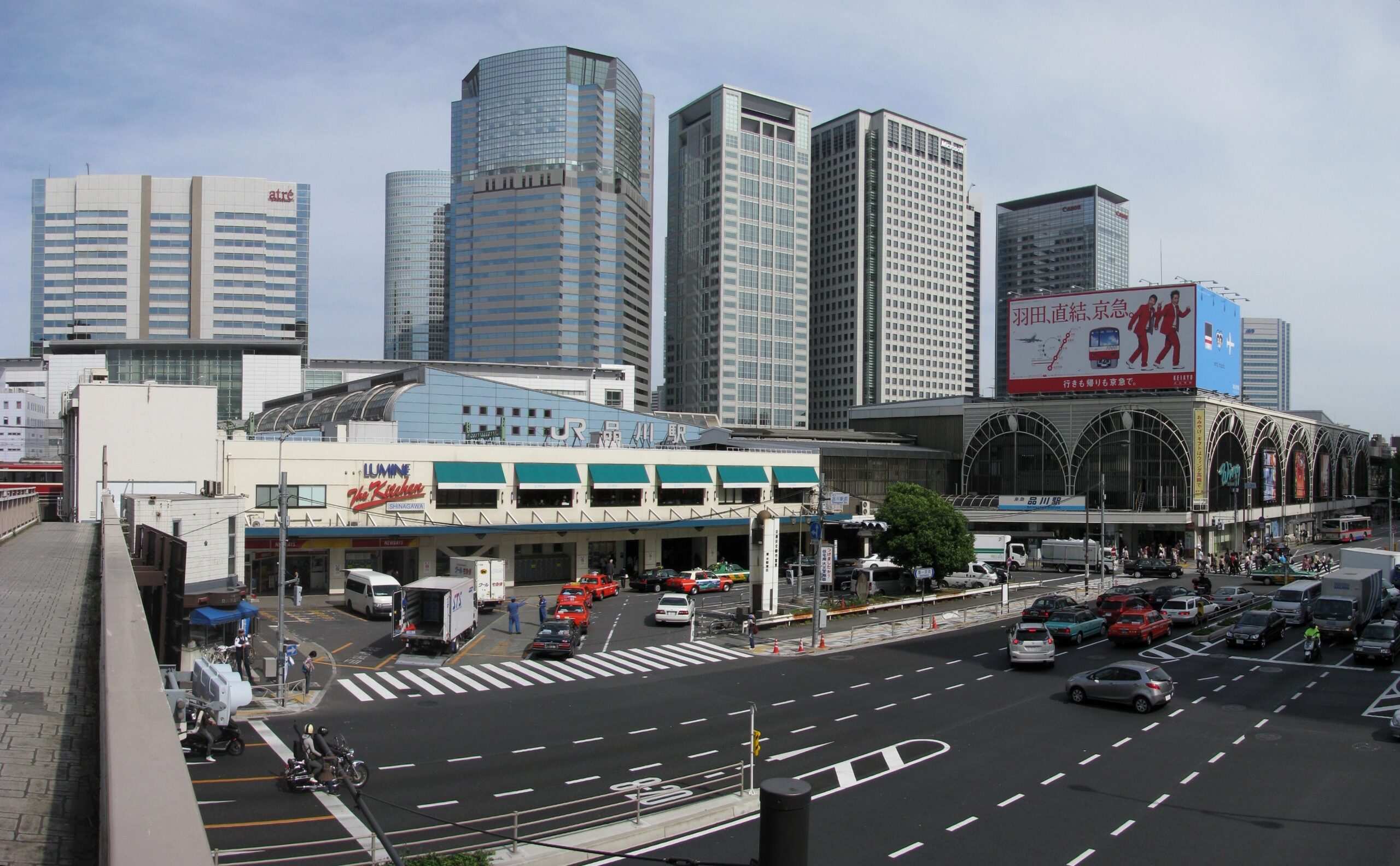
JR Shinagawa Station, 800 meters east of the Gateway City core, offers Shinkansen access to Osaka (2 hours 22 minutes via Nozomi) and Narita Express service to the airport (67 minutes). The 2026 opening of the Second East-West Connecting Road pedestrian section, scheduled for summer 2026, will reduce walking time between Gateway City and Shinagawa Station’s Takanawa Exit to approximately 6 minutes.
This infrastructure configuration distinguishes Takanawa from competing Minato-ku addresses. Azabu-Juban requires a transfer for Namboku Line access. Roppongi lacks direct Shinkansen proximity. For buyers prioritizing both government district access and international connectivity, Takanawa’s multimodal position is functionally unique within the ¥300–500 million entry segment.
Price Positioning Against Minato-ku Peers
Takanawa’s ¥3.89 million/m² district average sits below premium Minato-ku neighborhoods, creating relative value for buyers priced out of established addresses. Comparative 2026 official land prices:
| Neighborhood | 2026 Price/m² | YoY Change |
|---|---|---|
| Minami-Aoyama (南青山) | ¥8.125 million | +9.2% |
| Azabu-Juban (麻布十番) | ¥5.84 million | +11.4% |
| Roppongi (六本木) | ¥4.56 million | +8.7% |
| Takanawa (高輪) | ¥3.89 million | +16.85% |
| Shirokanedai (白金台) | ¥3.62 million | +12.1% |
The 45% discount to 1987 bubble peak prices (¥6.96 million/m²) versus Minami-Aoyama’s near-peak recovery suggests Takanawa retains structural upside. Historical data shows prices have tripled since 2013 (¥1.49 million/m²), with acceleration in 2024–2026 coinciding with Gateway City construction completion [tochidai.info].
For foreign investors, this trajectory carries both opportunity and concentration risk. The 16.85% annual appreciation exceeds Tokyo metropolitan average of 8.9% and suggests local factors—specifically Gateway City absorption—are driving premiums. Buyers acquiring at 2026 levels are pricing in continued rental demand from the 15,000 projected daily workers and 2,400 new residents the development will house.
Embassy District Dynamics and Rental Stability
Takanawa’s 82 embassies generate demand characteristics distinct from financial district rentals. Diplomatic postings typically run 3–4 years with housing allowances of ¥800,000–1,500,000 monthly for senior staff. Unlike corporate expatriates, diplomatic tenants rarely purchase, creating persistent rental demand for owner-investors.
The neighborhood’s international character—evident in bilingual signage density around Shirokane-Takanawa Station and the concentration of international schools within 15-minute radius—supports premium pricing for foreign-executive housing. The British School in Tokyo’s Shibuya campus and Nishimachi International School both serve Takanawa families; the German School Tokyo Yokohama and French International School are accessible via Namboku Line connections.
This demand profile favors certain property specifications: 100m²+ three-bedroom layouts, in-unit laundry, parking (¥30,000–50,000/month additional), and building security with bilingual concierge. Newer manshon developments meeting these criteria command ¥15,000–22,000/m² monthly rents, implying gross yields of 2.8–3.5% at current purchase prices before management fees and vacancy allowances.
Investors should note the supply constraint. Minato Ward’s 2024–2030 urban plan designates much of Shirokane-Takanawa as 第一種低層住居専用地域 (Category I Low-Rise Residential Zone), limiting new construction to 10–12 meters height. This protects neighborhood character but restricts inventory growth, supporting price stability for existing stock.
Practical Acquisition Considerations
Foreign buyers face specific procedural requirements in Takanawa transactions. The 重要事項説明 (juuyou-jikou-setsumei, statutory pre-contract disclosure meeting) must be conducted in a language the buyer understands; English-speaking 宅建士 (takken-shi, licensed real-estate transaction specialists) are essential for non-Japanese speakers. This disclosure covers 重要事項 (juuyou-jikou, material facts) including building defects, management disputes, and pending 修繕積立金 (shuuzentsumitatekin, repair reserve fund) assessments.
Financing availability expanded in 2025–2026. Sumitomo Mitsui Banking Corporation and Mizuho Bank now offer residential mortgages to non-resident foreigners with 30–40% down payment requirements, versus 50%+ pre-2023. Interest rates for foreign borrowers range 1.8–2.4% fixed for 10 years, approximately 0.3–0.5% above domestic rates. 永住権 holders access preferential terms approaching domestic pricing.
The 手付金 (tetsuke-kin, earnest-money deposit) of 10% binds both parties upon contract execution. Default by buyer forfeits this amount; default by seller requires double return. Final 登記 (touki, legal title transfer) at the Legal Affairs Bureau completes registration of ownership, typically 2–4 weeks after full payment.
For buyers considering Takanawa against alternatives, Roppongi offers established nightlife and cultural infrastructure at higher entry prices. Expatriates prioritizing international schooling and suburban space may prefer Hiroo or Denenchofu. Takanawa occupies a middle position: central Tokyo access with residential scale, international presence without tourist density, and 2026 pricing that retains appreciation capacity absent from fully-recovered peers.
Koukyuu represents buyers seeking distinguished Tokyo residences in Takanawa, Shirokane, and Minato-ku, focused exclusively on transactions of ¥300 million and above. A licensed 宅建士 personally handles every stage of the engagement, from the first consultation to the signing — a continuity most Tokyo agencies do not offer. Book a private consultation).