


Reviewed by a Koukyuu Takkenshi (宅地建物取引士)
Fact-checked against current Japanese real-estate law, tax rules, and market data by a nationally licensed specialist who oversees luxury transactions across Minato, Shibuya, and Chiyoda. In Japan, a Takkenshi is legally required to sign off on every property transaction, and about 15% of candidates pass the exam each year.
Shinagawa Ward recorded a 15.00% year-on-year increase in average land prices for 2026, climbing to ¥1,814,525 per square meter, per the Reiwa 8 Official Land Price announcement. This places Shinagawa 10th nationally by absolute price and 6th by growth rate among Japan’s 1,376 municipalities. For high-net-worth buyers evaluating Tokyo’s southern corridor, the figure signals something precise: infrastructure completion timelines have begun converting into locational premiums ahead of the Linear Chūō Shinkansen terminal’s post-2034 opening.
The Station Hierarchy: Where ¥5.5 Million Meets ¥565,000 Per Square Meter
Shinagawa Ward’s internal price dispersion exceeds that of many prefectures. The 2026公示地価 (kōji chika, official land price) data reveals a tenfold gap between the ward’s highest and lowest station zones.
| Rank | Station | Price/m² | YoY Change |
|---|---|---|---|
| 1 | Shinagawa | ¥5,538,333 | +14.41% |
| 2 | Gotanda | ¥3,442,500 | +17.03% |
| 3 | Ōsaki | ¥2,945,333 | +15.50% |
| 4 | Takanawadai | ¥2,502,500 | +15.79% |
| 5 | Meguro | ¥2,335,454 | +14.19% |
| 12 | Shinagawa Seaside | ¥1,380,000 | +20.00% |
| 31 | Ōi Keibajō-mae | ¥565,000 | +10.78% |
Shinagawa Station commands ¥5,538,333 per square meter, reflecting its status as a terminal for the Tōkaidō Shinkansen and the forthcoming Linear Chūō Shinkansen. The 14.41% appreciation, while substantial, actually lags the ward average, suggesting earlier-phase gentrification has already priced in much of the station’s accessibility premium.
Gotanda’s 17.03% surge to ¥3,442,500 per square meter indicates stronger momentum. The station sits at the intersection of the Tōkyū Ikegami Line and JR Yamanote Line, with the Meguro River corridor providing a rare southern-Tokyo waterfront axis. Buyers targeting ¥300 million to ¥600 million マンション (manshon, freehold condominium) units have begun shifting attention here from saturated Shibuya-ku alternatives.
Shinagawa Seaside’s 20.00% growth, the ward’s highest, merits particular scrutiny. At ¥1,380,000 per square meter, it remains 60% below the ward average, yet the Rinkai Line connection to Shinjuku and the proximity to Tennōzu Isle’s gallery and studio cluster have activated demand from buyers prioritizing space over station prestige. The area’s 2024 completion of the Shinagawa Season Terrace office complex, housing Microsoft Japan’s headquarters, established a weekday professional population that supports surrounding retail and residential absorption.
Takanawa Gateway to Ōimachi Tracks: The Redevelopment Calendar Through 2033
JR East’s “Greater Shinagawa” (広域品川圏) masterplan, formally articulated in 2025, coordinates multiple projects across a 15-year horizon. For buyers, the critical discipline is distinguishing between projects already delivering rent premiums and those still carrying execution risk.
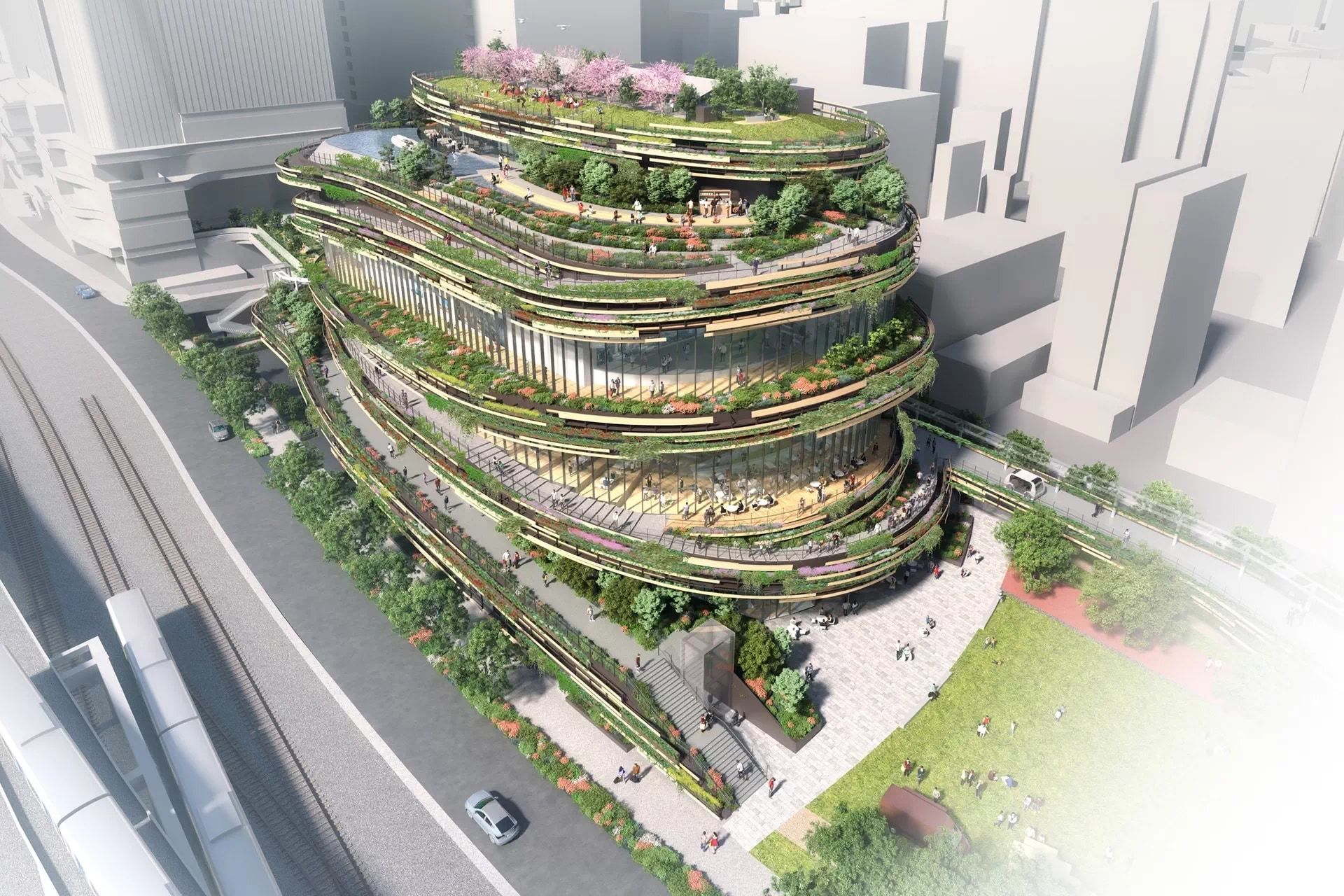
Takanawa Gateway City entered partial operation in 2024, with full opening scheduled for spring 2026. The station itself employs AI-powered crowd management and unmanned retail concepts. More materially for residential buyers, the surrounding 20 hectares will accommodate approximately 13,000 workers upon completion, with Nikkei and JR East relocating headquarters functions. The station’s 2020 opening initially underperformed commercial expectations due to pandemic-era remote work adoption; 2024-2025 leasing velocity has normalized, with Class A office rents now matching Ōsaki levels. Ōimachi Tracks opened March 28, 2026, providing the most immediate residential opportunity. The 26-floor mixed-use structure combines 25,000m² of office space, a 200-room hotel, retail, and 250 residential units. The deck-level connection to Ōimachi Station eliminates the 800-meter walk that previously suppressed the area’s residential appeal. Early transaction data from the building’s residential component shows ¥1.9 million to ¥2.3 million per tsubo, a 35% premium to comparable vintage stock in the surrounding 3-chōme. Shinagawa Station West Exit (A District) remains under construction with fiscal 2029 completion. The Keikyu-Toyota joint venture will deliver Toyota’s new Tokyo headquarters and the largest conference facility in central Tokyo. This project anchors the ward’s long-term commercial gravity; residential buyers acquiring now are positioning for the rental demand influx anticipated in the late 2020s.Further down the corridor, Tamachi will see multiple 39-floor towers complete in 2033, integrated with Takanawa Gateway through elevated pedestrian networks. The 2026 buyer evaluating a ¥400 million unit in Mita or Shibaura must model whether 2033-era competition from 2,000+ new Tamachi units will compress resale premiums.
Fixed-Asset Tax: Payment Optimization for Non-Resident Owners
Shinagawa Ward’s fixed-asset tax (固定資産税, kotei shisan zei) bills arrive annually in April, with payment due in four quarterly installments or single lump settlement. For 2026, the ward offers specific payment infrastructure that rewards attention to procedural detail.
au PAY bill payment provides the most efficient settlement method for domestic account holders. The service charges zero transaction fees and delivers 0.5–1.0% reward points when funded through card-linked charging. Constraints apply: ¥300,000 per transaction maximum, and ¥50,000 monthly limit for non-au card charging. For a ¥25 million property carrying a typical ¥500,000 annual fixed-asset tax burden, this structure accommodates full payment without fee erosion. Credit card settlement via eL-QR permits charges up to ¥9,999,999, with processing fees of 0.8–1.0% depending on card issuer. This ceiling accommodates virtually all residential tax obligations; the fee structure makes it economical only for cardholders maximizing mileage or point multipliers that exceed the surcharge.Critical procedural constraint: Taxpayers enrolled in automatic bank transfer (口座振替, kōza furikae) must cancel enrollment before switching to card or au PAY payment. The Shinagawa Tax Office (品川都税事務所) processes cancellations via phone at 03-3252-0955 or in-person submission. Failure to cancel results in duplicate payment attempts and 2-3 week reconciliation delays.
Non-resident owners should note that fixed-asset tax obligations persist regardless of occupancy status or rental income generation. The 2024-2025 yen depreciation has increased the effective burden for USD-denominated investors by approximately 18% compared to 2020-2021 acquisition cohorts, though this reverses partially for EUR-based buyers.
Inheritance Tax: Disability Credits and Route Price Valuation
Shinagawa Ward administers disability-based inheritance tax credits for statutory heirs with Japanese domicile. The structure, established for inheritances commenced on or after January 1, 2015, applies as follows:
| Disability Classification | Deduction Formula |
|---|---|
| General disability | (85 − age at inheritance) × ¥100,000 |
| Special disability | (85 − age at inheritance) × ¥200,000 |
A 45-year-old heir with special disability status would claim ¥8 million in deductions. This interacts with Tokyo’s 2024 (Reiwa 6) route price (路線価, rosenka) maps, which the Tokyo Metropolitan Government Tax Bureau publishes by chōme for inheritance and gift tax valuation purposes. Shinagawa’s 32 chōme span 91 map sheets, with highest route prices concentrated in Nishi-Gotanda, Ōsaki, and Kami-Ōsaki commercial zones.
Foreign buyers establishing Japanese residency should understand that inheritance tax applies to worldwide assets for domiciled individuals, versus Japan-situated assets only for non-domiciled decedents. The 10-year “temporary foreigner” exemption expired in 2018; current law requires 10 of the preceding 15 years in Japan to trigger worldwide taxation. Estate planning for Shinagawa properties should model both domicile scenarios, particularly given the Linear Shinkansen’s potential to extend professional tenures.
The Linear Shinkansen Terminal: Modeling Post-2034 Connectivity
The Linear Chūō Shinkansen’s Shinagawa terminal, approved for construction with opening targeted post-2034, represents the ward’s most significant infrastructure variable. The maglev line will reduce Tokyo-Nagoya transit time to 40 minutes, with eventual extension to Osaka. For Shinagawa residential buyers, the relevant metric is not travel time reduction but employment basin expansion.
Nagoya’s metropolitan economy generates approximately ¥38 trillion annual GDP, with substantial pharmaceutical, aerospace, and advanced manufacturing concentration. The Linear Shinkansen effectively integrates this basin into commutable distance for executives with flexibility to structure weekly rather than daily presence. This expands the rental demand pool for Shinagawa properties beyond Tokyo’s traditional employment geography.
The terminal’s construction timeline carries political contingency. The 2024 Shizuoka Prefecture litigation regarding tunnel environmental impact remains unresolved; JR Central has indicated opening delays of 2-4 years if geological surveys require rerouting. Buyers modeling 15-20 year holding periods should stress-test valuations against 2036 versus 2038 terminal opening scenarios. The 2026 land price surge already embeds substantial terminal completion probability; downside sensitivity is therefore elevated.
Comparative analysis with Roppongi’s 2026 investment landscape suggests Shinagawa offers higher beta to infrastructure execution, while established Minato-ku addresses provide lower volatility. The appropriate allocation depends on buyer liquidity and holding period constraints.
Acquisition Mechanics: Due Diligence Specific to Shinagawa’s Redevelopment Zones
Properties within 500 meters of active construction sites require specific verification. The Ōimachi Tracks and Takanawa Gateway developments have generated documented vibration and noise complaints during pile-driving phases; pre-2023 buildings in particular may show structural settlement requiring 重要事項説明 (jūyō jikō setsumei, statutory pre-contract disclosure meeting) supplementation.
Buyers should request 登記簿謄本 (tōki tōhon, certified copy of the registry) with full historical trace to identify any 2020-2024 mortgage distress sales, which cluster in the Shinagawa Seaside and Tennōzu Isle submarkets. The 2022-2023 interest rate transition generated forced sales at 15-20% discounts to comparable transactions; these comparables may artificially suppress automated valuation models while not reflecting current market clearing levels.
For purchasers requiring financing, the 2026 environment has tightened non-resident mortgage availability. Major banks now require 永住権 (eijūken, Japanese permanent residency) or 10+ year visa tenure for optimal terms, with loan-to-value ratios compressing from 80% to 60-70% for non-residents without domestic income documentation. This structural shift advantages cash buyers or those with established Japan operations capable of documenting local salary income. Japan property tax obligations for foreign owners compound these financing considerations, requiring integrated financial planning.
The 手付金 (tetsuke-kin, earnest-money deposit) of 10% typical in Tokyo transactions carries particular weight in Shinagawa’s fast-appreciating submarkets. Sellers increasingly require non-refundable deposit structures or 14-day due diligence windows versus the traditional 30-day period. A licensed 宅建士 (takken-shi, Japan’s licensed real-estate transaction specialist) can negotiate these terms; agencies routing clients through unlicensed sales staff until contract signing rarely secure such concessions.
Koukyuu represents buyers seeking distinguished Tokyo residences in Shirokane (白金), Hiroo (広尾), and the broader Minato-ku corridor, focused exclusively on transactions of ¥300 million and above. A licensed takken-shi personally handles every stage of the engagement, from the first consultation to the signing — a continuity most Tokyo agencies do not offer. Begin a private conversation).