


Reviewed by a Koukyuu Takkenshi (宅地建物取引士)
Fact-checked against current Japanese real-estate law, tax rules, and market data by a nationally licensed specialist who oversees luxury transactions across Minato, Shibuya, and Chiyoda. In Japan, a Takkenshi is legally required to sign off on every property transaction, and about 15% of candidates pass the exam each year.
The 2026 公示地価 (kouchi-chika, official land price announcement) from Japan’s Ministry of Land, Infrastructure, Transport and Tourism placed Motomachi’s average residential land price at ¥1,230,500 per square meter. That 4.34% year-on-year increase marks the fifth consecutive annual gain for this Yokohama district, yet the velocity remains deliberately measured compared to the explosive appreciation visible in Minatomirai proper. For buyers evaluating the Yokohama corridor as an alternative or complement to Tokyo core positions, this divergence in price trajectory warrants closer examination.
The 2026 Land Price Map and What It Reveals
Motomachi’s 2026 positioning within Yokohama’s hierarchy is precise. The district’s ¥1,230,500/m² average sits below Minatomirai’s ¥2,200,000/m² (+13.60% YoY) and the ¥1,830,000/m² recorded at Nihon-Odori, yet comfortably above the ¥981,625/m² registered around 元町・中華街駅 (Motomachi-Chukagai Station) itself.
The premium commercial benchmark site at 元町3丁目118番 commands ¥2,010,000/m², a 2.55% annual increase that has accumulated to ¥160,000/m² in total gains since 2021. This 8.6% five-year appreciation on prime commercial land suggests underlying institutional confidence in the district’s retail and office fundamentals, even as residential velocity moderates.
The pattern is consistent: Motomachi appreciates, but without the speculative heat visible in Minatomirai’s 13.60% surge or Kannai’s 16.58% jump. For capital preservation-oriented buyers, this relative stability carries informational value. The district appears to be pricing in gradual, demand-driven improvement rather than momentum-driven excess.
Tax Obligations for Motomachi Property Owners
Ownership of real estate in Motomachi triggers two annual tax obligations under Yokohama municipal standards. The 固定資産税 (koteishisan-zei, fixed asset tax) applies at 1.4% of assessed value, while the 都市計画税 (toshi-keikaku-zei, city planning tax) adds 0.3% for properties within 市街化区域 (shigaika-kuiki, urbanization promotion areas). Motomachi falls entirely within this designation.
The critical operational detail concerns assessment methodology. Tax authorities apply these rates not to market value but to 固定資産税評価額 (koteishisan-zei hyoukagaku, the fixed asset tax assessed value), typically calibrated at 60-70% of actual market price. A ¥500 million Motomachi residence might therefore generate annual tax obligations in the range of ¥5.1-5.95 million, depending on the specific assessment ratio applied.
Yokohama issues 課税明細書 (kazei-meisaisho, detailed tax assessment statements) annually in early April. Foreign owners must ensure their 登記簿上の住所 (touki-bo jou no juusho, registered address on the title deed) matches their current mailing address. Non-receipt of notices does not excuse late payment or penalties. For buyers without Japanese language capacity, engaging a 宅建士 (takken-shi, Japan’s licensed real-estate transaction specialist) to verify notice receipt and payment scheduling is standard practice among institutional purchasers.
Infrastructure Positioning: The Minatomirai Line Effect
Transportation access defines Motomachi’s functional relationship to greater Tokyo. The Minatomirai Line’s 元町・中華街駅 delivers direct service to Yokohama Station in 8 minutes and Shibuya in 35 minutes. The JR Keihin-Tohoku/Negishi Line’s 石川町駅 (Ishikawacho Station) sits a 2-minute walk from the Motomachi core, providing additional routing flexibility.
Haneda Airport access runs approximately 30 minutes via Keikyu Line connections. This positions Motomachi within practical commuting range of international headquarters operations while maintaining distinct residential character from the corporate density of Minatomirai’s tower district.
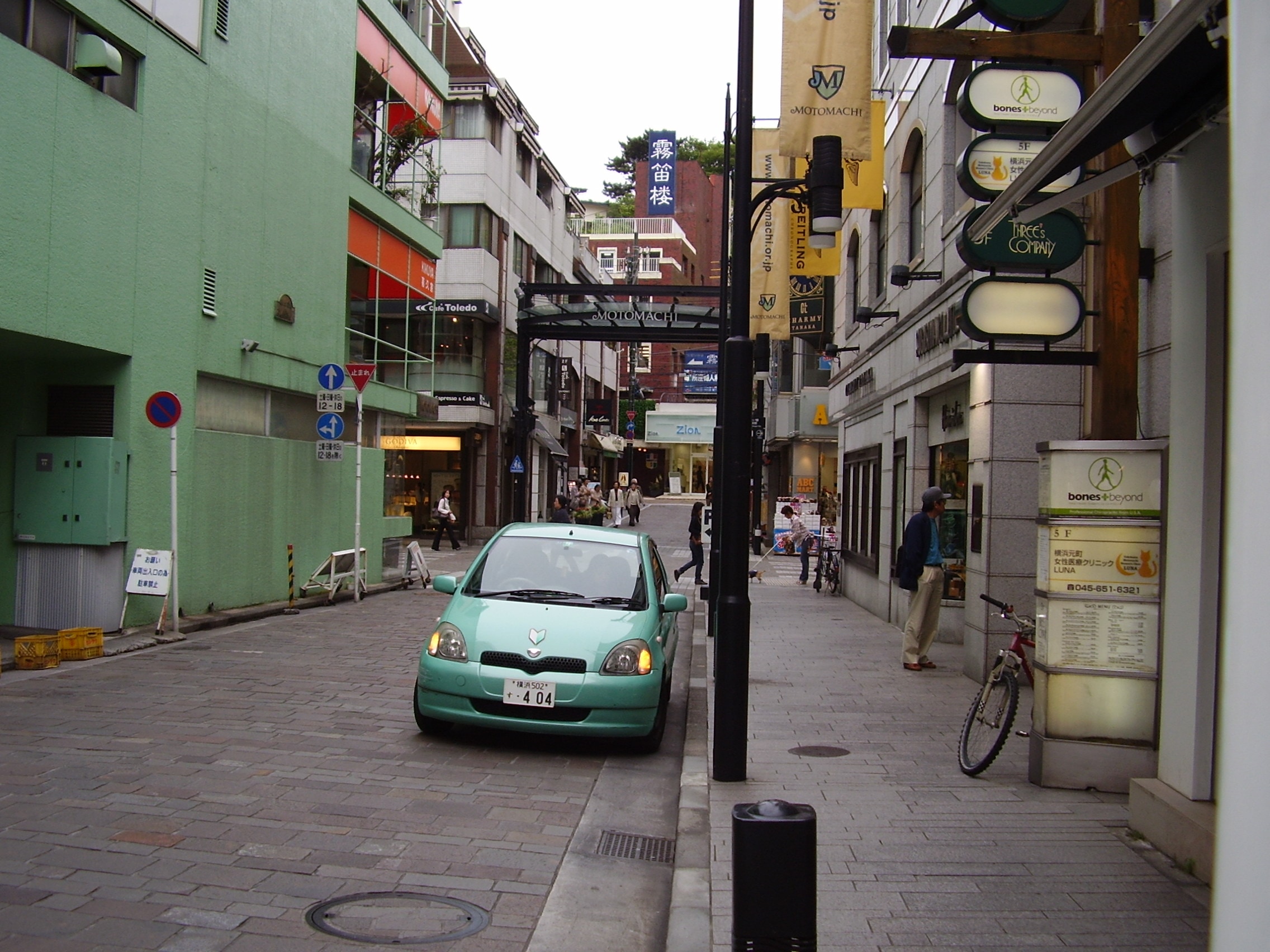
The district’s pedestrian-only street hours, operational weekends and holidays from 12:00 to 18:00, create specific considerations for residential buyers. The Motomachi Shopping Street Association enforces vehicle restrictions that enhance retail foot traffic and atmospheric distinction, but require parking planning for any residential acquisition. Underground or dedicated garage spaces command premiums precisely because surface access is periodically constrained.
Foreign Buyer Mechanics: Financing and Structure
Japan imposes no legal restrictions on foreign land ownership. Freehold acquisition is available to non-residents without citizenship requirements, corporate establishment, or local partner structures. This distinguishes Japan from regional alternatives where foreign land ownership faces statutory limitations.
Financing access for non-residents has tightened selectively in 2026. Major banks including MUFG, SMBC, and Mizuho extend yen-denominated mortgages to foreign buyers at loan-to-value ratios typically ranging 50-70%. Income verification requirements have intensified following 2025 regulatory guidance on anti-money-laundering protocols. Buyers should anticipate documentation demands exceeding those applied to domestic borrowers.
Inheritance tax exposure requires structural attention. Japan applies 相続税 (sozoku-zei, inheritance tax) to worldwide assets for individuals with 住所 (juusho, domicile under Japanese tax law). Non-residents face taxation limited to Japan-situs assets. Treaty relief provisions in US-Japan, UK-Japan, and other bilateral agreements may reduce effective rates, but require advance planning rather than reactive adjustment.
For buyers comparing Motomachi to Tokyo core districts, the financing differential is narrowing. Where Yokohama properties once commanded 50-75 basis point spreads over comparable Tokyo collateral, 2026 pricing has compressed this gap to 25-40 basis points in observed transactions. The arbitrage opportunity in debt cost has diminished even as absolute price levels remain discounted.
Retail Foot Traffic and the Calendar Effect
Motomachi’s commercial ecosystem operates on a distinct seasonal rhythm. The Motomachi Garden Party runs from April 25 through June 7, 2026, transforming the shopping street into a pedestrian-focused retail environment with extended hours and programmed events. The biannual Motomachi Charming Sale campaigns in February and September generate comparable foot traffic spikes.
For residential buyers, this calendar creates predictable patterns in neighborhood density and service availability. Properties on secondary streets experience amplified quiet during non-event periods, while frontage positions on the shopping street itself face periodic congestion. The St. Patrick’s Day Parade and Motomachi Winter Festival add further concentration points in March and February respectively.
Investors evaluating rental yield potential should model occupancy assumptions around these patterns. Short-term rental demand peaks align with event calendars, while long-term tenant preferences may favor addresses with acoustic and access insulation from the pedestrian street core.
Comparative Positioning: Motomachi Against Minatomirai and Kannai
The 2026 land price data illuminates strategic choice points within Yokohama. Minatomirai’s ¥2,200,000/m² and 13.60% appreciation reflects institutional capital concentration, corporate headquarters migration, and tower condominium premiumization. Kannai’s 16.58% surge at ¥1,173,800/m² suggests speculative repositioning ahead of anticipated redevelopment announcements.
Motomachi’s 4.34% trajectory at ¥1,230,500/m² occupies a middle position: established enough to demonstrate sustained demand, moderate enough to avoid pricing out future appreciation. The district’s built environment, characterized by low-rise commercial and mid-rise residential stock, lacks the vertical development potential of Minatomirai’s tower district. This constrains supply expansion and supports gradual price appreciation through scarcity rather than amenity upgrading.
For buyers with ¥300 million and above deployment capacity, Motomachi offers exposure to Yokohama’s economic gravity without the concentration risk of single-district dependence. The Minatomirai Line connection maintains functional integration with the region’s employment and transportation nodes, while the district’s distinct commercial identity provides non-replicable locational attributes.
Koukyuu represents buyers seeking distinguished Tokyo residences in Minato-ku, Shibuya-ku, and Chiyoda-ku, focused exclusively on transactions of ¥300 million and above. A licensed 宅建士 personally handles every stage of the engagement, from the first consultation to the signing. book a private consultation)