
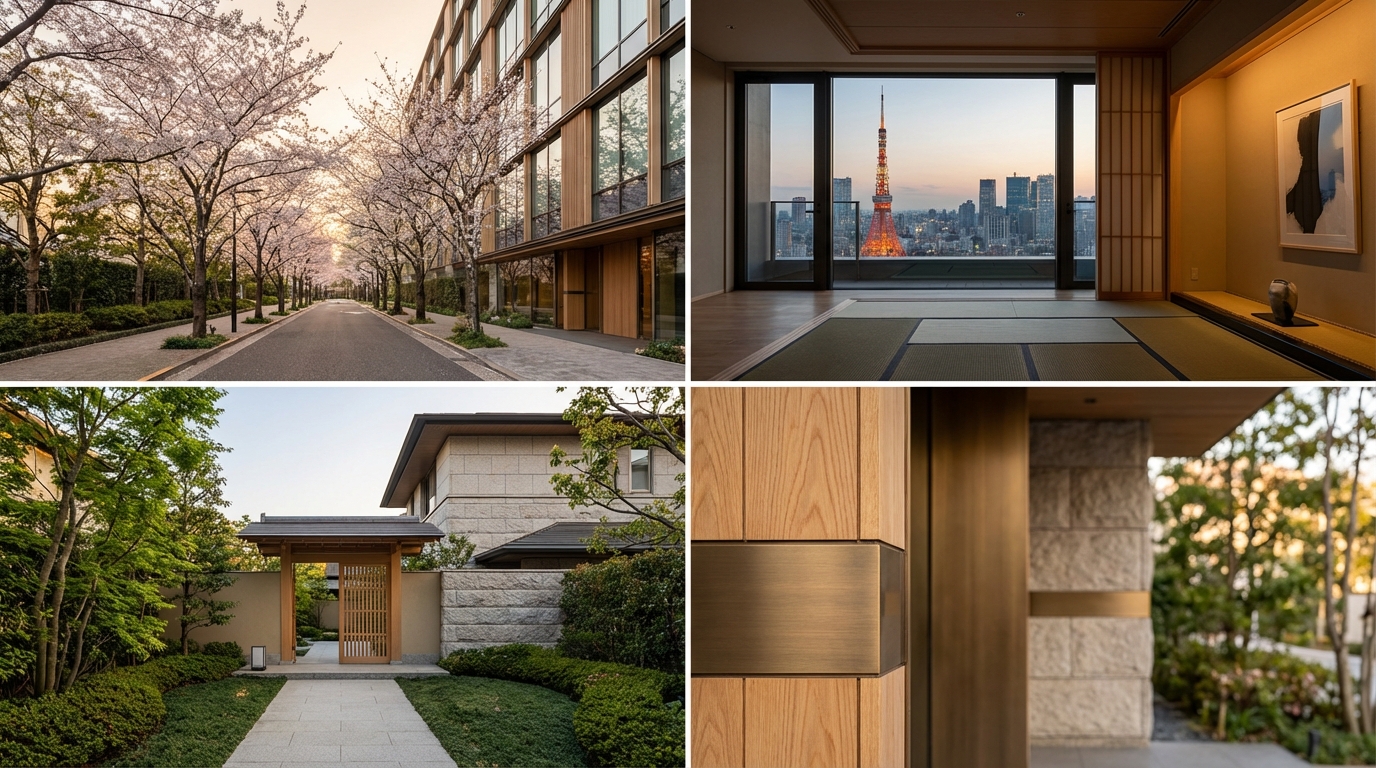
The Japanese academic calendar follows a rhythm distinct from Western systems. Spring marks the beginning, not autumn. Cherry blossoms frame entrance ceremonies in early April, and the school year concludes the following March. For families relocating to Tokyo in 2026, understanding this calendar proves essential for enrollment planning, property search timing, and daily life coordination.
The Japanese school year calendar structure
The Japanese academic year divides into three terms. The first term (一学期, ichigakki) begins in early April and runs through mid-July. The second term (二学期, nigakki) starts in late August or early September and continues until late December. The third term (三学期, sangakki) spans from early January through late March.
This structure differs fundamentally from the September-to-June calendar common in North America and Europe. The April start aligns with Japan’s fiscal year and corporate hiring cycles, creating a synchronized rhythm across education, government, and business sectors.
Key dates for the 2026 academic calendar
First term: April through July 2026
April 6-8, 2026: Entrance ceremonies (入学式, nyūgakushiki) take place at elementary schools, junior high schools, and high schools across Tokyo. These ceremonies mark the formal beginning of the academic year. Parents attend in formal attire, and the events carry significant cultural weight.
April 7-8, 2026: Classes begin for continuing students. The first week involves classroom assignments, textbook distribution, and schedule confirmation.
April 29, 2026: Shōwa Day (昭和の日, Shōwa no Hi), a national holiday. Schools close.
May 3-6, 2026: Golden Week (ゴールデンウィーク, Gōruden Wīku) encompasses multiple national holidays. Constitution Memorial Day falls on May 3, Greenery Day on May 4, and Children’s Day on May 5. Many schools extend the break through May 6, creating a four-day weekend.
July 21, 2026: First term concludes at most Tokyo schools. Closing ceremonies (終業式, shūgyōshiki) take place.
July 22 – August 31, 2026: Summer break (夏休み, natsuyasumi). This period lasts approximately 40 days. Students receive homework assignments, and many participate in club activities, summer schools, or family travel.
Second term: September through December 2026
September 1, 2026: Second term begins. Opening ceremonies (始業式, shigyōshiki) welcome students back.
September 21, 2026: Respect for the Aged Day (敬老の日, Keirō no Hi), a national holiday.
September 22, 2026: Autumnal Equinox Day (秋分の日, Shūbun no Hi), a national holiday.
October 12, 2026: Sports Day (体育の日, Taiiku no Hi), also known as Health and Sports Day. Schools typically hold their annual sports festivals (undōkai, 運動会) in October, though dates vary by institution.
November 3, 2026: Culture Day (文化の日, Bunka no Hi), a national holiday. Many schools schedule cultural festivals (bunkasai, 文化祭) around this date.
November 23, 2026: Labor Thanksgiving Day (勤労感謝の日, Kinrō Kansha no Hi), a national holiday.
December 25-26, 2026: Second term concludes. Winter break (冬休み, fuyuyasumi) begins.
December 26, 2026 – January 7, 2027: Winter break spans approximately two weeks. This period includes New Year celebrations, Japan’s most significant holiday season.
Third term: January through March 2027
January 8, 2027: Third term begins.
January 11, 2027: Coming of Age Day (成人の日, Seijin no Hi), a national holiday celebrating those who turned 20 during the previous year.
February 11, 2027: National Foundation Day (建国記念の日, Kenkoku Kinen no Hi), a national holiday.
March 20, 2027: Vernal Equinox Day (春分の日, Shunbun no Hi), a national holiday.
March 24-25, 2027: Graduation ceremonies (卒業式, sotsugyōshiki) for sixth-year elementary students, third-year junior high students, and third-year high school students.
March 25, 2027: Academic year concludes. Spring break (春休み, haruyasumi) begins, lasting approximately two weeks until the next academic year starts in April 2027.
How long is winter break in Japan
Winter break in Japanese schools typically lasts two weeks, running from late December through early January. For the 2026-2027 academic year, most Tokyo schools close around December 25-26, 2026, and resume classes on January 8, 2027. This duration proves shorter than winter breaks in many Western countries, where December and January breaks often extend three to four weeks.
The brevity reflects the academic calendar’s three-term structure. With the school year ending in March rather than June, winter break functions as a mid-year pause rather than a semester division. The New Year period (お正月, oshōgatsu) holds cultural primacy during this break, with families gathering for traditional celebrations.
School holidays and national observances in 2026
Japan observes 16 national holidays annually. When a national holiday falls on Sunday, the following Monday becomes a substitute holiday (振替休日, furikae kyūjitsu). Schools close for all national holidays.
January 1, 2026: New Year’s Day (元日, Ganjitsu)
January 12, 2026: Coming of Age Day (second Monday of January)
February 11, 2026: National Foundation Day
February 23, 2026: Emperor’s Birthday (天皇誕生日, Tennō Tanjōbi)
March 20, 2026: Vernal Equinox Day
April 29, 2026: Shōwa Day
May 3, 2026: Constitution Memorial Day (憲法記念日, Kenpō Kinenbi)
May 4, 2026: Greenery Day (みどりの日, Midori no Hi)
May 5, 2026: Children’s Day (こどもの日, Kodomo no Hi)
July 20, 2026: Marine Day (海の日, Umi no Hi) (third Monday of July)
August 11, 2026: Mountain Day (山の日, Yama no Hi)
September 21, 2026: Respect for the Aged Day (third Monday of September)
September 22, 2026: Autumnal Equinox Day
October 12, 2026: Sports Day (second Monday of October)
November 3, 2026: Culture Day
November 23, 2026: Labor Thanksgiving Day
Individual schools may designate additional closure days for teacher training, school festivals, or local events. International schools in Tokyo often blend Japanese national holidays with holidays from their home countries, creating hybrid calendars.
Enrollment deadlines and admission processes
Enrollment procedures vary significantly between public schools, private schools, and international schools. Understanding these timelines proves critical for families planning relocations to Tokyo.
Public schools
Public elementary and junior high schools in Tokyo operate on a residence-based assignment system. Families register at their local ward office (区役所, kuyakusho), and students attend the school designated for their residential address.
October – November 2025: Ward offices mail school enrollment notifications (shūgaku tsūchisho, 就学通知書) to families with children entering elementary school in April 2026.
January – February 2026: Health checkups (shūgaku-mae kenkō shindan, 就学前健康診断) for incoming first-graders.
March 2026: Final confirmation of school assignments.
For families moving to Tokyo mid-year, enrollment occurs through the local ward office within days of establishing residence. The residence registration certificate (jūminhyō, 住民票) serves as the primary documentation.
Private schools
Private schools conduct competitive entrance examinations. The process begins well before the academic year starts.
Spring – Summer 2025: School visits and information sessions for families considering April 2026 enrollment.
September – October 2025: Application submissions for elementary, junior high, and high school entrance exams.
November 2025 – January 2026: Entrance examinations. Elementary school exams typically occur in November, while junior high and high school exams take place in January and February.
February 2026: Admission results announced. Families confirm enrollment and pay initial fees.
March 2026: Orientation sessions and uniform fittings.
Elite private schools in areas such as Shibuya (渋谷), Setagaya (世田谷), and Minato (港区) maintain highly competitive admission processes. Acceptance rates at top institutions fall below 20 percent.
International schools
International schools in Tokyo follow varied calendars, with some adhering to the Japanese April start and others maintaining August or September beginnings. Admission processes reflect international standards.
September – December 2025: Applications open for the 2026-2027 academic year at most international schools.
January – March 2026: Admissions testing, interviews, and decisions.
April – August 2026: Late applications considered on a rolling basis, subject to space availability.
International schools in Hiroo (広尾), Roppongi (六本木), and Setagaya serve diplomatic families, expatriate professionals, and Japanese families seeking English-language education. Annual tuition ranges from ¥2 million to ¥3.5 million, with additional fees for enrollment, facilities, and activities.
When not to travel to Japan in 2026
Certain periods present challenges for travel to Japan due to domestic tourism peaks, transportation congestion, and accommodation scarcity.
Late April to early May 2026 (Golden Week): Japan’s longest holiday period sees massive domestic travel. Hotels, trains, and tourist sites reach capacity. Prices surge, and reservations become difficult to secure weeks in advance.
Mid-August 2026 (Obon): The Buddhist festival of Obon (お盆) prompts return visits to ancestral homes. Transportation networks experience peak demand from August 13-16, 2026. Many businesses close during this period.
Late December 2026 to early January 2027 (New Year): The New Year holiday period (oshōgatsu) represents Japan’s most significant annual celebration. December 28 through January 3 sees widespread business closures, transportation congestion, and limited restaurant availability.
Late March 2026 (cherry blossom season): While beautiful, peak cherry blossom viewing (hanami, 花見) creates intense competition for accommodations in Tokyo, Kyoto, and other major cities. The exact timing varies by weather, but late March through early April typically sees the highest demand.
For families relocating to Tokyo, these periods require advance planning. Property viewings, school visits, and administrative procedures become more difficult to schedule during major holidays.
Academic calendar variations across school types
While the three-term structure remains standard, implementation details vary by institution type.
Public schools
Public schools adhere closely to the Ministry of Education, Culture, Sports, Science and Technology (MEXT) guidelines. Term dates remain consistent across Tokyo’s 23 wards, with minimal variation. Saturday classes have largely been eliminated, with most public schools operating Monday through Friday.
Private schools
Private schools maintain greater autonomy over their academic calendars. Some prestigious institutions extend the school year by reducing break periods or adding Saturday classes. Others align more closely with international calendars to accommodate study abroad programs and university application timelines.
International schools
International schools in Tokyo operate on diverse calendars reflecting their educational systems. American-curriculum schools typically run from late August to mid-June. British-curriculum schools often follow a September-to-July calendar with three terms. Schools following the International Baccalaureate program may align with either system.
This diversity requires careful attention from families with children in different school types or those planning transitions between systems.
Practical considerations for families
Property search timing
Families relocating to Tokyo for the April school start should begin property searches in the preceding autumn. The rental market experiences peak activity from January through March as companies transfer employees and families secure housing before the school year begins.
Neighborhoods such as Azabu (麻布), Hiroo (広尾), and Shirokane (白金) see particularly high demand from families seeking proximity to international schools and established expatriate communities. Properties in school catchment areas for prestigious public schools command premium rents.
Daily schedule coordination
The Japanese school day typically begins at 8:30 AM and concludes at 3:00-3:30 PM for elementary students, later for junior high and high school students. After-school club activities (bukatsudō, 部活動) extend the day significantly, particularly at the secondary level.
Working parents often require supplementary childcare arrangements. After-school programs (gakudō, 学童) serve elementary students until 6:00 or 7:00 PM, though availability varies by ward and demand often exceeds capacity.
Cultural events and parental involvement
Japanese schools expect substantial parental participation. Parent-teacher association meetings (PTA) occur regularly. School events such as sports days, cultural festivals, and class observations (jugyō sankan, 授業参観) require parental attendance.
The expectation of maternal involvement remains particularly strong, though evolving gradually. Families should anticipate daytime commitments throughout the school year.
The 2025-2026 transition period
For families arriving in Tokyo during the 2025-2026 academic year, mid-year enrollment presents specific considerations. While public schools accommodate transfers throughout the year, private and international schools maintain limited mid-year availability.
The period from January through March 2026 offers a transitional window. Children can complete their previous school year abroad and begin the Japanese academic year in April 2026. This alignment minimizes curriculum disruption and allows for summer relocation, providing time for housing searches and administrative procedures.
Families arriving mid-academic year should engage with schools immediately. Public school enrollment through ward offices proceeds quickly once residence registration completes. Private and international schools require individual contact and may maintain waiting lists.
Information resources and planning tools
The Ministry of Education provides comprehensive information on the Japanese education system, though much content appears only in Japanese. Ward offices in Tokyo offer multilingual support for public school enrollment, with English, Chinese, and Korean interpretation commonly available.
International school associations maintain current information on member institutions, admission processes, and calendar details. The Tokyo Metropolitan Government website provides educational resources and links to ward-level services.
For families navigating school selection, property search, and relocation logistics simultaneously, the complexity proves substantial. The coordination of lease timing, school applications, and visa processing requires attention to multiple deadlines across different systems.
Koukyuu represents buyers seeking properties in Tokyo’s most distinguished residential addresses, with particular expertise serving families requiring proximity to international schools and established communities. For a confidential conversation about property search timing aligned with academic calendar considerations, contact our concierge team.