


Koukyuu 高級
Reviewed by Koukyuu’s in-house Takken-shi — Japan’s nationally licensed real-estate transaction specialist. Every figure is stress-tested against actual Minato-ku closings Koukyuu represents buyers on, with full attention to non-resident financing, visa-linked ownership structures, and cross-border tax — areas generic guides routinely skip.
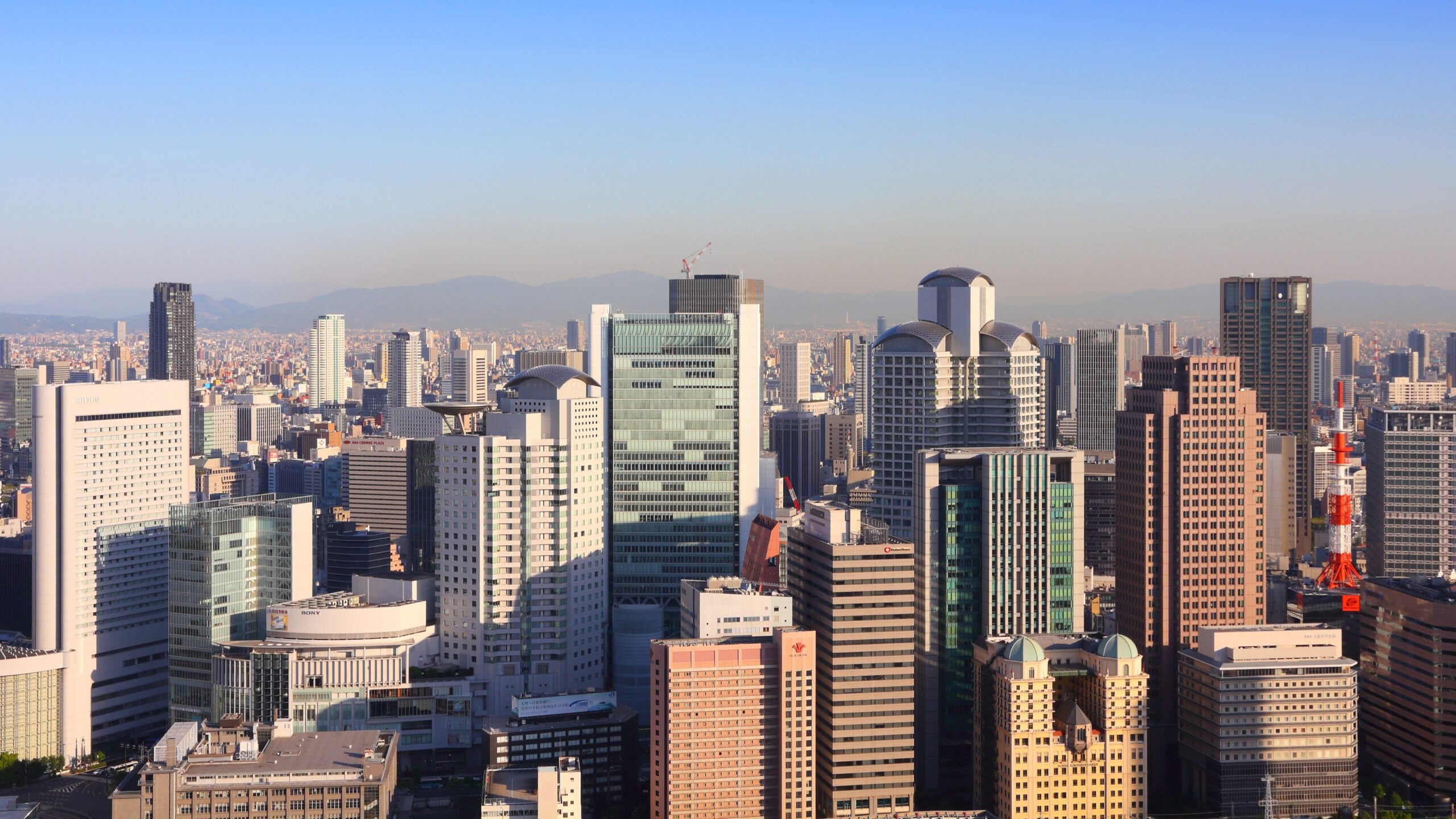
Residential land prices in Osaka’s Kita-ku (北区) have risen more than 50% over the past three years, and used condominiums in Chūō-ku (中央区) now trade at an average of ¥870,000 per square metre. For foreign buyers weighing a purchase in Japan’s second city, 2026 presents a market that is still moving, but one where the procedural details matter as much as the price. This guide covers what you need to know before you sign.
Osaka’s Property Market in 2026: Where Prices Stand
Osaka Prefecture’s used-home market averaged ¥540,000 per square metre in 2025, a 5.4% increase year-on-year from ¥516,000. Within Osaka City itself, that figure rises to ¥630,000 per square metre, representing a 17% gain over the prior three years. The urban core is leading the acceleration. Six wards in particular have driven most of the movement: Chūō-ku, Kita-ku, Nishi-ku (西区), Namba-ku (浪速区), Tennōji-ku (天王寺区), and Fukushima-ku (福島区).
At the ward level, the spread is significant. Kita-ku averages ¥850,000 per square metre, propelled by the グラングリーン大阪 (Grand Green Osaka, the Umekita Phase 2 mixed-use redevelopment) reaching full operation. Nishi-ku has climbed approximately 95% over ten years, now sitting at ¥800,000 per square metre. Tennōji-ku, which draws buyers partly for its school catchment quality, trades at ¥700,000 per square metre. Buyers with a family-oriented brief and a larger land requirement often look further out: Suita-shi (吹田市), anchored by the Senri New Town corridor, averages ¥490,000 per square metre.
The Yumeshima and Sakishima bay area in Minato-ku (港区) and Konohana-ku (此花区) has posted 20-40% price increases since the integrated resort and Expo announcements. The 2025 Expo effect is now largely priced in, but the IR pipeline continues to support demand in that corridor. New-build supply remains constrained by construction-cost inflation, which is pushing more buyers into the resale market. Osaka Prefecture residential land is forecast to rise a further 2.8% in 2026.
For a broader view of what different price points buy across Japan’s major cities, the Koukyuu analysis of house costs in Japan in 2026 provides useful context.
Foreign Ownership Rights in Japan: What the Law Actually Says
Japan imposes no nationality-based restrictions on foreign ownership of real estate. There is no minimum investment threshold, no reciprocity requirement, and no special government approval process. A foreign national can hold 所有権 (shoyu-ken, freehold title) over both land and buildings outright. This distinguishes Japan from many comparable markets in Asia and Europe.
Visa or 永住権 (eijuuken, Japanese permanent residency) status does not affect your legal right to purchase. You can buy as a tourist, as a working-visa holder, or as a non-resident with no Japanese address. That said, your residency status has significant downstream effects on mortgage access, tax treatment at exit, and the administrative steps required to complete the transaction. Those distinctions are covered below.
For a full treatment of the legal framework, including the difference between freehold land ownership and leasehold structures, see the complete guide to buying property in Japan as a foreigner.
Acquisition Taxes and Transaction Costs: The Full Stack
Buyers in Japan face a layered set of one-time costs at acquisition. Understanding the full stack before you make an offer is essential to accurate budgeting.
不動産取得税 (Real Estate Acquisition Tax)
不動産取得税 (fudosan shutoku-zei, the one-time prefectural real estate acquisition tax) is levied on all buyers regardless of nationality. The standard rate is 4% of 固定資産税評価額 (kotei-shisan-zei hyoka-gaku, the fixed-asset assessed value), which is typically 60-70% of the market purchase price. A special reduced rate of 3% applies to land and residential buildings through 31 March 2027. Non-residential buildings remain at 4%.
For qualifying residential properties with a floor area between 50 and 240 square metres, up to ¥12,000,000 is deducted from the assessed value before the 3% rate is applied. Certified 長期優良住宅 (choki-yuryo-jutaku, long-term superior housing) raises that deduction to ¥13,000,000, though this enhanced deduction expired on 31 March 2026. The land portion receives an additional reduction: the assessed value is halved for tax-base calculation purposes through 31 March 2027, and a further formula-based reduction frequently brings the land tax to zero on residential plots.
If you have no Japanese address, you are required to designate a 納税管理人 (nozei-kanri-nin, a tax agent resident in Japan) and file the relevant application with the Osaka Prefectural Tax Office before the tax notice arrives. The tax amount itself is identical for residents and non-residents; only the payment channel differs. Osaka Prefecture publishes an English-language notice on this requirement at pref.osaka.lg.jp.
Registration, Stamp Duty, and Agent Commission
登録免許税 (toroku-menkyo-zei, registration and licence tax) on an ownership transfer is 2.0% of assessed value as a standard rate. A reduced rate of 1.5% applied to residential property purchased for self-use through 31 March 2026; buyers completing after that date should confirm the current applicable rate with their 司法書士 (shihoshoshi, judicial scrivener), who is required for the 登記 (touki, the transfer of legal title recorded at the Legal Affairs Bureau). Judicial scrivener fees typically run ¥50,000 to ¥150,000 for a standard transaction.
印紙税 (inshi-zei, stamp duty) on the 売買契約書 (baibai-keiyakusho, the purchase and sale agreement) ranges from ¥10,000 to ¥60,000 depending on contract value.
仲介手数料 (chukai-tesuryo, agent commission) is capped by statute at the purchase price multiplied by 3%, plus ¥60,000, plus 10% consumption tax. On a ¥100 million property, that amounts to ¥3.36 million. In Japan, both buyer and seller pay their respective agents separately.
Annual holding costs after acquisition include 固定資産税 (kotei-shisan-zei, fixed-asset tax) at 1.4% of assessed value and 都市計画税 (toshi-keikaku-zei, city-planning tax) at 0.3% in Osaka City. Residential land benefits from a 住宅用地特例 (jutaku-yochi-tokurei) reduction that brings the fixed-asset tax base down to one-sixth of assessed value for lots up to 200 square metres. In practice, annual holding costs for a detached house in Osaka run approximately ¥200,000 to ¥500,000; for a マンション (manshon, Japanese usage meaning freehold condominium) they range from ¥400,000 to ¥800,000 including management fees.
Exit Planning: Capital Gains and the Non-Resident Tax Position
HNW buyers should model the exit tax position before purchase, not after.
譲渡所得税 (joto-shotoku-zei, capital gains tax on disposal) applies at 20.315% for properties held more than five years as of 1 January of the sale year (comprising 15.315% income tax and 5% resident tax). Short-term disposals of five years or fewer are taxed at 39.63%. These rates apply to foreign sellers as they do to Japanese nationals.
For non-resident sellers, the buyer is required to withhold 10.21% of the purchase price at source under 源泉徴収 (gensen-choshu, withholding tax) rules if the price exceeds ¥100 million or if the property is not the seller’s primary residence. The seller then files a Japanese tax return to reconcile the withheld amount against actual liability.
The 居住用財産の3,000万円特別控除 (kyojuyo-zaisan no 3,000-man-en tokubetsu-kojo, the ¥30 million primary-residence deduction) is available to sellers who occupied the property. Foreign buyers who later sell as non-residents generally cannot claim this deduction unless they were resident in Japan at the time of sale. If your exit strategy depends on this relief, confirm your residency position with a 税理士 (zeirishi, certified tax accountant) before you exchange contracts.
For inherited properties, the holding period for capital gains purposes runs from the original decedent’s acquisition date. A separate 空き家特例 (akiya-tokurei, vacant-home special deduction) of ¥30 million, reduced to ¥20 million where there are three or more heirs, applies to the sale of a sole-occupant decedent’s home following seismic retrofit or demolition. That provision expires on 31 December 2027.
Mortgage Access and the Cash-Buyer Reality
Japanese banks require Japanese residency or permanent residency for standard 住宅ローン (jutaku-ron, residential mortgage) products. Non-resident foreign buyers are effectively excluded from mainstream mortgage lending. Some regional banks and 信託銀行 (shintaku-ginko, trust banks) offer non-resident products, but terms vary considerably and loan-to-value ratios are typically lower.
In practice, the majority of HNW foreign buyers transact in cash or arrange financing offshore against existing assets. This is not a disadvantage in a negotiation: a cash buyer with a clear title chain and a competent 宅建士 (takken-shi, Japan’s licensed real-estate transaction specialist) handling due diligence can move from accepted offer to 重要事項説明 (juuyou-jikou-setsumei, the statutory pre-contract disclosure meeting) to signed contract in three to four weeks.
The 手付金 (tetsuke-kin, the earnest-money deposit) is typically 10% of the purchase price and is paid at contract signing. If the buyer withdraws after this point without a contractual basis, the deposit is forfeited. If the seller withdraws, they must return double the deposit. Understanding this mechanic before you enter the process matters.
As of early 2026, most residential properties in Osaka sell slightly below their asking price, with a typical sale-to-asking ratio of around 96%. That figure suggests measured negotiating room exists, but it is not a market where aggressive discounting is standard practice on well-located stock.
For buyers considering both Osaka and Tokyo, the Koukyuu analysis of Japan’s most expensive houses in 2026 illustrates how the two markets diverge at the top end.
The Purchase Process: Step by Step for Foreign Buyers
The procedural sequence for buying a house in Osaka follows the national framework, with a few Osaka-specific administrative steps.
First, identify the property and agree on a price in principle. Your agent will then prepare the 重要事項説明, a statutory pre-contract disclosure document that must be explained in person by a licensed 宅建士 before you sign anything. This document covers title status, zoning, building code compliance, any encumbrances, and the material facts of the transaction. Read it carefully. If it is not available in English, have it translated before the meeting.
At contract signing, the 手付金 is paid and the 売買契約書 is executed. The balance is paid on the closing date, at which point the 司法書士 files for 登記 at the Legal Affairs Bureau. Title transfer is typically completed within one to two weeks of the closing payment.
If you have no Japanese address, designate your 納税管理人 before the acquisition tax notice arrives. Osaka Prefecture typically issues that notice two to six months after the closing date.
Note that as of 1 April 2024, 相続登記 (souzoku-touki, inheritance registration) became mandatory for all ownership transfers by inheritance, with a three-year window from the date you learn of the inheritance. Non-compliance carries a fine of up to ¥100,000. This applies retroactively to unregistered inheritances predating 2024. If you are acquiring a property that has passed through an estate, verify that the title chain is fully registered before proceeding.
Koukyuu is a private buyer’s advisory for distinguished Tokyo residences in Nishi-Azabu (西麻布), Kita-Aoyama (北青山), and Azabudai Hills (麻布台ヒルズ), focused exclusively on transactions of ¥300 million and above, with a licensed 宅建士 personally handling every stage from the first consultation through to signing. To begin a private conversation, book a private consultation).