


Reviewed by a Koukyuu Takkenshi (宅地建物取引士)
Fact-checked against current Japanese real-estate law, tax rules, and market data by a nationally licensed specialist who oversees luxury transactions across Minato, Shibuya, and Chiyoda. In Japan, a Takkenshi is legally required to sign off on every property transaction, and about 15% of candidates pass the exam each year.
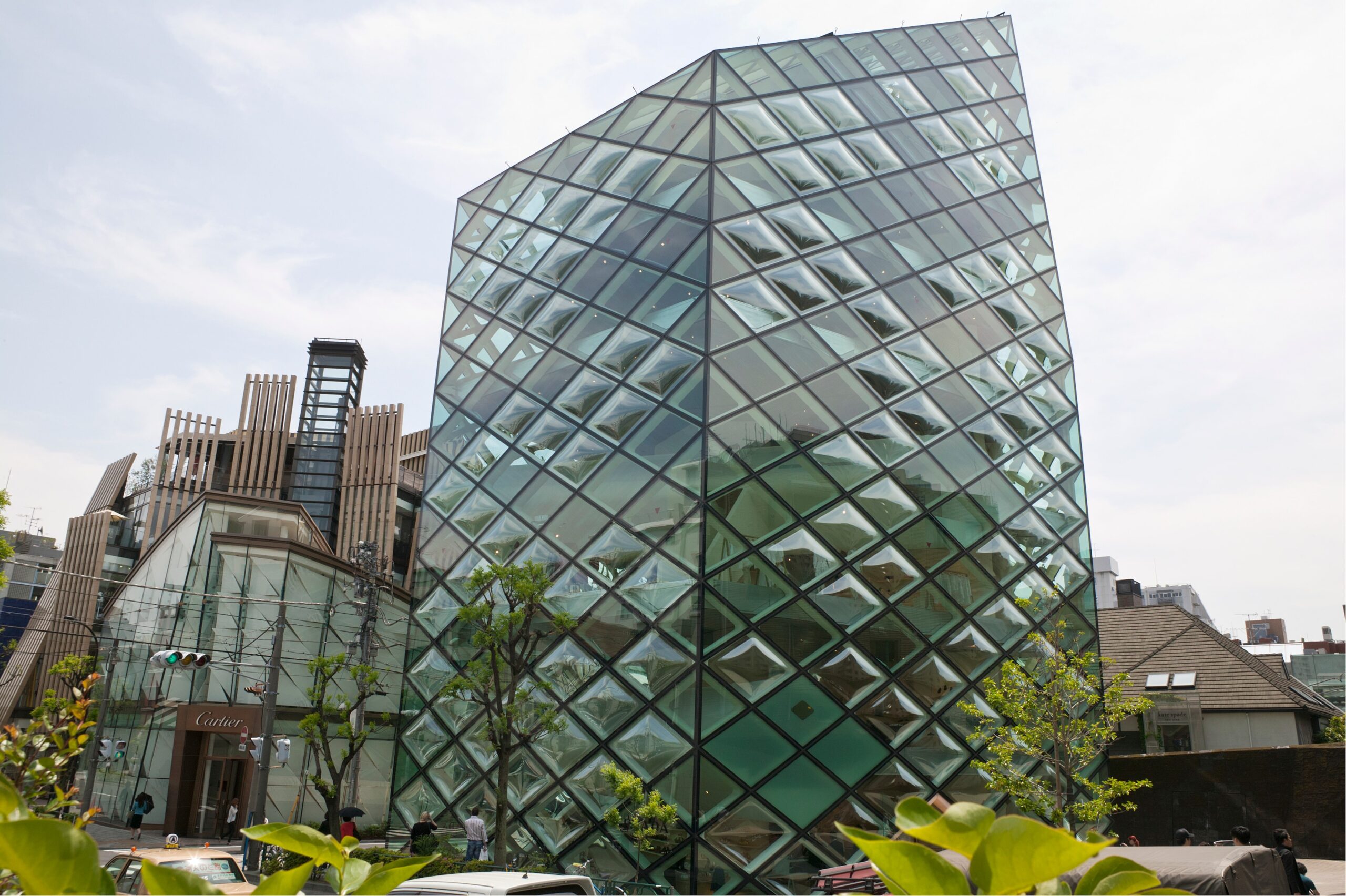
The tallest residential tower ever completed in the Aoyama (青山) and Omotesando (表参道) corridor opened its doors in February 2026. At 38 floors and approximately 160 metres, the Omotesando Grid Tower (表参道グリッドタワー), developed by Mitsui Fudosan (三井不動産) at Minami-Aoyama 3-chome 8-35 in Minato-ku (港区), resets the ceiling for what high-rise living in central Tokyo looks like. It is not alone. Grand City Tower Tsukishima (グランドシティタワー月島), a 58-floor, 1,285-unit project by a four-developer consortium including Sumitomo Fudosan (住友不動産), is completing in late April 2026 in Chuo-ku (中央区). Park Court Aoyama Takagi-cho The Tower (パークコート青山高樹町 ザ タワー) by Mitsui Fudosan Residential (三井不動産レジデンシャル) is scheduled for occupancy in October 2026. For a foreign buyer trying to navigate this market, the supply picture is rich and the structural details are consequential.
What the 2026 Supply Actually Looks Like
Three projects dominate the conversation for high-net-worth buyers this year, and they differ from one another in ways that matter at the point of purchase.
Omotesando Grid Tower is a rental-only building. All 109 residential units on floors 16 through 38 are available to lease, covering layouts from 1LDK to 4LDK with the largest plans reaching 200 m². Amenities include a view lounge oriented toward Tokyo Tower, a fitness facility, and concierge services. Soho House Tokyo, the London-based members’ club, occupies floors 11 through 14 of the same building, its first Japan location. No public asking rents have been released as of April 2026, but the building is a four-minute walk from Tokyo Metro Omotesando Station (表参道駅), a location that commands a premium in any comparison. For foreign buyers on work visas who prefer flexibility over ownership, or who are not yet ready to commit capital in Japan, this building represents the clearest new option in the Aoyama submarket. Grand City Tower Tsukishima is a purchase product. At 58 floors and 144,276 m² of total floor area, it is the largest single residential tower completing in Tokyo in 2026. Of its 1,285 units, 915 are offered for general sale across 1LDK to 3LDK layouts. The location, five minutes on foot from Tokyo Metro Tsukishima Station (月島駅), sits in Chuo-ku rather than Minato-ku, which places it in a different price band from Aoyama or Azabu (麻布). For buyers whose priority is scale, floor count, and direct waterfront adjacency rather than a specific Minato-ku address, this is the most significant new supply in 2026. Park Court Aoyama Takagi-cho The Tower is a 21-floor, 85-unit building in Minami-Aoyama 6-chome, Minato-ku, with 53 units available for general sale. Pricing released in February 2026 shows a 61.70 m² 2LDK at ¥239 million and an 80.00 m² 2LDK at ¥385 million. The building sits on elevated ground at approximately 31 metres above sea level and is an eight-to-nine-minute walk from Omotesando Station. Monthly management fees run ¥45,660 to ¥59,200, with repair reserves of ¥21,600 to ¥28,000 per month.For context on what price appreciation looks like in this submarket, resale マンション (manshon, Japanese usage for freehold condominium) prices for a 10-year-old, 70 m² unit near Omotesando Station have risen approximately 13.68%, or about ¥15 million, over the past three years, according to LIFULL HOME’S index data. Rental rates for equivalent units in the same area are up 10.41%, or roughly ¥37,000 per month, over the same period.
For a broader orientation to Tokyo apartments for sale in 2026, including neighborhood-by-neighborhood pricing benchmarks, the structural comparisons are worth reviewing before narrowing to a specific building.
The Leasehold Question Every Foreign Buyer Must Resolve
Park Court Aoyama Takagi-cho The Tower is built on 定期借地権 (teiki-shakuchiken, fixed-term land leasehold) land. The lease expires in April 2098, approximately 70 years from now. The building price and the prepaid land rent (前払地代) are separated within the total purchase figure. Buyers also pay a monthly 解体準備金 (kaitai-junbikin, demolition reserve fund) of ¥9,550 to ¥33,700 per month, in addition to standard management and repair fees. At lease expiry, the land reverts to the landowner. The unit cannot be passed to heirs as a permanent freehold asset.
Resale and subletting are permitted during the lease term, which means the asset is not illiquid. However, as the 2098 expiry date approaches over decades, the market value of remaining lease years will compress in ways that freehold ownership does not. For foreign buyers whose primary concern is long-term capital preservation or estate planning across jurisdictions, leasehold structures require specific legal advice before signing.
Freehold high-rise purchases, where the buyer owns both the unit and a proportional share of the land beneath the building, carry no such time-limit risk. Grand City Tower Tsukishima is a freehold product. The distinction is not always flagged clearly in English-language listings, and it is one of the first questions to resolve when evaluating any Tokyo tower.
If the vocabulary of Japanese apartment layouts is new to you, the guide to Japanese apartment layout terms including 1K, 1LDK, and 2DK provides a practical reference before you begin comparing floor plans.
Environmental Certification and Its Financial Consequences
All three major 2026 completions carry green building certifications. Omotesando Grid Tower holds ZEB Ready (office portions) and ZEH-M Oriented (residential portions) ratings, plus a DBJ Green Building four-star designation. The building used low-carbon steel branded Kobenable Steel in construction. Park Court Aoyama carries ZEH-M Oriented certification. Park City Nakano The Tower Breeze (パークシティ中野ザタワーブリーズ), a 20-floor, 262-unit Mitsui Fudosan Residential project that completed in March 2026 in Nakano-ku (中野区), holds both 免震 (menshin, seismic isolation) and ZEH-M Oriented certifications.
These ratings are not only environmental markers. Under Japan’s 住宅ローン減税 (juutaku-rouun-genzei, residential mortgage deduction) rules as reformed in FY2024, ZEH-certified new construction qualifies for the highest loan deduction ceiling, calculated on a borrowing base of ¥45 million. For foreign buyers using domestic Japanese financing, the practical effect depends on residency status and lender eligibility criteria, which vary significantly between institutions. Non-resident buyers and those on certain visa categories face more constrained mortgage access than permanent residents. Confirming eligibility with a Japanese bank before submitting a purchase application is not optional; it is a prerequisite.
The 永住権 (eijuuken, Japanese permanent residency) question surfaces here in a specific way. Buyers holding permanent residency generally access the same mortgage products as Japanese nationals. Buyers on work visas, dependent visas, or investor visas face lender-by-lender discretion. Some major Japanese banks will not lend to non-residents at all. Others will lend to long-term visa holders at higher deposit requirements. The gap between what a property costs and what a foreign buyer can finance domestically is often larger than expected.
The Due Diligence Process in a High-Rise Purchase
The statutory disclosure process in Japan requires a 重要事項説明 (juuyou-jikou-setsumei, the statutory pre-contract disclosure meeting) to be conducted by a licensed 宅建士 (takken-shi, Japan’s licensed real-estate transaction specialist) before any contract is signed. This document covers title status, building use restrictions, leasehold conditions if applicable, repair fund balances, outstanding litigation, and dozens of other material facts about the property. In practice, many Tokyo agencies employ unlicensed salespeople for the entire sales process and produce a licensed specialist only at this single statutory moment.
For a high-rise purchase at the price points discussed here, that model creates a structural gap. The person who guided you through viewings, negotiated the price, and shaped your understanding of the asset may have had no statutory qualification to advise on any of it. At Koukyuu, a licensed 宅建士 personally handles every stage of the engagement, from initial consultation through viewings, negotiation, due diligence, and contract signing. The ¥300 million minimum transaction floor means the agency works exclusively at the level where that continuity is most consequential.
For a concrete example of what a high-rise purchase at this level looks like in practice, the Park Court Jingu Kita-Sando The Tower listing at ¥490 million for a 2LDK provides a useful reference point on specification, floor plan, and pricing structure.
The 手付金 (tetsuke-kin, the earnest-money deposit, typically 10% of the purchase price) is paid at contract signing and is forfeit if the buyer withdraws without a contractual basis. On an ¥800 million purchase, that is ¥80 million at risk from the moment the contract is executed. The due diligence phase before signing is where the licensed specialist’s role is most material, and it is the phase most commonly compressed or delegated in standard Tokyo agency practice.
What Is Coming After 2026
The next significant project in the Omotesando corridor is already permitted. The 北青山三丁目地区市街地再開発事業 (Kita-Aoyama 3-chome Urban Redevelopment Project) will produce a tower of approximately 180 metres and 38 floors on a site between Omotesando and Gaienmae (外苑前) stations, on land formerly occupied by Tokyo Metropolitan Housing. The project incorporates office, retail, and hotel uses and is targeted for completion in FY2029. The immediate residential market impact is indirect: the redevelopment removes older, lower-density stock from a constrained supply zone and will add institutional-grade commercial density to a neighborhood already pricing at a premium.
For buyers considering whether to act in 2026 or wait, the pipeline does not suggest a softening in the Minami-Aoyama and Kita-Aoyama (北青山) submarkets over the next three to four years. Supply additions in those specific zones are limited and heavily mixed-use. The residential units that do come to market in premium Minato-ku locations are absorbed quickly, and the resale appreciation data from the past three years supports that pattern.
Koukyuu is a private buyer’s advisory for distinguished Tokyo residences in Omotesando, Kita-Aoyama, Nishi-Azabu (西麻布), and Azabudai Hills (麻布台ヒルズ), focused exclusively on transactions of ¥300 million and above, with a licensed 宅建士 personally handling every stage from first consultation to signing. To begin a private conversation, book a private consultation).