

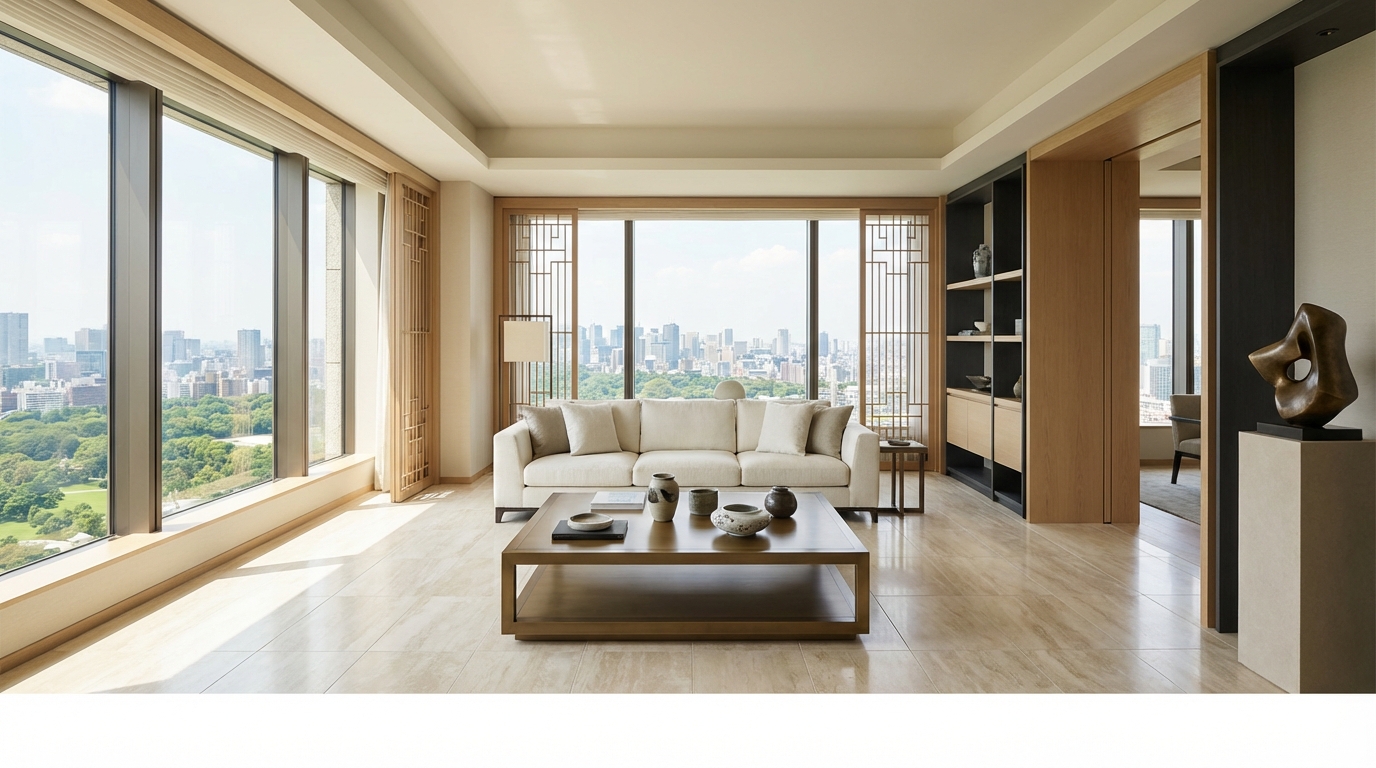
The Tokyo furniture market operates on a spectrum few international buyers anticipate. A three-seat sofa ranges from ¥29,800 at Nitori to ¥850,000 at a Roppongi showroom specializing in Italian imports. The difference lies in materials, construction, and longevity. For those furnishing a Tokyo residence, understanding where each retailer positions itself saves both time and capital.
Budget furniture stores in Tokyo
Nitori: Japan’s answer to accessible furniture
Nitori dominates the budget furniture segment across Tokyo with over 40 locations in the metropolitan area as of 2026. The Shibuya flagship spans five floors, carrying everything from ¥2,990 cushions to complete bedroom sets under ¥100,000. The quality reflects the price point: particleboard construction, simple joinery, fabrics that show wear within two years.
The advantage lies in immediacy. Most items stock in-store for same-day collection. Delivery within Tokyo’s 23 wards typically costs ¥3,000-¥5,000 and arrives within three days. Assembly services add another ¥5,000-¥15,000 depending on complexity.
Nitori’s N-Sleep mattress line offers reasonable value for temporary housing or rental properties. The premium model at ¥39,900 uses pocket coil construction adequate for a guest bedroom. The warranty extends five years, standard across their mattress range.
IKEA Tokyo locations and logistics
IKEA operates three Tokyo-area stores: Tachikawa, Funabashi, and the 2024-opened Harajuku format store. The Harajuku location occupies a different model—compact, urban, focused on smaller items and room displays rather than warehouse inventory. For furniture pieces requiring immediate collection, Tachikawa or Funabashi serve better.
IKEA’s Tokyo pricing runs approximately 15% higher than European locations due to import costs and currency fluctuations. A Klippan two-seat sofa costs ¥34,990 in Tokyo versus roughly ¥29,000 equivalent in Sweden. The Billy bookcase, IKEA’s volume leader globally, retails at ¥6,999 for the standard size.
Delivery from IKEA to central Tokyo addresses costs ¥3,990 for small items, scaling to ¥9,990 for large furniture. Assembly services through TaskRabbit integration launched in Tokyo in 2025, charging ¥8,000-¥25,000 based on item complexity and assembly time.
Other budget chains worth consideration
Shimachu Home’s Assist operates 15 Tokyo locations, positioning between Nitori and mid-range retailers. Their original furniture line uses slightly better materials than Nitori at 20-30% higher prices. A solid wood dining table measuring 150cm runs ¥58,000 compared to Nitori’s ¥39,900 veneer equivalent.
Cainz expanded into furniture in recent years, leveraging their home center footprint. The Cainz Style furniture line focuses on simple, functional pieces. Quality matches Nitori with marginally better fabric options on upholstered items.
Mid-range furniture stores in Tokyo
Unico: contemporary Japanese design
Unico maintains six Tokyo showrooms in Shibuya (渋谷), Shinjuku (新宿), Jiyugaoka (自由が丘), Kichijoji (吉祥寺), Futakotamagawa (二子玉川), and Shirokane (白金). The brand positions itself as accessible design for urban professionals, with most pieces ranging ¥80,000-¥300,000.
The construction quality rises substantially above budget retailers. Unico uses solid oak, walnut, and ash for frames with traditional joinery on higher-end pieces. Their Albero sofa series, priced ¥198,000-¥268,000 depending on configuration, features kiln-dried hardwood frames and eight-way hand-tied springs—construction methods absent at budget retailers.
Lead times extend 6-12 weeks for most upholstered furniture, as Unico manufactures domestically in Kyushu. Fabric customization adds no additional cost, offering 40+ options across their standard lines. The warranty covers three years on frames, one year on fabrics.
Actus: Scandinavian influence in Tokyo
Actus operates 12 Tokyo locations, including flagship stores in Shinjuku and Nihonbashi (日本橋). The retailer mixes imported Scandinavian brands with original designs manufactured in Japan and Southeast Asia. Price points span ¥100,000-¥500,000 for major pieces.
The Shinjuku showroom dedicates an entire floor to Herman Miller, Vitra, and Carl Hansen & Søn—high-end international brands rarely discounted. An original CH24 Wishbone Chair costs ¥98,000 at Actus, identical to authorized dealers globally.
Actus original furniture uses mixed construction quality. Their lower-priced items (¥80,000-¥150,000) often use engineered wood with veneer, while pieces above ¥200,000 typically feature solid wood construction. Sales occur twice yearly in January and July, offering 20-30% reductions on floor models and discontinued fabrics.
Idee: design-forward furnishings
Idee positions slightly above Actus in both price and design ambition. The Jiyugaoka flagship serves as the primary Tokyo showroom, supplemented by shop-in-shops at select department stores. Most pieces range ¥150,000-¥600,000.
Idee collaborates with Japanese designers including Keiji Ashizawa and Norm Architects. The resulting furniture emphasizes clean lines, quality materials, and longevity. A Keiji Ashizawa dining table in solid oak measuring 180cm costs ¥385,000—expensive by Tokyo mid-range standards but reasonable compared to equivalent European design furniture.
The store also carries international brands: Fritz Hansen, Cassina, Fredericia. These items price identically to other authorized Tokyo dealers, meaning Idee functions partly as a curated showroom for those seeking design furniture without navigating multiple specialty stores.
Muji furniture: minimalism as philosophy
Muji operates 40+ Tokyo locations, though only six carry substantial furniture inventory. The Yurakucho (有楽町) flagship dedicates three floors to furniture and home goods, offering the most complete selection in central Tokyo.
Muji furniture reflects the brand’s broader philosophy: simple, functional, anonymous design. A solid oak dining table measuring 150cm costs ¥89,900. The construction uses finger-jointed oak—solid wood but with visible joints every 30-40cm. This approach reduces costs while maintaining structural integrity.
The Muji sofa series prices ¥79,900-¥149,900, featuring removable, washable covers and modular construction. The frames use plywood rather than solid wood, appropriate for the price point. Cushions compress noticeably after 2-3 years of daily use, based on customer reviews aggregated on Kakaku.com.
Muji offers customization through their “Fit” furniture line, allowing customers to specify dimensions for shelving units and storage systems. Production takes 3-4 weeks, with costs running 30-40% above standard items.
High-end and luxury furniture in Tokyo
Cassina IXC: Italian design in Aoyama
Cassina IXC operates the primary Tokyo showroom for Cassina, B&B Italia, Maxalto, and affiliated brands in Aoyama (青山). The three-story space displays furniture ranging ¥300,000 to several million yen for complete room settings.
A Le Corbusier LC2 sofa costs ¥847,000 for the two-seat version, ¥1,089,000 for three seats. These represent authorized Cassina reproductions with proper licensing—identical quality to pieces sold in Milan. The showroom maintains stock on core items, with specialty pieces requiring 12-16 week lead times from Italy.
The second floor focuses on B&B Italia contemporary designs. The Charles sofa system, designed by Antonio Citterio, starts at ¥1,200,000 for a modest three-seat configuration and scales to ¥5,000,000+ for large sectional arrangements with premium leather.
Hiroo (広尾) and Shirokane (白金) specialty retailers
The neighborhoods of Hiroo and Shirokane contain the highest concentration of luxury furniture retailers in Tokyo. These smaller showrooms specialize in specific categories or design movements.
Meister in Hiroo focuses on German kitchen systems and contemporary European furniture. Bulthaup kitchens start at ¥8,000,000 for a modest 3-meter run, scaling to ¥20,000,000+ for larger configurations with premium materials.
Conran Shop in Shirokane carries British and European design furniture alongside home accessories. The selection includes both contemporary pieces and mid-century reproductions, with most items priced ¥200,000-¥800,000.
Livingmotif near Hiroo specializes in American and European vintage furniture from the 1950s-1970s. An original Eames lounge chair in good condition costs ¥800,000-¥1,500,000 depending on year and condition. Reproductions from authorized manufacturers like Herman Miller retail ¥1,200,000 for the chair and ottoman set.
Japanese craftsmanship: traditional and contemporary
Tokyo supports several retailers specializing in Japanese-made furniture emphasizing traditional joinery and domestic wood species.
Truck Furniture maintains a Tokyo showroom in Sangenjaya (三軒茶) despite headquartering in Osaka. The brand uses solid oak and walnut with traditional mortise-and-tenon joinery. A 180cm dining table costs ¥280,000-¥380,000 depending on wood species. Lead times extend 3-4 months as each piece is made to order.
Kitani in Takadanobaba (高田馬場) specializes in Japanese joinery techniques applied to contemporary forms. Their work emphasizes visible joinery as design elements rather than concealing construction. Prices reflect the labor intensity: a simple side table starts at ¥180,000.
Momo Natural offers a more accessible entry point to Japanese-made furniture at ¥80,000-¥300,000 for major pieces. The construction quality sits between mid-range retailers and true craftsman furniture, using solid wood with simpler joinery methods to control costs.
Secondhand and recycle shops in Tokyo
The Tokyo secondhand furniture market operates through several distinct channels, each serving different needs and price expectations.
Recycle shops: volume and variety
Hard Off operates 25+ Tokyo locations, offering used furniture alongside electronics and household goods. Quality varies dramatically—a ¥15,000 sofa might last six months or five years depending on its history. The advantage lies in immediate availability and negotiable pricing. Most stores reduce prices 20-30% on items sitting more than three weeks.
2nd Street focuses on cleaner, more recent items than Hard Off. Furniture typically dates within the past 5-10 years, with obvious damage rare. A three-year-old Nitori sofa that retailed ¥79,900 new typically costs ¥25,000-¥35,000 depending on condition. The Shimokitazawa (下北沢) location carries the most furniture inventory in Tokyo.
Treasure Factory operates 15 Tokyo stores with furniture sections. The chain positions between Hard Off and higher-end consignment shops, refusing items with significant wear or damage. Prices run 40-60% of original retail for items in good condition.
Sayonara Sales and expat networks
Tokyo’s international community generates continuous furniture turnover as residents complete assignments and return home. Several platforms facilitate these transactions.
Sayonara Sales groups on Facebook list thousands of furniture items monthly. Prices typically run 30-50% of original retail, sometimes lower for sellers prioritizing speed over return. The quality spans from budget items to high-end pieces—a ¥400,000 Actus sofa might list at ¥150,000 from someone departing in two weeks.
Craigslist Tokyo maintains active furniture listings, though volume has declined as users migrate to Facebook Marketplace. The platform skews toward international sellers and buyers, with most listings in English.
Jimoty serves as Japan’s domestic classifieds platform, offering substantially more listings than English-language services. The interface operates entirely in Japanese, limiting accessibility for those without language skills. Prices often run lower than international platforms, as sellers target local buyers with different price expectations.
Consignment and curated vintage shops
Pass the Baton in Marunouchi (丸の内) and Omotesando (表参道) operates as a curated consignment shop, accepting only items meeting their aesthetic and quality standards. A mid-century credenza might cost ¥180,000-¥400,000, pricing closer to vintage dealers than typical recycle shops.
Garage Paradise in Nakameguro (中目黒) specializes in American and European vintage furniture from the 1950s-1980s. An original Herman Miller Eames shell chair costs ¥45,000-¥80,000 depending on condition and base type. The shop verifies authenticity, providing documentation for significant pieces.
Rental furniture options in Tokyo
Furniture rental serves temporary residents and those preferring flexibility over ownership. The Tokyo market includes both short-term and long-term options.
Subsclife: ownership path rentals
Subsclife operates as rent-to-own, offering new furniture from brands including Unico, Journal Standard Furniture, and Balmuda. Monthly costs typically equal 1/24th of retail price over a 24-month contract. A ¥120,000 sofa costs ¥5,000 monthly. At contract end, ownership transfers automatically.
The model works for those certain they’ll remain in Tokyo 24+ months but lacking capital for upfront furniture purchases. Terminating early requires paying the difference between paid months and depreciated value, potentially costing more than buying used furniture initially.
CLAS: flexible monthly rentals
CLAS offers month-to-month furniture rental with no long-term commitment. A basic sofa rents for ¥3,300-¥8,800 monthly depending on size and style. The minimum rental period is one month, with returns requiring one month notice.
The economics favor rentals under 12 months. Beyond that timeframe, purchasing used furniture and reselling at departure typically costs less. CLAS serves those on short assignments or uncertain about Tokyo tenure.
Kamarq: expat-focused rentals
Kamarq targets international residents with English-language service and Western furniture styles. Monthly rates run 20-30% higher than CLAS for comparable items, reflecting the specialized service and inventory selection.
A three-seat sofa rents for ¥11,000-¥16,000 monthly. The minimum contract is three months. Kamarq includes delivery, assembly, and pickup in rental fees—convenient for those lacking Japanese language skills or time to coordinate logistics.
Where to buy furniture in Tokyo: strategic considerations
Matching retailers to residence type and duration
The appropriate furniture source depends on residence type and expected tenure. A furnished マンション (mansion/condominium) in Minato-ku (港区) for a three-year assignment requires different furniture than a 10-year commitment to an unfurnished 一戸建て (detached house) in Setagaya (世田谷).
For assignments under two years, rental or quality secondhand furniture makes financial sense. A ¥150,000 investment in used furniture from Sayonara Sales typically returns ¥80,000-¥100,000 at departure through similar channels.
For permanent or long-term residents, investing in quality furniture from mid-range or high-end retailers proves economical over time. A ¥400,000 sofa lasting 15 years costs less annually than replacing a ¥100,000 piece every four years.
Delivery and assembly logistics in Tokyo
Tokyo addresses present unique furniture delivery challenges. Many buildings restrict delivery hours to 9:00-17:00 on weekdays. Elevators in older マンション often measure 110cm wide, preventing delivery of sofas or beds exceeding that dimension. These items require crane delivery through balconies or windows, adding ¥30,000-¥80,000 to costs.
Budget retailers typically offer basic delivery—items left in the entrance or living room unassembled. Full assembly services cost extra. Mid-range and luxury retailers include delivery, assembly, and packaging removal in furniture prices.
For secondhand purchases, buyers typically arrange transport. Takkyubin large item delivery services cost ¥8,000-¥15,000 for sofas or tables within Tokyo. Some Sayonara Sales sellers include delivery within central Tokyo, particularly when departing soon and prioritizing quick sales.
Seasonal sales and optimal purchase timing
Tokyo furniture retailers follow predictable sale cycles. January and July bring the largest discounts, coinciding with traditional Japanese sale seasons. Discounts reach 30-40% on floor models and 20-30% on regular inventory at mid-range retailers.
March sees smaller sales as retailers clear inventory before the April fiscal year start. November brings modest discounts ahead of year-end, though less substantial than summer and winter sales.
Secondhand markets peak in March-April and September-October, aligning with international assignment cycles. Supply increases as departing expats sell furniture, often creating buyer advantages. Prices drop 10-20% during these months compared to slower periods.
Furniture stores in Tokyo: Reddit and expat insights
Reddit’s Tokyo communities provide unfiltered perspectives on furniture shopping experiences. The r/Tokyo and r/JapanLife subreddits contain extensive furniture discussions, with several consistent themes emerging from 2026 threads.
Nitori receives mixed assessments. Users appreciate the price and availability but report quality issues within 2-3 years. One thread from March 2026 details a ¥49,900 Nitori sofa developing significant sagging after 18 months of normal use. Multiple responses confirmed similar experiences.
IKEA generates frustration regarding delivery logistics and customer service in Japanese. Several threads recount delivery delays extending weeks beyond promised dates, with limited English-language support for resolution. The Harajuku store receives positive mentions for convenient access but criticism for limited inventory compared to suburban locations.
Unico and Actus earn consistent recommendations for those willing to invest in better quality. A September 2026 thread comparing mid-range retailers concluded Unico offers better value for original designs, while Actus serves better for accessing international brands without navigating multiple specialty shops.
Sayonara Sales generates the most discussion in expat communities. Users recommend patience and quick response times—desirable items often receive 10+ inquiries within hours of posting. One detailed March 2026 post outlined furnishing a 2LDK マンション entirely through Sayonara Sales for ¥180,000, compared to ¥600,000 estimated for equivalent new furniture from mid-range retailers.
Tokyo furniture shopping: practical execution
Budget allocation by room priority
Strategic furniture budgets allocate more toward high-use items and less toward occasional-use pieces. A bedroom used eight hours daily merits investment in a quality mattress and frame. A guest bedroom used monthly accepts budget options.
A typical 2LDK マンション furniture budget might allocate: ¥150,000-¥300,000 for the primary bedroom (bed, mattress, nightstands), ¥200,000-¥400,000 for the living room (sofa, coffee table, TV stand, shelving), ¥100,000-¥200,000 for the dining area (table, chairs), and ¥50,000-¥100,000 for the second bedroom (bed, minimal furniture).
These ranges assume mixing sources—perhaps a quality mattress from a specialty retailer, mid-range living room furniture from Unico, and budget bedroom furniture from Nitori.
Combining sources for optimal value
Few Tokyo residents furnish entirely from one retailer. The optimal approach combines sources based on each item’s importance and use frequency.
A practical combination might include: a ¥180,000 sofa from Unico (high use, visible to guests, worth the investment), a ¥45,000 dining table from Nitori (adequate quality for the price, easily replaceable), ¥120,000 in Sayonara Sales items (bedroom furniture, occasional chairs, shelving), and a ¥150,000 mattress from a specialty retailer (critical for health and sleep quality).
This approach totals ¥495,000 for furnishing a 2LDK, balancing quality where it matters against economy where it suffices.
Long-term cost considerations
Tokyo residents staying 5+ years should calculate furniture costs annually rather than focusing on purchase prices. A ¥300,000 sofa lasting 12 years costs ¥25,000 annually. A ¥80,000 sofa requiring replacement after four years costs ¥20,000 annually—seemingly better value until accounting for the time and effort of researching, purchasing, and disposing of furniture three times versus once.
Quality furniture also maintains resale value better. A ¥400,000 Actus sofa might sell for ¥150,000-¥200,000 after five years if well maintained. A ¥100,000 Nitori sofa typically brings ¥10,000-¥20,000 after the same period, if saleable at all.
Koukyuu represents buyers seeking distinguished Tokyo residences in neighborhoods including Azabu (麻布), Hiroo (広尾), and Shirokane (白金). For those furnishing properties at this level, our team maintains relationships with specialty furniture retailers and craftsmen appropriate to these addresses. Begin a private conversation at koukyuu.com/inquiry.