


Reviewed by a Koukyuu Takkenshi (宅地建物取引士)
Fact-checked against current Japanese real-estate law, tax rules, and market data by a nationally licensed specialist who oversees luxury transactions across Minato, Shibuya, and Chiyoda. In Japan, a Takkenshi is legally required to sign off on every property transaction, and about 15% of candidates pass the exam each year.
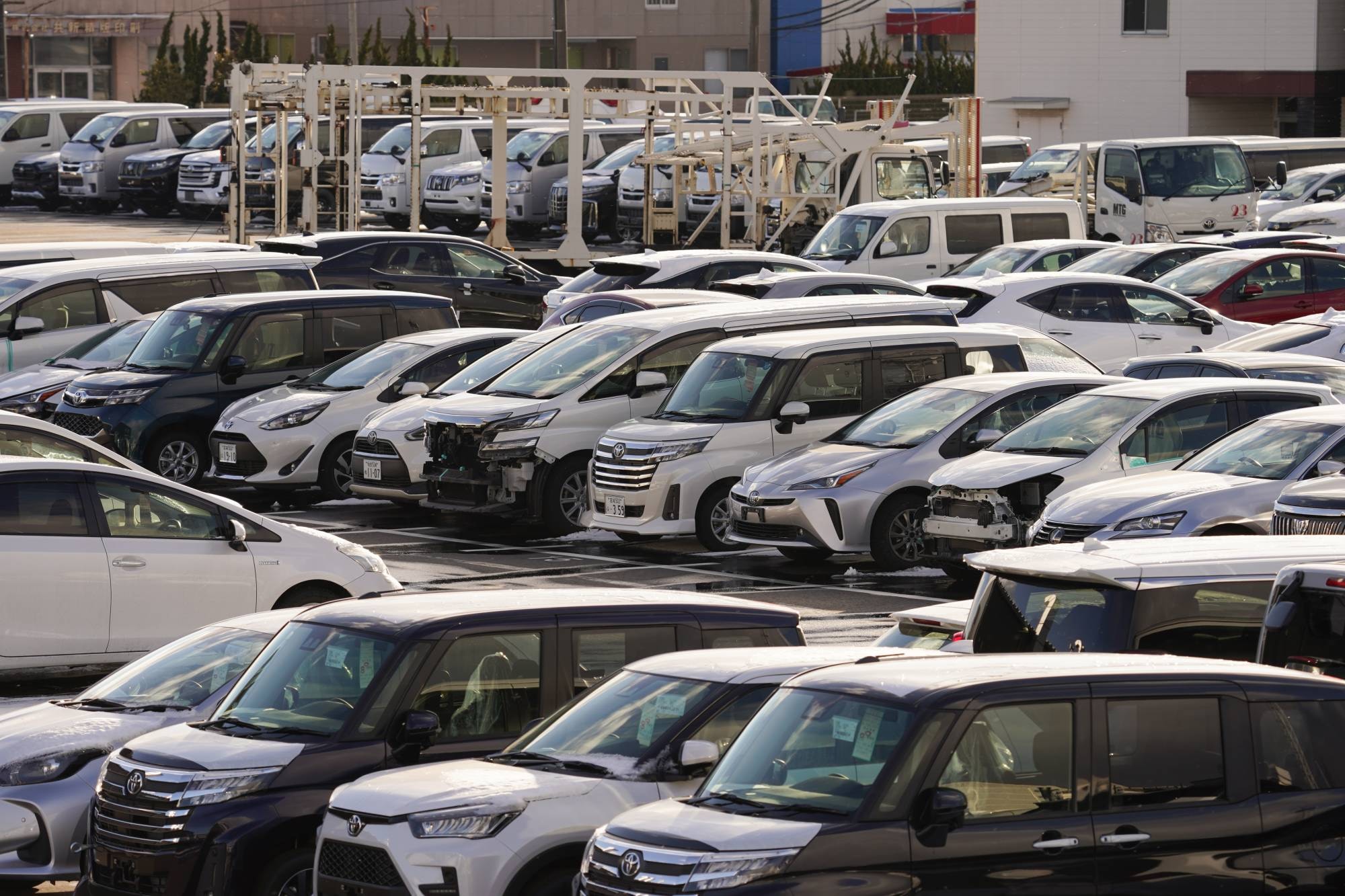
The Japanese used-car market moved approximately 7.8 million units in 2025, making it one of the largest and most liquid secondary automotive markets in the world. For foreigners living in or relocating to Japan, that volume translates into genuine choice: a clean 2019 Toyota Prius with under 40,000 kilometers can be found at a reputable dealer for ¥1.4 million to ¥1.8 million as of April 2026, while a low-mileage 2021 Honda N-Box kei car sits closer to ¥1.1 million. The entry cost is accessible. The process, however, involves several Japan-specific legal requirements that catch foreign buyers off guard. This guide covers each one in sequence.
What Foreign Residents Need Before They Can Buy
Japan places no nationality restriction on purchasing a vehicle. Any foreign national with a valid residence card (在留カード, zairyu kaado, the ID card issued to registered foreign residents) can buy a car. What you cannot do is register a vehicle without a fixed address in Japan, because vehicle registration is tied to your registered domicile (住民票, juuminhyo, the official household registration document issued by your local ward office).
Before visiting a dealer, gather three documents: your residence card, your juuminhyo (obtainable same-day at your ward office for roughly ¥300), and a 車庫証明 (shako-shoumei, the parking space certificate issued by your local police station). The shako-shoumei is the document most foreign buyers underestimate. You must prove to the police that you have a dedicated parking space within a 2-kilometer radius of your registered address before you can register a car in your name. In central Tokyo wards such as Minato-ku (港区) and Shibuya-ku (渋谷区), monthly parking fees range from ¥30,000 to over ¥80,000 depending on the building and street. Budget for this ongoing cost before committing to a purchase. A practical overview of how parking works in central Tokyo is available in Parking in Tokyo: How to Find a Spot.
Processing time for the shako-shoumei is typically three to seven business days at the police station. Factor that into your purchase timeline.
Understanding Shaken: Japan’s Mandatory Vehicle Inspection
車検 (shaken, Japan’s mandatory periodic vehicle roadworthiness inspection) is the single most important cost variable when buying a used car in Japan. Every vehicle must pass shaken before it can be legally driven on public roads. New cars receive a three-year initial shaken; all subsequent inspections are every two years. A car sold with shaken remaining is ready to drive. A car sold without shaken requires you to fund the inspection before registration.
Shaken costs vary by vehicle class and age. For a standard passenger car (普通車, futsuu-sha), a full shaken at a dealer or authorized station in 2026 typically runs ¥60,000 to ¥120,000, inclusive of the mandatory liability insurance premium (自賠責保険, jibaiseki hoken) and the weight tax (重量税, juuryou-zei). Older vehicles with worn parts can exceed ¥150,000 if repairs are required to pass. Kei cars (軽自動車, keijidousha, the sub-660cc displacement category that dominates Japanese urban streets) carry lower weight taxes and slightly lower inspection fees, typically ¥40,000 to ¥70,000.
When comparing two cars at similar prices, always check the shaken expiry date printed on the front windshield sticker. A car with 22 months of shaken remaining is worth meaningfully more in practical terms than an identical car with two months left.
Where to Buy: Dealer Types and Price Ranges in 2026
Japan’s used-car retail landscape divides into three main channels, each with different pricing logic.
Franchise dealers (Toyota Used Cars, Honda Cars, Nissan Satio, and their equivalents) carry certified pre-owned inventory with documented service histories. Prices are 10 to 15 percent higher than independent lots, but the paperwork is handled in-house and English-speaking staff are increasingly available at urban branches. A 2020 Toyota Alphard with 35,000 kilometers lists at approximately ¥4.2 million at a franchise dealer in Tokyo as of April 2026. Independent used-car lots (中古車販売店, chuukosha hanbai-ten) offer wider price variation. The same Alphard configuration might list at ¥3.6 million at an independent lot in Saitama or Kanagawa, a 30-minute drive from central Tokyo. Price negotiation is standard at independents; a 3 to 7 percent reduction from sticker is common if the car has been on the lot for more than 60 days. Online auction platforms including USS, JAA, and BidCars allow registered dealers to bid on vehicles at wholesale. Foreign private buyers cannot participate directly in most auctions, but several English-language broker services will bid on your behalf for a flat fee of ¥30,000 to ¥50,000. Auction-sourced vehicles carry no dealer warranty and must be independently inspected before purchase.For a broader sense of how Japanese property and consumer transactions are structured for foreign nationals, the How to Buy Homes in Japan as a Foreign National: 2026 Complete Guide provides useful context on documentation requirements and the general rhythm of major purchases in Japan.
The Yen Factor: Why 2026 Pricing Favors Foreign Buyers With Overseas Income
The yen averaged approximately ¥152 to the US dollar in the first quarter of 2026, a level that, while slightly stronger than the historic lows of late 2024, still represents a significant discount relative to the 2019 to 2021 range of ¥105 to ¥115. For foreign buyers earning in dollars, euros, or sterling and converting to yen for a local purchase, this exchange environment compresses the effective cost of a Japanese used car by 25 to 35 percent compared to five years ago.
A 2021 Lexus RX 450h with 28,000 kilometers listed at ¥5.8 million at a Tokyo dealer in April 2026. At ¥152 per dollar, that is approximately $38,200. The same vehicle in the United States, where it was never sold in right-hand-drive configuration, has no direct comparable, but equivalent North American luxury SUV inventory in similar condition trades at $48,000 to $54,000. The domestic Japanese price, even before the exchange benefit, reflects Japan’s high vehicle turnover culture: many owners replace cars at the five-year mark regardless of condition, flooding the used market with low-mileage, well-maintained inventory.
According to Provide Cars, the combination of yen weakness and Japan’s structurally high used-car supply has made 2026 one of the most favorable years on record for foreign buyers acquiring Japanese vehicles, whether for domestic use or export.
Registration, Insurance, and Ongoing Costs
Once you have agreed on a price and the dealer has your shako-shoumei and juuminhyo, the registration process (登録, touroku, the official recording of vehicle ownership with the transport bureau) takes three to five business days. Dealers handle this on your behalf as a standard service; expect a handling fee of ¥15,000 to ¥30,000 on top of the government fees.
Mandatory costs at the point of purchase include:
- Jibaiseki hoken (自賠責保険, compulsory third-party liability insurance): approximately ¥17,650 for a 24-month term on a standard passenger car as of April 2026.
- Juuryou-zei (重量税, vehicle weight tax): paid at shaken time, ranging from ¥8,200 per year for a kei car to ¥24,600 per year for a vehicle over 2 tonnes.
- Automobile tax (自動車税, jidousha-zei): billed annually each May. A 1.5-liter engine car incurs ¥30,500 per year; a 3.0-liter car incurs ¥58,000 per year under the 2026 rate schedule.
- 任意保険 (nini hoken, voluntary comprehensive insurance): strongly recommended. Annual premiums for a foreign-licensed driver with no Japan driving history typically start at ¥80,000 to ¥120,000 per year for a standard sedan, depending on the insurer and coverage level.
Foreign driving licenses from most countries are valid in Japan for up to one year from entry, after which a Japanese license conversion (切り替え, kirikae) is required. The conversion process varies by country of origin: drivers from countries with bilateral recognition agreements (including most EU member states, Australia, Canada, and New Zealand) complete a simplified test and fee payment at the local driving license center. US license holders face a more involved written and practical examination at most prefectural centers.
A Practical Buying Sequence for Foreign Residents
The steps below reflect the standard sequence for a foreign national purchasing a used car at a Tokyo-area dealer in 2026.
The full sequence from parking certificate application to key handover typically runs two to three weeks. Buyers relocating to Japan and coordinating a vehicle purchase alongside a property search will find the Japan Property Purchase Timeline: A Step-by-Step Guide for Foreign Buyers in 2026 a useful parallel reference for managing both processes simultaneously.
For additional detail on the dealer search process, Tokyo Cheapo’s Tips For Buying a Used Car in Japan covers the on-the-ground mechanics of visiting lots and negotiating in practical terms.
Koukyuu is a private buyer’s advisory for distinguished Tokyo residences in Omotesando (表参道), Nishi-Azabu (西麻布), and Azabudai Hills (麻布台ヒルズ), focused exclusively on transactions of ¥300 million and above, with a licensed 宅建士 (takken-shi, Japan’s licensed real-estate transaction specialist) personally handling every stage from first consultation to contract signing. To begin a private conversation, book a private consultation).