

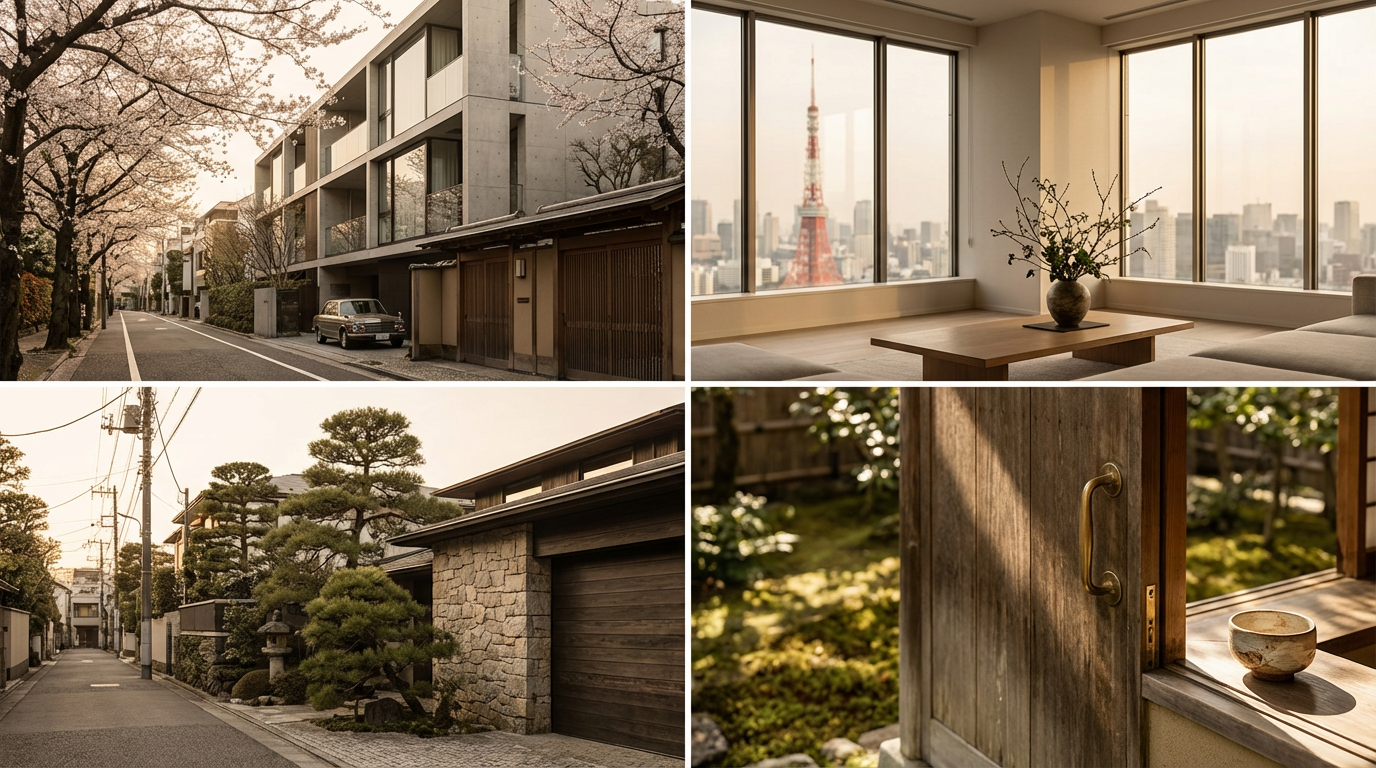
The driver circles the block for the third time, the navigation system offering no answers. A vacant spot appears, then vanishes as another vehicle slides into place. This scene repeats across Tokyo daily, where parking remains one of the city’s most persistent challenges. For residents who own vehicles in the world’s most densely populated metropolitan area, understanding how to secure parking transforms from inconvenience to necessity.
Understanding Tokyo’s parking landscape
Tokyo contains approximately 13.96 million residents within its 23 wards, yet the city’s parking infrastructure operates under constraints that define urban planning here. The shako shomei (車庫証明), or parking certificate, creates the foundation of this system. Japanese law requires proof of a secured parking space within 2 kilometers of your registered address before vehicle registration proceeds. This regulation, established to prevent street parking and reduce congestion, shapes how residents approach vehicle ownership.
The certificate process involves submitting documentation to your local police station, including a parking space contract, property map, and application forms. Processing typically requires three to seven business days. The fee ranges from ¥2,000 to ¥2,750 depending on the ward.
Monthly parking contracts represent the standard arrangement for Tokyo residents. These contracts, known as gekkyoku chushajo (月極駐車場), provide dedicated spaces secured through rental agreements lasting six months to one year. Landlords and parking management companies operate these facilities across residential and commercial districts.
Parking costs across Tokyo’s wards
Monthly parking rates in Tokyo reflect land values and density patterns. Central wards command premium rates, while outer areas offer more accessible pricing.
Minato-ku (港区) leads Tokyo’s parking costs. Azabu (麻布), Roppongi (六本木), and Shirokane (白金) neighborhoods average ¥50,000 to ¥80,000 monthly for standard outdoor spaces. Covered garage spaces in luxury residential buildings reach ¥100,000 to ¥150,000 monthly. A parking space near Roppongi Hills can exceed ¥120,000 monthly for covered, secure access.
Shibuya-ku (渋谷区) follows closely, with monthly rates between ¥40,000 and ¥70,000 in areas like Daikanyama (代官山) and Ebisu (恵比寿). Proximity to station areas increases costs substantially.
Chiyoda-ku (千代田区) and Chuo-ku (中央区) business districts see monthly parking range from ¥45,000 to ¥90,000, depending on building specifications and security features.
Setagaya-ku (世田谷区) offers more moderate pricing, with monthly spaces averaging ¥25,000 to ¥40,000 in residential neighborhoods. Areas near Futako-Tamagawa (二子玉川) trend higher due to commercial development.
Suginami-ku (杉並区) and Nerima-ku (練馬区) provide monthly parking between ¥18,000 and ¥30,000, making these wards more accessible for vehicle owners seeking value.
Outer wards like Adachi-ku (足立区) and Katsushika-ku (葛飾区) average ¥12,000 to ¥20,000 monthly, reflecting lower land costs and reduced density.
The table below summarizes average monthly parking costs by ward category:
| Ward Category | Average Monthly Cost | Example Areas |
|————–|———————|—————|
| Premium Central | ¥50,000 – ¥80,000 | Minato, Shibuya, Chiyoda |
| Central Residential | ¥35,000 – ¥50,000 | Meguro, Shinagawa, Bunkyo |
| Mid-tier Residential | ¥25,000 – ¥40,000 | Setagaya, Nakano, Suginami |
| Outer Residential | ¥12,000 – ¥25,000 | Adachi, Katsushika, Edogawa |
How to find monthly parking spaces
Locating available monthly parking in Tokyo requires systematic approach across multiple channels. The following methods produce results:
Specialized parking search platforms operate as the primary resource. Websites like at-parking.jp and times-info.net maintain databases of available monthly spaces across Tokyo. These platforms allow filtering by ward, price range, space dimensions, and features like roofed coverage or security gates. Updated listings appear daily as contracts expire and spaces become available.
Real estate agencies that handle residential leasing often coordinate parking arrangements. When securing an apartment through an agency, inquire about parking availability in the building or nearby contracted lots. Agencies maintain relationships with parking management companies and can expedite the search process.
Direct contact with parking management companies yields results in target neighborhoods. Companies like Times Parking, Park24, and NPC operate extensive networks across Tokyo. Their offices maintain waiting lists for popular areas and can notify you when spaces become available.
Physical neighborhood searches remain effective, particularly in residential areas. Walking through your target neighborhood reveals parking lots with contact information posted on signage. Smaller, independently operated lots may not list online but maintain availability. Note the management company phone numbers and inquire directly.
Building management for luxury residences typically includes parking allocation. Properties represented by Koukyuu in areas like Hiroo (広尾) and Aoyama (青山) often provide dedicated parking within the building or through exclusive contracted facilities nearby. These arrangements streamline the parking certificate process.
Real estate listing apps like Suumo and Homes include parking-specific search functions. While primarily focused on residential properties, these platforms list standalone parking spaces for rent.
The waiting period for desirable locations varies significantly. Central Tokyo areas with limited space may require three to six months on waiting lists. Outer wards typically offer immediate availability.
The parking certificate requirement explained
The shako shomei (車庫証明) serves as legal proof that you maintain a parking space for your vehicle. This certificate becomes mandatory for new vehicle registration, used vehicle purchases, and address changes involving vehicle ownership.
The process begins after securing a parking space contract. Your parking space must meet specific legal requirements: location within 2 kilometers of your registered address, dimensions adequate for your vehicle (typically minimum 2.0m width × 5.0m length for standard vehicles), and legal right to use the space through ownership or rental contract.
Documentation required includes:
- Jidosha Hokan Basho Shomeisho (自動車保管場所証明書) application form
- Hokan Basho no Shozu (保管場所の所図), a map showing the parking location relative to your residence
- Hokan Basho Shiyosho Shomeisho (保管場所使用承諾証明書), consent form from the parking space owner or management company
- Copy of your parking contract
- Proof of residence (juminhyo)
Submit these documents to the police station with jurisdiction over your parking location. The police conduct verification, sometimes including physical inspection of the space. Processing takes three to seven business days.
Upon approval, you receive the parking certificate and a sticker (shako shomei hyoshiki) to display on your vehicle’s rear window. The certificate remains valid for one month from issuance, during which you must complete vehicle registration at the land transport office.
Failure to maintain valid parking arrangements carries penalties. Operating a vehicle without a proper parking certificate can result in fines up to ¥100,000 and potential criminal charges for fraudulent applications.
Coin parking options across Tokyo
Coin parking (コインパーキング) facilities provide short-term parking solutions throughout Tokyo. These automated lots operate 24 hours with pay-by-time pricing structures. While not suitable for monthly residential parking, coin parking serves specific purposes for vehicle owners.
Times, Park24, and NPC operate the majority of coin parking facilities across Tokyo’s 23 wards. These companies maintain mobile apps showing real-time availability, pricing, and navigation to facilities.
Pricing structures vary by location and time:
Daytime rates in central areas like Roppongi and Shibuya range from ¥400 to ¥600 per 30 minutes, with maximum daily charges between ¥2,400 and ¥4,000. Business districts in Chiyoda-ku and Chuo-ku implement similar pricing during weekday business hours.
Evening and overnight rates often decrease after 8:00 PM, dropping to ¥100 to ¥200 per hour in some locations. Maximum overnight charges (typically 8:00 PM to 8:00 AM) range from ¥1,000 to ¥2,000 in central areas.
Residential area pricing in wards like Setagaya and Suginami averages ¥200 to ¥300 per hour, with daily maximums between ¥1,200 and ¥2,000.
Coin parking facilities employ two primary systems: flap-type barriers that rise behind your vehicle upon parking, and gate-type barriers that require ticket validation at exit. Payment methods include cash, credit cards, IC cards (Suica, Pasmo), and mobile payment apps.
Strategic use of coin parking includes:
- Temporary parking when your monthly space undergoes maintenance
- Guest parking when visitors arrive by vehicle
- Overflow parking during events or gatherings
- Short-term parking for errands in commercial districts
The Times Parking app and similar platforms allow advance reservation at select facilities, guaranteeing space availability during peak periods. This feature proves valuable for planning trips to congested areas.
Parking etiquette and reverse parking requirements
Tokyo parking culture follows specific conventions that vehicle owners observe. Understanding these unwritten rules prevents conflicts and demonstrates consideration.
Reverse parking (バック駐車) represents the standard method in Japan. Most parking facilities, both monthly and coin parking, expect vehicles to reverse into spaces. This practice serves practical purposes: forward exit provides better visibility when departing, particularly in busy lots with limited sightlines. Emergency situations benefit from vehicles positioned for quick forward exit. Loading and unloading cargo proceeds more efficiently with rear access.
Many parking facilities display signs explicitly requiring reverse parking. While not legally mandated in all locations, compliance with facility rules prevents disputes with management and other users.
Space dimensions in Tokyo parking facilities trend smaller than international standards. Compact vehicles dominate Japanese streets partly due to these constraints. Standard parking spaces measure 2.5m width × 5.0m length, though older facilities may offer only 2.3m width. Luxury vehicles and imported cars with larger dimensions require verification that your contracted space accommodates your vehicle.
Idling restrictions apply throughout Tokyo. Extended engine idling while parked violates environmental regulations and disturbs neighbors. Parking management companies may terminate contracts for repeated violations.
Cleanliness expectations include removing trash and avoiding fluid leaks that damage parking surfaces. Monthly parking contracts typically include clauses requiring proper vehicle maintenance.
Neighbor consideration extends to parking lot interactions. Avoid blocking access routes during loading activities. Minimize noise during early morning and late evening hours. Respect designated spaces and avoid encroaching on adjacent spots.
Finding parking in specific Tokyo areas
Different Tokyo neighborhoods present distinct parking challenges and opportunities.
Azabu (麻布) and Hiroo (広尾) in Minato-ku contain predominantly residential streets with limited street parking. Monthly parking here requires early planning, often involving waiting lists of three to six months for premium locations. Buildings in these areas typically include parking for residents, making properties with dedicated parking particularly valuable.
Roppongi (六本木) commercial and entertainment district offers numerous coin parking facilities near restaurants and shopping areas. Monthly parking spaces near residential towers command premium rates but provide convenient access to the area’s amenities. Evening and weekend coin parking sees high demand, making advance reservation through apps advisable.
Shibuya (渋谷) and Daikanyama (代官山) present challenging parking environments during business hours and weekends. Residential side streets in Daikanyama offer monthly parking at slightly lower rates than main thoroughfares. The area’s topography includes hills and narrow roads, requiring attention to vehicle dimensions and maneuvering space.
Aoyama (青山) and Omotesando (表参道) combine luxury retail with residential areas. Parking here serves both commercial visitors and residents. Monthly spaces near Aoyama-dori command premium pricing, while residential streets behind the main avenue offer more accessible options.
Setagaya (世田谷) residential neighborhoods provide more abundant parking options at moderate costs. Areas near Yoga (用賀) and Sakura-shinmachi (桜新町) stations offer monthly parking with shorter waiting periods. The ward’s family-oriented character means many households maintain vehicles, creating steady demand.
Shinagawa (品川) and Meguro (目黒) balance residential and commercial functions. Parking near major stations costs significantly more than residential areas several blocks away. The Meguro River area has limited parking availability, particularly during cherry blossom season when visitors increase dramatically.
Mechanical parking systems in Tokyo
Space constraints in Tokyo drive adoption of mechanical parking systems (機械式駐車場), particularly in luxury residential buildings. These automated systems stack vehicles vertically or horizontally, maximizing capacity within limited footprints.
Puzzle parking systems arrange vehicles in grid patterns with horizontal and vertical movement. Retrieving your vehicle requires the system to shuffle other cars, creating wait times of two to five minutes. These systems accommodate standard-sized vehicles but may restrict larger imports.
Tower parking systems stack vehicles vertically in multi-story automated structures. You drive onto a platform at ground level, exit your vehicle, and the system elevates it to an available space. Retrieval reverses the process. These systems appear in high-density areas where land costs justify the infrastructure investment.
Pit parking systems lower vehicles below ground level, creating additional capacity beneath surface parking areas. Common in newer luxury buildings, these systems provide weather protection and security.
Operating mechanical parking requires attention to specific protocols:
- Vehicle dimensions must fall within system specifications (typically maximum 1.85m height, 5.0m length, 1.85m width for standard systems)
- Folding mirrors before parking prevents damage during automated movement
- Removing items from roof racks or external carriers before parking
- Allowing adequate time for retrieval before departure
Monthly parking fees for mechanical systems typically match or slightly exceed surface parking in the same area, reflecting the enhanced security and weather protection.
Parking for luxury and imported vehicles
Owners of luxury and imported vehicles face additional considerations in Tokyo’s parking environment. Vehicle dimensions, security requirements, and maintenance concerns influence parking decisions.
Size restrictions affect many Tokyo parking facilities. Standard Japanese parking spaces measure 2.5m × 5.0m, adequate for domestic vehicles but tight for larger European and American models. Full-size SUVs, extended-wheelbase sedans, and sports cars with low ground clearance require verification that contracted spaces accommodate these specifications.
Premium monthly parking facilities catering to luxury vehicles offer:
- Wider spaces (2.7m to 3.0m width) with additional clearance
- Enhanced security including surveillance cameras and restricted access
- Covered or enclosed parking protecting paint and interiors
- Valet parking services in select luxury buildings
- Charging infrastructure for electric vehicles
These specialized facilities concentrate in areas like Minato-ku, Shibuya-ku, and Meguro-ku, where luxury vehicle ownership density justifies premium amenities. Monthly costs range from ¥80,000 to ¥200,000 depending on location and services.
Security considerations matter for high-value vehicles. Surface parking lots without surveillance or access control present higher theft and vandalism risks. Enclosed garage parking with 24-hour security monitoring provides peace of mind, particularly for vehicles exceeding ¥10 million value.
Maintenance access includes adequate space for detailing services and minor maintenance. Some luxury buildings provide dedicated areas where residents can wash vehicles or perform basic maintenance. Independent luxury parking facilities may offer concierge services coordinating detailing and maintenance.
How easy is it to find parking in Tokyo
The difficulty of finding parking in Tokyo correlates directly with location, timing, and commitment level. Monthly parking searches require patience and systematic approach, particularly in central wards. Waiting lists for premium areas extend several months, though outer residential wards offer immediate availability.
The shako shomei requirement creates urgency around parking searches. Vehicle purchase and registration timelines depend on securing parking first, making this a priority task for new residents planning vehicle ownership.
Coin parking availability fluctuates throughout the day. Central Tokyo business districts see highest demand during weekday business hours. Entertainment districts like Roppongi and Shibuya experience peak demand during evenings and weekends. Residential areas maintain more consistent availability, though popular shopping streets see periodic congestion.
Real-time parking apps have improved the search process significantly since their introduction. Times Parking, Park24, and other operators provide live availability data, reducing the circling-block phenomenon that once characterized Tokyo parking searches.
Where to go car spotting in Tokyo
Automotive enthusiasts seeking to observe high-end vehicles find specific locations concentrate luxury and exotic cars.
Roppongi Hills and Tokyo Midtown attract luxury vehicle owners, particularly during weekend evenings. The underground parking facilities and surrounding streets showcase current models from European manufacturers alongside Japanese luxury brands.
Aoyama and Omotesando shopping districts see regular appearances of limited-edition and custom vehicles. Sunday afternoons bring collectors and enthusiasts to the area’s cafes and galleries.
Daikanyama T-Site area attracts design-conscious vehicle owners. The neighborhood’s aesthetic sensibility extends to automotive choices, with rare European models and vintage Japanese sports cars appearing regularly.
Arisugawa Park in Hiroo provides weekend gathering space for luxury vehicle owners. The park’s perimeter roads see informal displays of high-end automobiles, particularly during favorable weather.
Shibuya Scramble Square and surrounding areas showcase both luxury daily drivers and special occasion vehicles, particularly during evening hours when restaurants and entertainment venues draw crowds.
These locations offer observation opportunities while respecting private property and parking regulations. Photography remains acceptable from public spaces, though direct interaction with vehicle owners requires discretion and courtesy.
Tokyo’s parking landscape demands understanding of legal requirements, cost structures, and neighborhood-specific dynamics. The shako shomei certificate creates the foundation for legal vehicle ownership, while monthly parking contracts provide residential solutions. Coin parking serves temporary needs across the city’s 23 wards, with pricing reflecting land values and density patterns.
Koukyuu represents buyers seeking Tokyo residences where parking arrangements integrate seamlessly with luxury living. For a confidential conversation about properties with dedicated parking in Tokyo’s most distinguished addresses, reach our concierge team.