

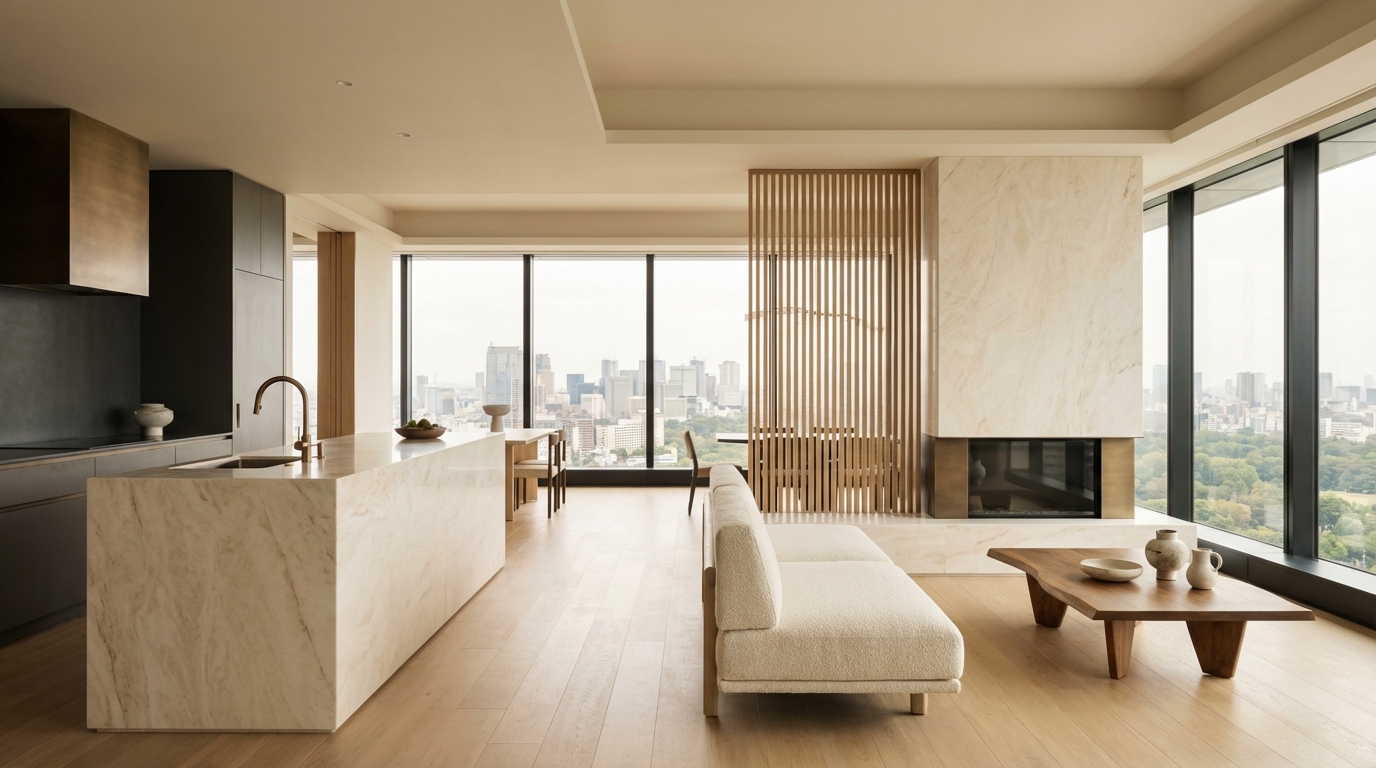
The question arrives in our inbox monthly from international buyers preparing for a Tokyo relocation: what separates an apāto (アパート) from a manshon (マンション) in Japan? The distinction carries practical weight. These two categories define the Japanese rental and ownership landscape, influencing everything from monthly costs to sleep quality. Understanding the difference clarifies housing searches and sets realistic expectations for life in Tokyo.
What the terms mean in Japanese real estate
In Japan, the word “mansion” bears no relation to sprawling estates or palatial homes. A manshon refers to a mid-rise or high-rise condominium building, typically constructed with reinforced concrete or steel-reinforced concrete. The term derives from the English “mansion,” adopted during Japan’s post-war modernization period when developers sought to position these structures as premium housing options.
An apāto, shortened from the English “apartment,” designates a smaller, lower-rise residential building. These structures rarely exceed three stories and employ lighter construction methods—primarily wood or lightweight steel frame. The distinction between apāto and manshon originates from construction materials and building scale rather than ownership structure. Both categories include rental and purchase options.
Japanese real estate listings maintain this binary classification with remarkable consistency. The categories appear in every major property portal, rental agreement, and real estate transaction. For anyone navigating the Japanese housing market, understanding this fundamental division proves essential.
Construction materials define the primary difference
The core distinction between apāto and manshon lies in structural composition. Manshon buildings employ 鉄筋コンクリート (tekkin konkurīto, reinforced concrete) or 鉄骨鉄筋コンクリート (tekkin konkurīto, steel-reinforced concrete). These materials provide superior earthquake resistance, fire protection, and acoustic insulation. Construction costs run significantly higher, which translates directly to rent and purchase prices.
Apāto structures typically use 木造 (mokuzō, wooden construction) or 軽量鉄骨 (keiryō tekkotsu, lightweight steel frame). Wooden apāto buildings represent the most economical construction method in Japanese residential development. Lightweight steel frame offers a middle ground—more durable than wood, less expensive than reinforced concrete. According to data from the Japan Real Estate Institute, wooden structures account for approximately 60% of apāto buildings in Tokyo’s 23 wards as of 2026.
The material difference extends beyond initial construction. Reinforced concrete buildings demonstrate longer lifespans, often remaining viable for 50-70 years with proper maintenance. Wooden apāto structures face shorter functional lifespans, typically 20-30 years, though well-maintained examples exceed these estimates. Insurance premiums, maintenance costs, and resale values all reflect these material distinctions.
Building height and scale
Manshon buildings rise to five stories or higher. Many reach 10-15 floors in central Tokyo neighborhoods like 港区 (Minato-ku) and 渋谷区 (Shibuya-ku). Luxury manshon towers in areas such as Roppongi (六本木) and Shirokane (白金) extend beyond 20 floors, offering elevated views across the metropolitan landscape.
Apāto buildings remain low-rise by definition. The typical apāto stands two or three stories tall. Building codes and construction economics both contribute to this limitation. Wooden and lightweight steel structures face regulatory height restrictions for safety reasons. Beyond three stories, construction costs increase substantially, pushing developers toward reinforced concrete methods that fall into the manshon category.
This height difference shapes neighborhood character. Streets lined with apāto buildings maintain a more intimate, residential atmosphere. Manshon-dominated areas project density and urban energy. The visual distinction becomes immediately apparent when walking through Tokyo’s residential districts.
Rent levels and cost considerations
Monthly rent varies significantly between apāto and manshon properties. In Tokyo’s central wards, a 25㎡ studio in a wooden apāto averages ¥70,000-¥90,000 per month according to 2026 data from Tokyo Kantei. A comparable-sized unit in a reinforced concrete manshon ranges from ¥95,000-¥130,000 monthly, depending on building age and specific location.
The rent differential widens in premium neighborhoods. A 50㎡ one-bedroom apāto in Hiroo (広尾) might command ¥140,000 monthly, while a similar-sized manshon unit in the same area reaches ¥180,000-¥220,000. The gap reflects construction quality, building amenities, and perceived status within the Japanese housing hierarchy.
Initial move-in costs follow similar patterns. Japanese rental agreements typically require 礼金 (reikin, key money), 敷金 (shikikin, security deposit), and agent fees. While these costs apply to both apāto and manshon rentals, the absolute amounts scale with monthly rent, making manshon properties more expensive to secure initially.
Beyond rent, utility costs differ between the two categories. Reinforced concrete buildings provide better thermal insulation, potentially reducing heating and cooling expenses during Tokyo’s humid summers and cold winters. Wooden apāto structures allow more heat transfer, which can increase monthly utility bills despite lower base rent.
Noise insulation and acoustic performance
Sound transmission represents one of the most significant quality-of-life differences between apāto and manshon living. Reinforced concrete construction provides substantial acoustic barriers between units. Floor slabs typically measure 150-200mm thick in manshon buildings, effectively blocking footstep noise, conversation, and household activities from neighboring apartments.
Wooden apāto buildings offer minimal sound insulation. Residents frequently hear footsteps from the floor above, conversations through walls, and daily activities from adjacent units. This acoustic transparency proves particularly challenging for those sensitive to noise or working from home. The experience varies by building age and construction quality, but even well-built wooden structures cannot match concrete performance.
Lightweight steel frame apāto buildings fall between these extremes. They provide better acoustic separation than wooden construction but remain inferior to reinforced concrete. Noise from adjacent units typically remains audible, though less intrusive than in wooden buildings.
For international residents accustomed to Western construction standards, this difference often comes as a surprise. Japanese wooden construction employs different methods than North American wood-frame buildings, and acoustic expectations should adjust accordingly. Those prioritizing quiet living environments should focus their search on manshon properties, accepting the higher rent that accompanies better sound insulation.
Amenities and building features
Manshon buildings frequently include amenities absent from apāto properties. Elevator access becomes standard in buildings exceeding five floors, though some luxury manshon install elevators even in four-story structures. Auto-lock entry systems, security cameras, and on-site management appear commonly in manshon buildings.
Package delivery systems vary between categories. Modern manshon buildings increasingly feature 宅配ボックス (takuhaibokkusu, parcel lockers) that accept deliveries when residents are away. Apāto buildings rarely include this convenience, requiring residents to coordinate delivery times or retrieve packages from local post offices.
Bicycle parking, motorcycle storage, and automobile parking spaces follow different patterns. Manshon buildings typically provide dedicated, secure bicycle parking. Car parking may be available on-site or through nearby contracted spaces. Apāto buildings offer more variable arrangements, sometimes providing simple outdoor bicycle racks with minimal security.
Common areas differ substantially. Manshon buildings often include entrance lobbies, mail rooms, and shared corridors with climate control. Apāto buildings feature outdoor corridors and stairways with minimal common space. This distinction affects daily comfort, particularly during Tokyo’s rainy season and summer humidity.
Earthquake resistance and structural safety
Japan’s seismic building codes apply to all residential construction, but performance varies by building type. Reinforced concrete manshon buildings demonstrate superior earthquake resistance. The material combination provides both strength and flexibility, allowing structures to absorb and dissipate seismic energy. Modern manshon buildings constructed after the 2011 Tōhoku earthquake incorporate enhanced seismic design standards.
Wooden apāto buildings meet current earthquake codes but perform differently during seismic events. Wood provides natural flexibility, allowing structures to sway during tremors. While this flexibility prevents catastrophic collapse in properly constructed buildings, it creates more noticeable movement during earthquakes. Residents in wooden apāto buildings typically experience more pronounced shaking than those in concrete manshon structures.
Fire resistance follows similar patterns. Reinforced concrete provides inherent fire protection, containing flames within individual units and preventing rapid spread between floors. Wooden construction presents higher fire risk, though modern building codes require fire-resistant materials and compartmentalization measures.
These safety distinctions carry particular weight for families with children or those new to Japan’s seismic environment. The psychological comfort of concrete construction justifies higher rent for many residents, particularly those who have experienced significant earthquakes.
Which option fits different needs
Budget-conscious individuals and students gravitate toward apāto properties. The lower rent and reduced initial costs make these buildings accessible entry points into Tokyo’s housing market. A single person willing to accept acoustic limitations and basic amenities can secure comfortable housing at manageable monthly costs.
Remote workers and those spending significant time at home benefit from manshon properties. The superior sound insulation creates a more productive work environment and reduces daily stress from neighbor noise. The additional monthly cost translates directly to improved quality of life for those whose homes serve as both residence and workspace.
Families with young children face competing considerations. Manshon buildings offer better sound insulation, which reduces conflict with neighbors when children make noise. However, the acoustic protection also means children’s noise becomes more contained, potentially disturbing other residents less in apāto buildings where sound expectations run lower. The decision depends on specific family circumstances and priorities.
Short-term residents and those on temporary work assignments might prioritize apāto properties to minimize housing costs during limited stays. Long-term residents and those planning to remain in Tokyo for years typically find manshon properties worth the additional investment in daily comfort and quality of life.
Location preferences intersect with property type. In central Tokyo neighborhoods like Aoyama (青山) and Akasaka (赤坂), manshon buildings dominate the landscape. Outer wards and suburban areas offer more apāto options, where land costs allow for lower-density development.
Market availability and search considerations
The Japanese real estate market maintains clear category boundaries. Major property portals including SUUMO, Homes, and athome allow users to filter by construction type, immediately separating apāto from manshon listings. This classification system streamlines searches but requires understanding the underlying distinctions to use effectively.
Inventory varies by neighborhood and price point. Tokyo’s central five wards (Chiyoda, Chuo, Minato, Shibuya, Shinjuku) contain predominantly manshon buildings. Outer wards like Setagaya (世田谷), Suginami (杉並), and Nerima (練馬) maintain more balanced mixes of both categories. Suburban areas beyond the 23 wards show higher proportions of apāto properties.
Seasonal availability follows predictable patterns. The Japanese rental market peaks during February through April, corresponding with the academic year and corporate fiscal year transitions. Both apāto and manshon inventory increases during this period, providing more options but also more competition from other prospective tenants.
Building age significantly impacts both categories. Newly constructed manshon properties command premium rents but offer modern layouts, updated earthquake standards, and contemporary amenities. Older manshon buildings from the 1980s and 1990s provide reinforced concrete construction at lower prices, though layouts may feel dated and building systems require more frequent maintenance.
Legal and contractual considerations
Rental agreements function identically across apāto and manshon categories. The standard Japanese lease structure applies to both: initial contracts typically run two years, with renewal options requiring 更新料 (kōshinryō, renewal fees) equivalent to one month’s rent. Landlord approval remains necessary for renewals, though rejection without cause is rare.
Property management structures differ between categories. Manshon buildings, particularly larger ones, employ professional management companies that handle maintenance, repairs, and tenant relations. Apāto buildings may be managed by individual landlords or small-scale property owners, leading to more variable response times and service quality.
Pet policies vary by individual property rather than by category, though manshon buildings more frequently allow pets due to better sound insulation and more formal management structures. Prospective tenants with pets should verify policies explicitly during property searches, as restrictions remain common across both categories.
Guarantor requirements apply universally in the Japanese rental market. Both apāto and manshon leases require either a Japanese guarantor or enrollment in a guarantor company service. International residents typically use guarantor companies, which charge fees based on monthly rent—another area where higher manshon rents translate to increased costs.
The luxury market perspective
Within Tokyo’s luxury residential sector, the distinction between apāto and manshon becomes less relevant. Properties at the ¥300M+ level occupy exclusively manshon buildings, with reinforced concrete construction serving as a baseline expectation rather than a differentiating feature. At this market tier, distinctions shift to location specificity, architectural design, and building pedigree.
Premium neighborhoods like Azabu (麻布), Hiroo (広尾), and Shirokane (白金) contain virtually no apāto buildings. The land values in these areas make low-density wooden construction economically unviable. Developers invest in high-rise manshon structures that maximize the return on expensive urban land.
Luxury manshon buildings incorporate features absent from standard properties: concierge services, private guest rooms, fitness facilities, and sky lounges. These amenities justify premium pricing and create residential experiences that transcend basic housing needs. The conversation moves from construction materials to lifestyle services and architectural distinction.
For international buyers and tenants operating at this level, understanding the apāto-manshon distinction provides useful context for the broader Japanese housing market but holds limited relevance to their specific property searches. The focus shifts to identifying buildings that meet exacting standards for location, design, and service.
The difference between apāto and manshon in Japan extends beyond simple terminology. Construction materials, building height, acoustic performance, and rent levels create distinct housing experiences. The choice between categories depends on individual priorities: budget constraints, noise sensitivity, planned length of stay, and lifestyle preferences. Both options serve legitimate needs within Tokyo’s diverse housing market.
Koukyuu represents buyers seeking properties in Tokyo’s most distinguished addresses, where the distinction between apāto and manshon dissolves into a singular focus on exceptional residential environments. For those exploring Tokyo’s luxury market, our concierge team provides guidance through the city’s most refined properties at https://koukyuu.com/inquiry.