


Reviewed by a Koukyuu Takkenshi (宅地建物取引士)
Fact-checked against current Japanese real-estate law, tax rules, and market data by a nationally licensed specialist who oversees luxury transactions across Minato, Shibuya, and Chiyoda. In Japan, a Takkenshi is legally required to sign off on every property transaction, and about 15% of candidates pass the exam each year.
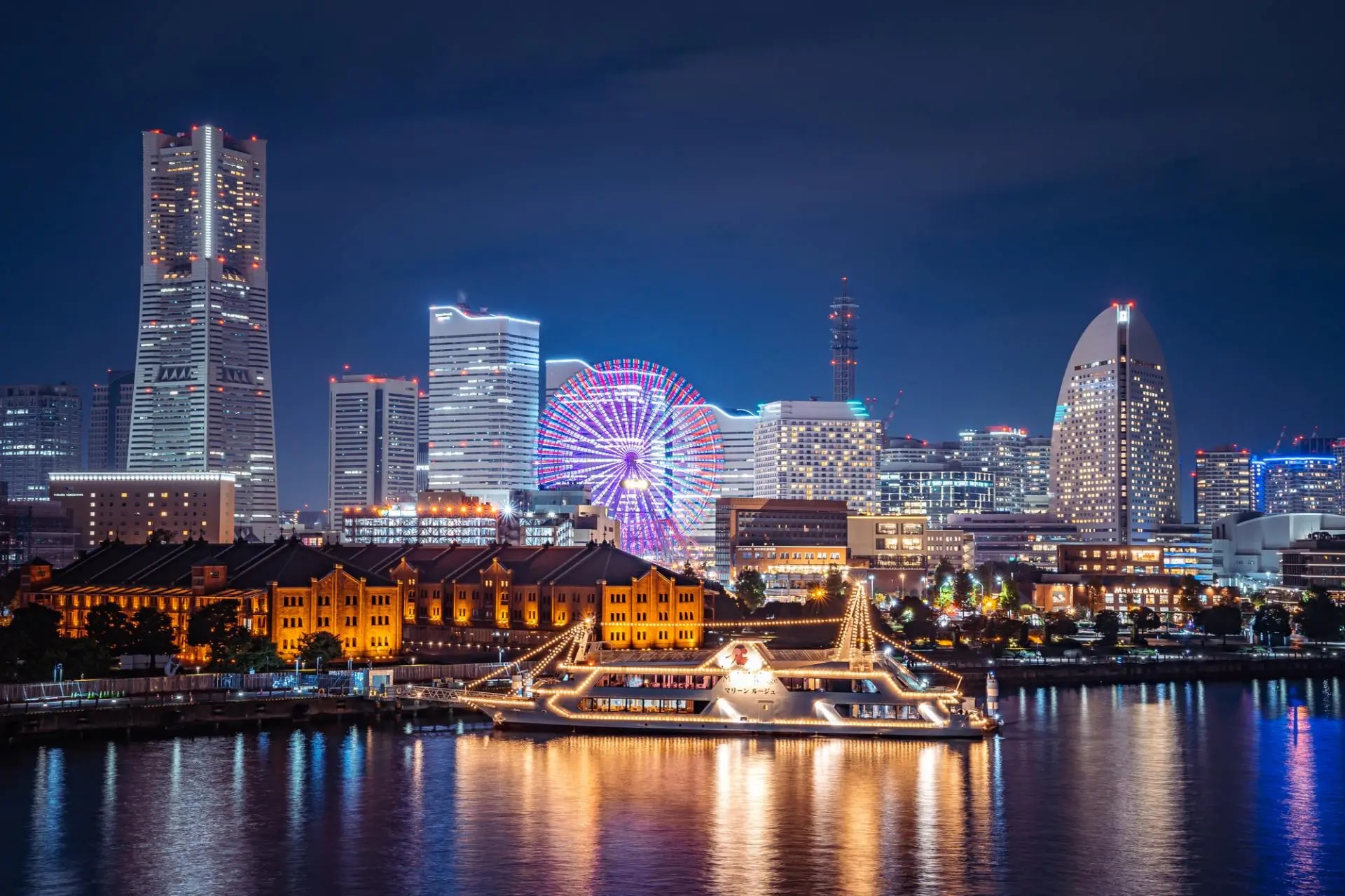
The 2026 公示地価 (public notice of land prices) placed Minatomirai’s average at ¥2.2 million per square meter, a 13.60% year-over-year increase that marks the steepest rise in the district’s post-bubble history. For foreign buyers evaluating tower mansions in Yokohama’s most visible redevelopment zone, this figure matters less as a headline than as the foundation of a tax structure that treats vertical living as a luxury good. The same floor that delivers harbor views also multiplies your annual obligations to Yokohama City.
The Mechanics of Floor-Level Taxation
Yokohama applies a 階層別専有床面積補正率 (floor-level correction rate) to all buildings exceeding 60 meters in height, approximately 20 floors. Each floor above ground level adds roughly 0.256% to the assessed value of your unit. A residence on the 40th floor carries a tax base approximately 10% higher than an equivalent unit on the first floor, despite identical interior specifications and ownership shares.
This is not a marginal distinction. For a premium tower mansion in Minatomirai, annual 固定資産税 (fixed asset tax) and 都市計画税 (city planning tax) combined typically range from ¥400,000 to ¥600,000. The floor-level premium alone can add ¥40,000 to ¥60,000 annually, recurring every year of ownership. The correction rate applies to the building portion only, not the land share, but in a 50-story tower the building assessment often dominates the total.
The statutory rates are 1.4% for fixed asset tax and 0.3% for city planning tax, applied to the assessed value as determined by Yokohama City’s appraisal committee. These rates are uniform across Kanagawa Prefecture; the variation lies entirely in the assessed values and the applicable correction factors.
The 5-7 Year Relief Cliff
New construction carries a substantial but temporary advantage. The building portion of fixed asset tax receives a 50% reduction for five years for standard construction, or seven years for 認定長期優良住宅 (certified long-term quality housing). This relief applies to the structure only, not the land share.
The cliff arrives without ceremony. In year six or eight, depending on certification, the tax bill on the building portion doubles. For a ¥80 million construction assessment, this means an overnight increase of roughly ¥560,000 annually at standard rates, before floor-level corrections. Foreign buyers purchasing resale properties often discover this only upon receiving their first full-rate bill, as disclosure obligations for resale transactions do not emphasize post-relief tax levels.
The relief period runs from the date of construction completion, not the purchase date. A buyer acquiring a four-year-old tower mansion enjoys only one year of reduced rates. The original completion certificate, available from the 法務局 (Legal Affairs Bureau) or the management association, establishes the timeline.
Land Price Tiers and Their Tax Implications
The 2026 公示地価 (official land prices) reveal a stratified market beneath the headline average. Prime commercial plots at Minatomirai 3-1-1, adjacent to Sakuragicho Station, command ¥37.5 million per square meter, equivalent to ¥12.4 million per tsubo. At Minatomirai 4-4-5, near Yokohama Station, the figure is ¥34.1 million per square meter, or ¥11.3 million per tsubo. Both locations posted approximately 10% annual appreciation.
For residential tower mansions, the relevant benchmark is the 基準地価 (standard land prices), which averaged ¥3.41 million per square meter in 2025, the most recent available data, representing 10% year-over-year growth. This figure more closely approximates the underlying land value assigned to mixed-use residential towers.
The assessed value for taxation purposes typically tracks at 70% of the 公示地価 for land, with periodic reassessment. Rapid appreciation therefore creates a lag: your tax obligations rise on a delayed schedule as the city’s appraisals catch up to market levels. A buyer entering at ¥2.2 million per square meter in 2026 should model tax increases through 2028-2030 as assessments adjust.
Inheritance Tax Route Values and Estate Planning
Separate from annual property taxes, the 国税庁 (National Tax Agency) publishes annual 相続税路線価 (inheritance tax route values) used to calculate estate tax liabilities. The 2026 route value for Minatomirai commercial land is ¥9.92 million per tsubo, or ¥3 million per square meter, representing 9.1% annual appreciation.
Route values are systematically discounted to market prices, typically at 80% of the 公示地価 for commercial land. This discount creates a structural advantage for estate planning: the taxable value of Minatomirai real estate for inheritance purposes is substantially below its market realization value. For foreign buyers from jurisdictions with estate taxes, this differential can influence holding structure decisions.
The route value applies to the land share only. The building portion for inheritance tax purposes uses the same assessed value as fixed asset tax, with floor-level corrections intact. A 40th-floor unit therefore carries a higher inheritance tax exposure than a lower-floor equivalent, though the absolute differential is modest compared to land value effects.
Foreign Buyer Compliance Obligations
Ownership itself requires no visa, residency, or corporate structure. The practical constraints appear in tax administration. Non-resident owners receiving rental income face 源泉徴収 (withholding tax) at 20.42% of gross receipts, with final tax liability determined through 確定申告 (annual tax return). The 国税庁 requires non-resident owners to appoint a 税務代理人 (tax agent) with a Japanese address to receive correspondence and file documents.
This agent requirement is statutory, not optional. The agent assumes no liability for the owner’s tax obligations but serves as the interface with Japanese tax authorities. Most accounting firms serving foreign investors offer this service for annual retainers ranging from ¥50,000 to ¥200,000, depending on complexity.
For owners not generating rental income, the obligation is limited to fixed asset tax and city planning tax payments, which Yokohama City bills directly to the registered address of the owner or the management association for common areas. Delinquency beyond two years triggers compulsory auction procedures, a risk for owners who fail to update contact information after relocation.
Payment Optimization and Practical Considerations
Yokohama City accepts multiple payment channels for property taxes, including smartphone payment platforms (楽天ペイ, au PAY, FamiPay) and credit card processing through F-REGI公金支払い. Processing fees range from 0.7% to 0.8% per ¥10,000, typically exceeding cashback rewards for standard cards. Rakuten Cash offers a 0.5% charge bonus that can produce marginal gains for large tax bills, though the administrative complexity rarely justifies the effort for single-property owners.
The more significant optimization lies in timing. Fixed asset tax is billed in four annual installments: April, July, December, and February. Prepayment of the full annual amount in April eliminates the risk of currency fluctuation for owners funding obligations from foreign accounts, though Yokohama offers no discount for early settlement.
For buyers comparing Minatomirai to central Tokyo alternatives, the tax structure is broadly similar. Motoazabu Hills Forest Tower in Minato-ku faces identical floor-level corrections and relief schedules, though Minato Ward’s 都市計画 tax area boundaries differ. Park Court Azabujuban The Tower operates under the same statutory framework. The material distinction lies in land price appreciation rates: Minatomirai’s 13.6% annual growth in 2026 exceeded most central Tokyo submarkets, suggesting faster assessment growth in coming years.
Koukyuu is a private buyer’s advisory for distinguished Tokyo residences in Minato-ku, Shibuya-ku, and Chiyoda-ku, focused exclusively on transactions of ¥300 million and above. A licensed 宅建士 (takken-shi, Japan’s licensed real-estate transaction specialist) personally handles every stage of the engagement, from the first consultation to the signing, a continuity most Tokyo agencies do not offer. Book a private consultation).