


Reviewed by a Koukyuu Takkenshi (宅地建物取引士)
Fact-checked against current Japanese real-estate law, tax rules, and market data by a nationally licensed specialist who oversees luxury transactions across Minato, Shibuya, and Chiyoda. In Japan, a Takkenshi is legally required to sign off on every property transaction, and about 15% of candidates pass the exam each year.
The 国土交通省 (Ministry of Land, Infrastructure, Transport and Tourism) published its 令和8年公示地価 (FY2026 Official Posted Land Prices) on March 18, 2026. Shibuya-ku residential land rose 8.4% year-on-year, the steepest single-year gain since the early 1990s. Within this surge, Hiroo (広尾) and adjacent Shoto maintained their position as the ward’s premium tier, with land valuations now approaching levels last seen in 1991. For foreign buyers considering Tokyo luxury residential assets, this price appreciation coincides with a more consequential development: the 令和8年度税制改正大綱 (FY2026 Tax Reform Outline), which takes effect January 1, 2027, and fundamentally restructures inheritance tax valuation for rental real estate.
The 2026 Window: What Changes in 127 Days
The reform introduces a hold-period test for rental properties. Assets acquired on or after January 1, 2027, and transferred by inheritance or gift within five years, will be valued at approximately 80% of acquisition price for tax purposes. This represents a dramatic compression of the traditional benefit structure.
Under current rules, a ¥1 billion Hiroo rental property might assess at ¥400–450 million for inheritance tax, reflecting the layered discounts of 路線価 (rosen-ka, inheritance tax road-frontage value), 貸家建付地評価減 (rental land discount), and 小規模宅地等の特例 (small-scale land special provision). Post-reform, the same property inherited within five years would assess at roughly ¥800 million. The tax-efficient valuation gap narrows from 55–60% to approximately 20%.
Properties acquired in 2026 retain the existing framework for any inheritance or gift occurring before January 1, 2027. For buyers with estate planning horizons under five years, this creates a discrete, non-repeatable entry point. The 国税庁 (National Tax Agency) has confirmed that acquisition date, not inheritance date, determines applicable rules. A December 2026 purchase followed by a 2028 inheritance falls under pre-reform treatment.
Hiroo’s Market Position and 2026 Price Levels
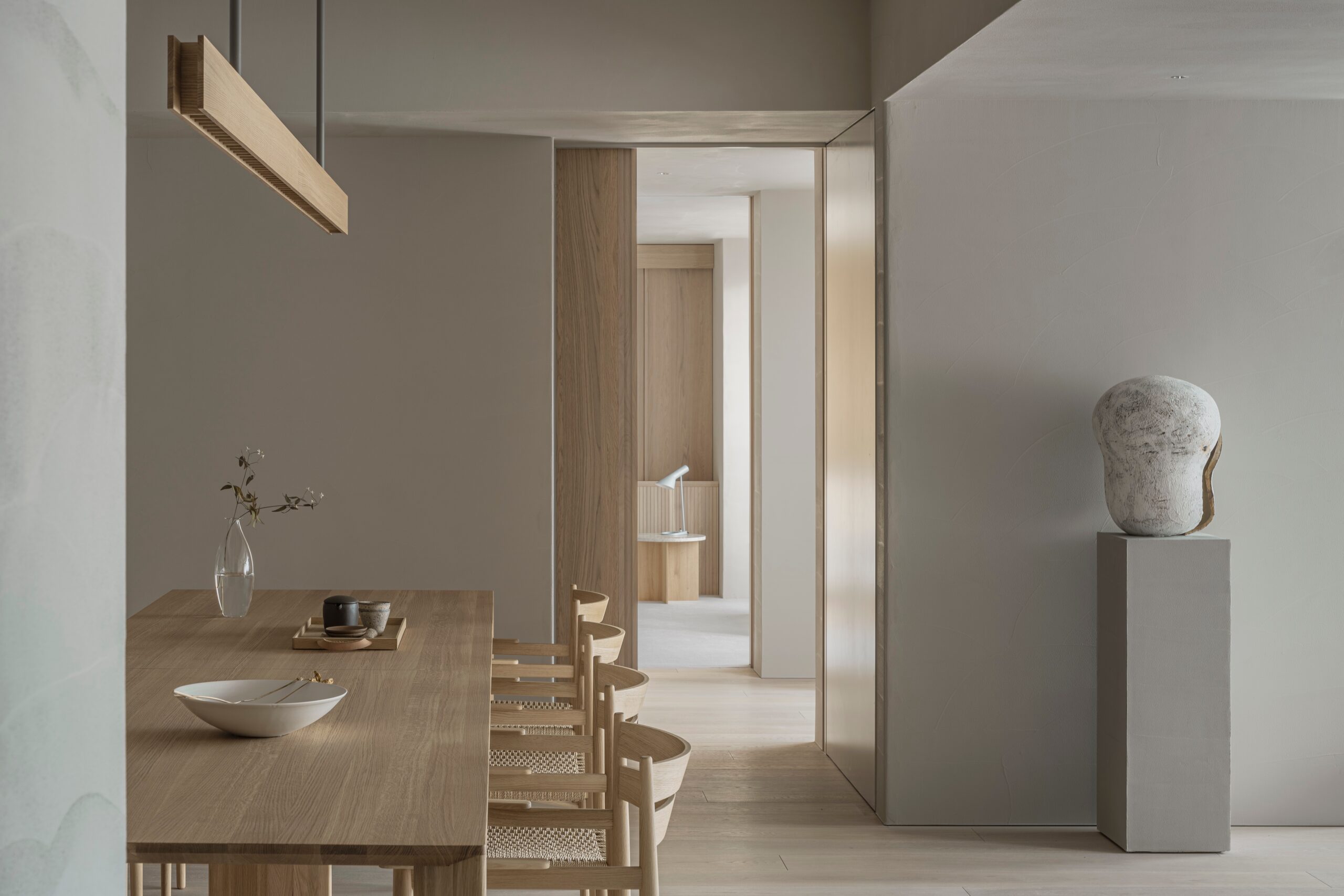
Hiroo occupies a specific niche in Tokyo’s luxury residential hierarchy. Located between Ebisu and Roppongi within Shibuya-ku, the neighborhood combines low-rise residential scale with immediate access to the Hibiya Line and the commercial corridors of Roppongi Hills and Azabudai Hills. Unlike Azabu (麻布) or Shirokane (白金), which front major arterial roads, Hiroo’s interior streets maintain a deliberately residential character, with building height restrictions preserving sightlines and privacy.
The FY2026 rosen-ka for Shibuya-ku premium corridors, to be published July 2026, is expected to show continued elevation from the FY2025 baseline of ¥1.8–2.8 million per square metre. Transaction volume in Hiroo remains constrained by supply: the 2014-built Style House Ebisu and comparable boutique developments rarely reach the open market, with most transfers occurring through private placement.
For foreign buyers, Hiroo offers a secondary advantage: its Shibuya-ku location places it outside the most intensely competitive buyer pools of Minato-ku, while maintaining comparable accessibility to international schools, medical facilities, and diplomatic missions. The 2026 price appreciation has narrowed but not eliminated this arbitrage.
Fixed-Asset Tax: The Annual Burden
Beyond inheritance planning, Hiroo property carries predictable annual obligations under 東京都主税局 (Tokyo Metropolitan Government Bureau of Taxation) rules. The 固定資産税 (kotei shisan-zei, fixed asset tax) applies at 1.4% of assessed value; the 都市計画税 (toshi keikaku-zei, city planning tax) adds 0.3%.
The 住宅用地特例 (residential land special provision) reduces these burdens significantly. For land parcels of 200m² or less, the fixed-asset tax base is assessed at one-sixth of standard value; the city planning tax base at one-third. A ¥500 million Hiroo landholding thus generates annual tax obligations of approximately ¥1.17 million rather than ¥8.5 million.
Reassessment occurs every three years, with the next cycle in FY2027. The 2026 acquisition window therefore captures the current assessment basis before the scheduled revaluation. Payment schedules for FY2026 run June 30, September 30, January 5, 2026, and March 2, 2026.
Residency Status and Worldwide Taxation
Foreign buyers fall into two categories with divergent tax exposure. 無制限納税義務者 (unlimited taxpayers) are foreign nationals resident in Japan for more than 10 of the past 15 years. This group faces taxation on worldwide assets, including property held outside Japan. 制限納税義務者 (limited taxpayers) are non-residents or shorter-term residents, taxed only on Japan-sited assets.
The five-year rental property rule applies to both categories for Japan-sited holdings. However, unlimited taxpayers face additional complexity: Hiroo real estate may trigger Japanese inheritance tax on their global estate, with potential treaty relief depending on jurisdiction. The United States, for instance, maintains an estate tax treaty with Japan that eliminates double taxation through credit mechanisms; many European and Asian jurisdictions do not.
For limited taxpayers, Hiroo property represents a contained, Japan-only exposure. This structural clarity explains why the neighborhood attracts significant non-resident investment from jurisdictions without comprehensive tax treaties. The 2026 reform does not alter this residency-based framework, but it does reduce the efficiency of rental property as a wealth transfer vehicle for both categories.
Strategic Acquisition Scenarios
Three distinct buyer profiles emerge for the 2026 window.
Short-hold estate planners seek to acquire before January 2027 with inheritance or gift events anticipated within five years. For this group, the pre-reform valuation rules preserve substantial tax efficiency. The acquisition must complete, with 手付金 (tetsuke-kin, earnest-money deposit, typically 10% of purchase price) transferred and contracts executed, before December 31, 2026. Long-hold investors with five-year-plus horizons face less urgency. The reform’s hold-period test resets after five years, restoring full rosen-ka-based discounts. For this group, 2026 offers price appreciation exposure without structural disadvantage, but no unique tax benefit. Development-oriented buyers receive a specific exemption. New construction on land held more than five years is excluded from the new rule for the land component. A buyer assembling Hiroo land in 2021, for instance, could develop in 2026–2027 without triggering the compressed valuation. This creates secondary market opportunities in land parcels with established hold periods.The Wellis Daikanyama Sarugakucho Terrace and comparable developments in adjacent neighborhoods illustrate this pattern: land assembly predating 2020, construction completion in 2024–2025, and current resale at premiums reflecting the embedded tax efficiency.
Due Diligence Specifics for Hiroo Transactions
Foreign buyers encounter predictable friction points in Tokyo luxury residential acquisition. 重要事項説明 (juuyou-jikou-setsumei, the statutory pre-contract disclosure meeting) requires Japanese-language delivery; statutory documentation runs to 50–100 pages for complex assets. The 宅建士 (takken-shi, Japan’s licensed real-estate transaction specialist) conducting this meeting bears legal liability for accuracy, yet many agencies delegate initial client contact to unlicensed sales staff.
REINS (the national MLS operated by the Real Estate Information Network) lists available inventory, but premium Hiroo properties frequently transact before public listing. Direct brokerage relationships, maintained over years, provide earlier visibility. The 登記 (touki, transfer of legal title recorded at the Legal Affairs Bureau) process requires 2–4 weeks post-contract, with foreign buyers needing 印鑑証明 (inkan shoumei, registered seal certificate) or notarized power-of-attorney arrangements.
For the 2026 window, transaction timing carries particular weight. A contract signed December 15, 2026, with 手付金 transferred, secures pre-reform status even if 登記 completes in January 2027. A contract dated January 2, 2027, falls under new rules regardless of negotiation commencement date.
Koukyuu is a private buyer’s advisory for distinguished Tokyo residences in Hiroo (広尾), Shoto, and Ebisu, focused exclusively on transactions of ¥300 million and above. A licensed 宅建士 personally handles every stage of the engagement, from the first consultation to the signing, a continuity most Tokyo agencies do not offer. Book a private consultation).