


Reviewed by a Koukyuu Takkenshi (宅地建物取引士)
Fact-checked against current Japanese real-estate law, tax rules, and market data by a nationally licensed specialist who oversees luxury transactions across Minato, Shibuya, and Chiyoda. In Japan, a Takkenshi is legally required to sign off on every property transaction, and about 15% of candidates pass the exam each year.
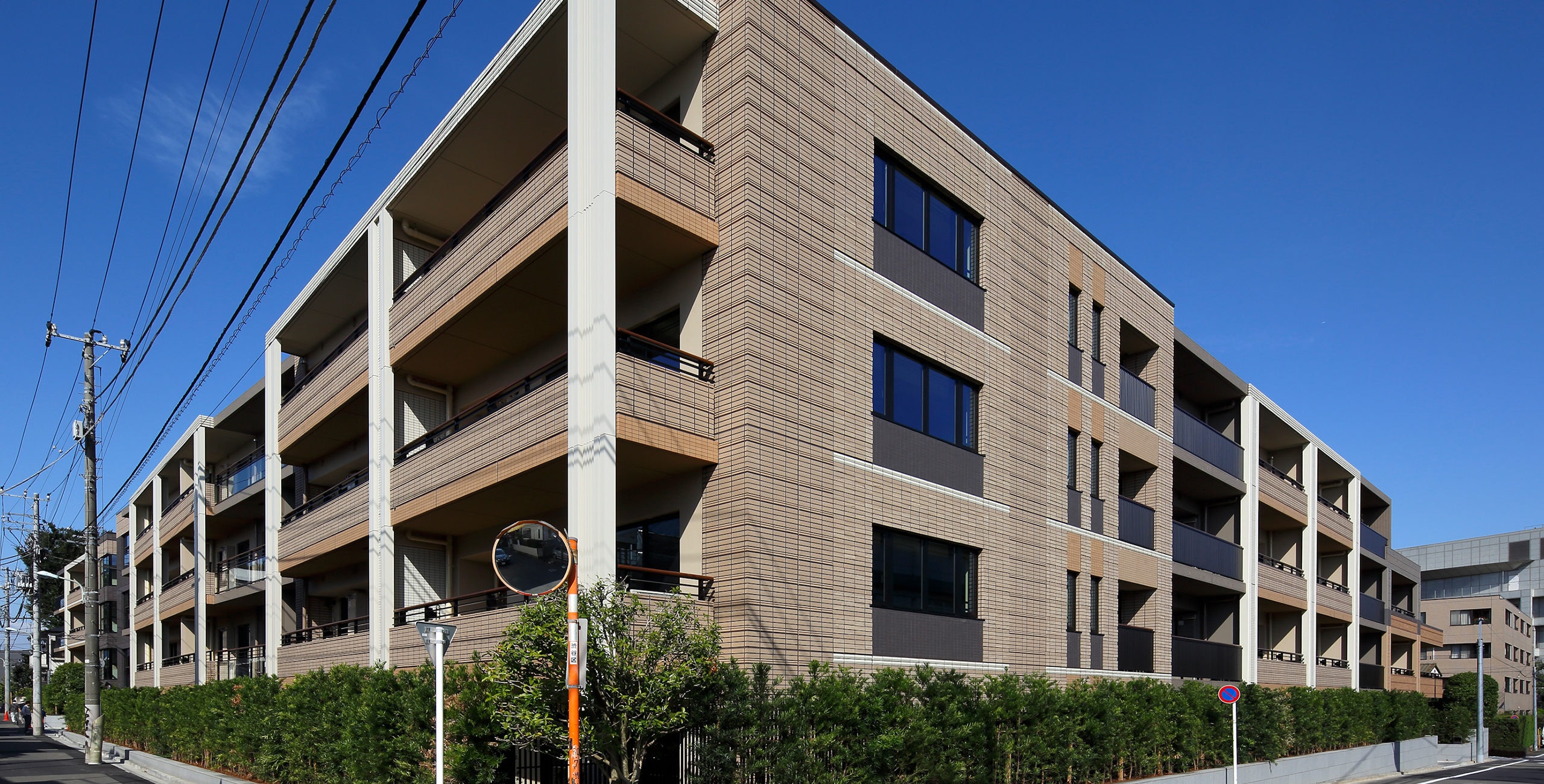
In February 2026, a 91.39 square meter unit at Grand Maison Shibuya Ōyamachō sold for ¥458 million including tax before the building reached full completion. The development, a 20-unit low-rise in a Category I Low-Rise Residential Zone, had equipped its kitchens with Molteni&C systems and Miele appliances. Molteni&C does not supply standard Tokyo condominiums. The price equated to roughly ¥5 million per square meter, a threshold that now separates true architect-designed residences from marketed luxury.
This transaction illustrates a structural shift in Tokyo’s ultra-luxury residential market. Supply constraints in Minato-ku (港区), Shibuya-ku (渋谷区), and Chiyoda-ku (千代田区) have compressed availability of new stock, while foreign capital continues to enter through yen weakness. The result is a bifurcated market: standardized premium product and genuinely limited architect-designed residences with documented provenance.
What “Designer” Actually Means in Tokyo
The term デザイナーズマンション (designers-manshon) carries no regulatory definition. A developer may apply it to any unit with exposed concrete and pendant lighting. For the purposes of serious acquisition, the market recognizes three distinct categories.
Signature Architect ProjectsThese involve named architects with international exhibition history. The KITA (ザ・キタ) in Shibuya-ku, completed in 2020 by 隈研吾 (Kengo Kuma), remains the reference. Its 13 units feature extensive wood and marble applications, natural ventilation systems, and ceiling heights exceeding standard condominium specifications. Unit 202, a 160.51 square meter 2LDK with two walk-in closets, currently lists on application. The Tea House penthouse, at 1,035 square meters with private terrace and pool, represents among the largest single residential floorplates in central Tokyo.
Kuma’s designs command measurable premiums. Comparable standard luxury product in the same district trades at approximately 60% of The KITA’s per-square-meter valuation.
Architect-Led RenovationsThese reposition existing stock, typically 1980s-1990s vintage buildings in prime locations. The renovation process involves structural assessment, seismic retrofitting where required, and complete interior reconstruction. Quality varies substantially. Credible projects disclose the supervising architect, construction company, and warranty terms. Units without this documentation should be evaluated as standard renovated stock, regardless of aesthetic presentation.
Developer Marketing CategoriesThe majority of “designer” listings fall here. Common markers include: exposed concrete walls, open kitchens, designer-branded fixture packages, and compact floorplates optimized for rental yield. These serve a legitimate market segment but should not be confused with architect-designed residences. Entry pricing typically ranges ¥80-150 million for 50-70 square meters.
Price Benchmarks and Location Premiums in 2026
The 令和8年公示地価 (2026 Official Posted Land Price), released March 18 by the Ministry of Land, Infrastructure, Transport and Tourism, recorded an 8.9% year-on-year increase for Tokyo’s 23 wards. This is the steepest appreciation since the early 1990s. Within this aggregate, architect-designed residences in prime wards have decoupled from the broader market.
Current transaction evidence includes:
| Segment | Size Range | Price Range (2026) | Per-Square-Meter Benchmark |
|---|---|---|---|
| Entry architect-renovated | 50-70㎡ | ¥80-150 million | ¥1.1-2.1 million |
| Mid-tier signature design | 70-100㎡ | ¥150-400 million | ¥2.1-4 million |
| Ultra-luxury architect projects | 100㎡+ | ¥400 million-¥2 billion+ | ¥4-8 million |
Proud Jingūmae (プラウド神宮前), a 76-unit 2024 completion in Shibuya-ku, listed a premium unit at ¥1.269 billion for 141.34 square meters in March 2026. This equates to approximately ¥897,000 per square meter, or roughly ¥29.7 million per tsubo (坪, the traditional Japanese unit of 3.305 square meters).
Location premiums follow predictable patterns. Jingūmae, Kita-Aoyama, and Nishi-Azabu command 15-25% premiums over comparable product in secondary Shibuya-ku addresses. Minato-ku’s Azabu (麻布) and Shirokane (白金) districts maintain the highest sustained valuations, though Shibuya-ku has narrowed the gap since 2023.
The Most Expensive Apartments in Tokyo: 2026 Price Guide for Serious Buyers provides additional transaction-level detail on ultra-luxury segments above ¥1 billion.The January 2027 Inheritance Tax Realignment
The most consequential policy change affecting foreign buyers is the inheritance tax reform effective January 1, 2027. The 令和8年度税制改正大綱 (FY2026 Tax Reform Outline), announced December 19, 2025, eliminates a long-standing valuation advantage.
Current System (through December 31, 2026)Real estate is valued for inheritance and gift tax purposes using 路線価 (rosen-ka, road-frontage value) for land, approximately 80% of official posted land prices. Buildings use 固定資産税評価額 (kotei shisan-zei hyōka-gaku, fixed asset tax valuation). This creates substantial compression versus market value. A ¥500 million property might be assessed at ¥300-350 million for tax purposes.
2027 System (effective January 1, 2027)Rental properties acquired within five years of an inheritance or gift event will be valued at approximately 80% of acquisition price, effectively using market value as the benchmark. Properties acquired before January 1, 2022 retain grandfathered status for 2027 inheritance events under the old rules.
This compresses the window for tax-efficient acquisition. A foreign buyer completing purchase in December 2026 versus January 2027 faces potentially material differences in eventual estate tax exposure.
Residency ClassificationsThe reform interacts differently depending on residency status:
- 無制限納税義務者 (unlimited taxpayers): Foreign nationals resident in Japan for 10 or more of the past 15 years face inheritance and gift tax on worldwide assets. The 2027 valuation change affects their entire estate planning.
- 制限納税義務者 (limited taxpayers): Non-residents or those with fewer than 10 years’ residency face tax only on Japan-sited assets. The reform still affects their Tokyo property valuation but with narrower extraterritorial implications.
For buyers with multi-jurisdictional estate structures, the interaction between Japanese inheritance tax and home-country estate tax treaties requires advance analysis. Japan has comprehensive treaties with the United States, United Kingdom, France, and several other jurisdictions, but treaty provisions vary in their treatment of real estate situs.
Acquisition Mechanics and Foreign Buyer Specifics
Japan imposes no restrictions on foreign freehold ownership. No foreign buyer stamp duties, no minimum holding periods, no citizenship requirements for registration. This regulatory openness, combined with yen depreciation since 2022, has sustained foreign demand even as domestic interest rates have risen modestly.
Financing ConstraintsJapanese banks extend limited mortgage availability to non-resident foreign buyers. 永住権 (eijuuken, permanent residency) substantially improves access, though loan-to-value ratios and spreads remain less favorable than for domestic borrowers. Many foreign buyers in the ¥300 million-plus segment purchase without leverage or secure offshore financing against non-Japanese assets.
Taxes at Acquisition and Holding| Tax | Rate | Base | Effective Through |
|---|---|---|---|
| 不動産取得税 (Real Estate Acquisition Tax) | 3% reduced / 4% standard | 固定資産税評価額 | Reduced rate: March 31, 2027 |
| 固定資産税 (Fixed Asset Tax) | 1.4% annually | 固定資産税評価額 | Next rebase: FY2027 |
| 都市計画税 (City Planning Tax) | 0.3% annually | 固定資産税評価額 | Where applicable in urbanization zones |
| 譲渡所得税 (Capital Gains Tax) | 20.315% long-term / 39.63% short-term | Gain | “January 1 Rule” determines holding period |
Non-resident sellers face 10.21% withholding on gross sale price, recoverable through tax filing if the actual liability is lower.
Transaction ProcessEvery transaction requires a 宅建士 (takken-shi, licensed real estate transaction specialist) to conduct the 重要事項説明 (jūyō-jikō-setsumei, statutory pre-contract disclosure meeting). This is not optional. For transactions exceeding ¥800 million, continuity of licensed representation through due diligence, contract execution, and 登記 (tōki, title transfer registration) becomes operationally significant. Most Tokyo agencies route clients through unlicensed sales staff until closing day. This creates information discontinuities that materialize in complex transactions.
Koukyuu maintains licensed 宅建士 continuity at every stage, from initial consultation through signing. This is not standard practice.
Notable 2026 Completions and Pipeline
Beyond Grand Maison Shibuya Ōyamachō, several architect-designed projects reached completion or near-completion in early 2026:
Completed February 2026:- Grand Maison Shibuya Ōyamachō: 20 units, sold out at pricing up to ¥458 million for 91.39㎡
- The KITA Unit 202: 160.51㎡, price on application
- Proud Jingūmae premium units: ¥897,000/㎡ benchmark established
Supply of new architect-designed stock in Minato-ku and Shibuya-ku will remain constrained through 2027. Development sites in 第一種低層住居専用地域 (Category I Low-Rise Residential Zones) face strict height and density restrictions. The trade-off favors existing stock renovation, which carries seismic risk assessment requirements for pre-2001 construction.
Diana Garden Nishi-Azabu represents the repositioned vintage category: a 1990s building in a prime Minato-ku address, evaluated for structural integrity and renovation potential.Evaluating Architect Credentials
Serious buyers should verify four elements before attributing premium value to architect involvement:
The absence of any of these elements should prompt price renegotiation toward standard luxury comparables.
Koukyuu is a private buyer’s advisory for distinguished Tokyo residences in Azabu (麻布), Hiroo (広尾), and Shirokane (白金), focused exclusively on transactions of ¥300 million and above. A licensed 宅建士 personally handles every stage of the engagement, from the first consultation to the signing. Book a private consultation).