


Reviewed by a Koukyuu Takkenshi (宅地建物取引士)
Fact-checked against current Japanese real-estate law, tax rules, and market data by a nationally licensed specialist who oversees luxury transactions across Minato, Shibuya, and Chiyoda. In Japan, a Takkenshi is legally required to sign off on every property transaction, and about 15% of candidates pass the exam each year.
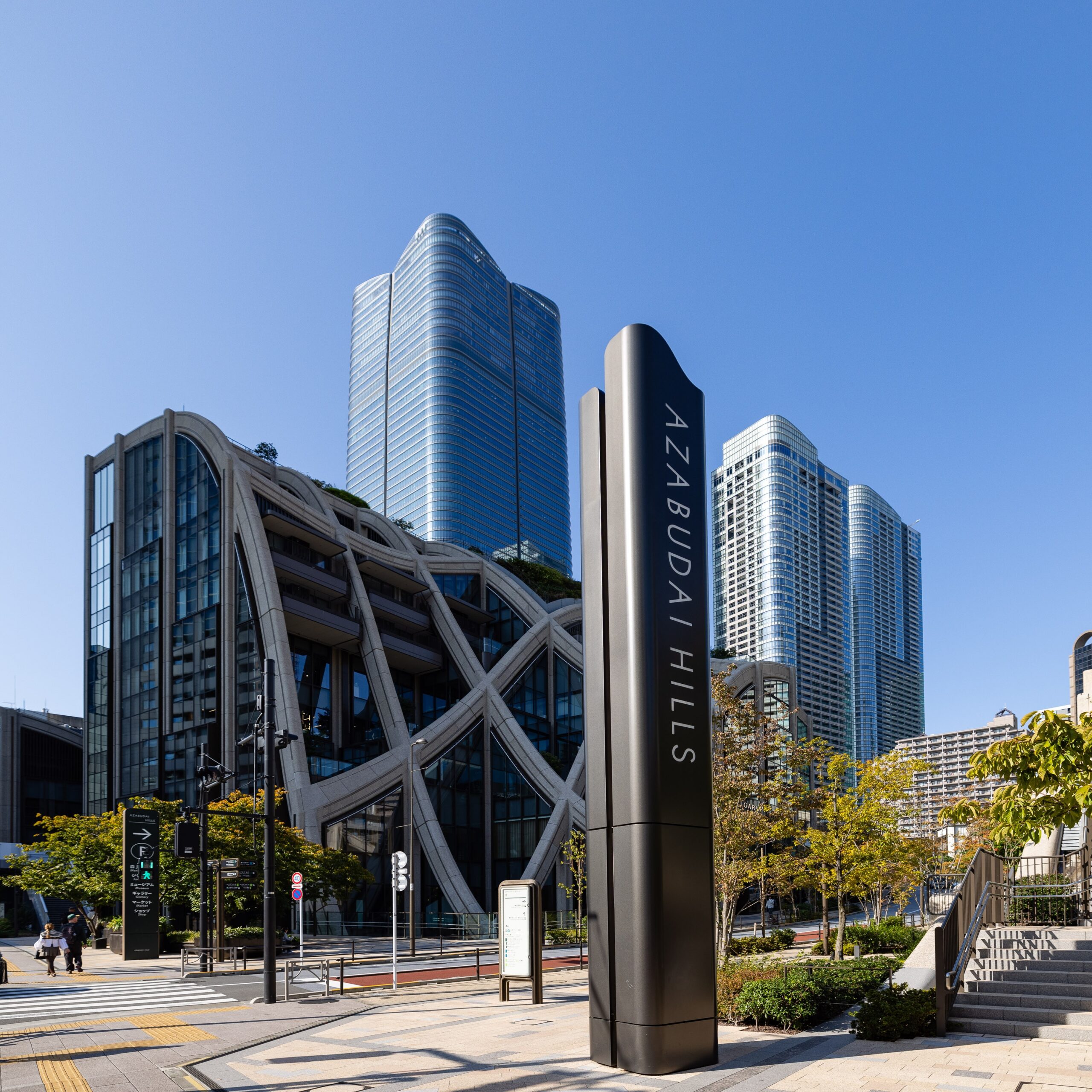
In January 2026, a foreign investor who purchased a ¥280 million Azabudai Hills residence in June 2021 faced an unexpected tax bill. Their property had appreciated 34%, yet selling that month would trigger short-term capital gains tax of ~39.63%. The holding period calculation does not run from the purchase date. It freezes on January 1 of the year of disposal, making their effective holding period four years and seven months, not five years and seven months. Delaying until January 2027 would reduce the tax burden to ~20.315%, preserving approximately ¥54 million on a ¥95 million gain. This mechanical timing rule, buried in National Tax Agency guidance No. 3208, governs more exit decisions in 2026 than any market forecast.
The Bifurcated Tax System and Its January 1 Trap
Japan’s capital gains tax system for real estate operates with two distinct rates. For holdings of five years or less, classified as 短期譲渡所得 (tanki-jouto-shotoku, short-term capital gains), the combined rate reaches approximately 39.63%. This includes 30.63% income tax, 9% residence tax, and the 2.1% reconstruction surtax. For holdings exceeding five years, classified as 長期譲渡所得 (chouki-jouto-shotoku, long-term capital gains), the rate drops to approximately 20.315%, comprising 15.315% income tax, 5% residence tax, and the same reconstruction surtax.
The statutory language appears straightforward. Article 31 of the Income Tax Act defines the five-year threshold. Yet the administrative interpretation creates a cliff. The National Tax Agency determines holding period as of January 1 of the year in which the transfer occurs, not the actual elapsed time since acquisition. A property purchased December 31, 2020, and sold January 2, 2026, holds for five years and two days in calendar time. On January 1, 2026, however, it has completed only four years and one day. The short-term rate applies.
This timing mechanism generates predictable market patterns. Transaction volumes in Tokyo’s luxury condominium market historically compress in October through December as sellers await the calendar turn. January and February see corresponding surges. Data from REINS (the national MLS operated by the Real Estate Information Network) for 2024-2025 shows Minato-ku and Shibuya-ku transactions declining 18% in Q4 versus Q1, with average prices per square meter rising 6% in January-February as tax-motivated sellers withdraw supply.
For foreign investors, the practical implication is stark: calendar-aware scheduling of exits can alter net proceeds by nearly twenty percentage points. A ¥300 million property with ¥100 million unrealized gain faces a ¥19.5 million additional tax burden if sold on December 31, 2026, versus January 2, 2027. The two-day difference is worth more than many annual salaries.
The 2026 Inheritance Tax Reforms and Their Portfolio Implications
Separate from capital gains timing, 2026 introduces structural changes to inheritance taxation that reshape holding decisions. The so-called “5-year rule” (5年ルール, go-nen ruuru) eliminates favorable valuation treatment for rental properties acquired or constructed within five years of the inheritance event. Previously, such properties benefited from route value-based assessment with rental business land reductions, often producing assessed values at 40-60% of market price. Post-reform, they face market-value assessment: acquisition price multiplied by land price fluctuation rate multiplied by 80%.
The reform targets the “tower mansion tax savings” (タワマン節税, tawaman-setsuzei) strategy that dominated Tokyo luxury real estate investment through the early 2020s. High-net-worth individuals purchased high-floor units in premium buildings, exploiting the gap between market values and inheritance tax assessments. A ¥300 million property might assess at ¥120 million, reducing potential inheritance tax by ¥90 million at the 55% marginal rate for estates exceeding ¥600 million.
Under 2026 rules, that same property acquired three years prior to death assesses at approximately ¥240 million. At a 50% inheritance tax bracket, the additional burden reaches ¥60 million. The reform extends to real estate fractionalization products (小口化商品, koguchika-shouhin), which permanently lose favorable valuation regardless of holding period.
For portfolio planning, this creates a binding constraint. Properties held primarily for estate tax compression must now clear a five-year survival horizon to preserve their structural advantage. Investors in their sixties or seventies face accelerated decision timelines. The reform also interacts with the January 1 capital gains rule: a property held four years and eleven months on January 1, 2026, requires thirteen additional months to secure both long-term capital gains treatment and inheritance tax protection.
Non-Resident Taxation: New Consumption Tax and Withholding Obligations
Foreign investors face additional layers specific to non-resident status. Effective October 2026, consumption tax applies to brokerage fees for domestic real estate transactions regardless of seller or buyer residence. The previous export exemption (輸出免税, yushutsu-menzei) for services related to Japanese real estate sold by non-residents is eliminated. On a ¥300 million transaction with standard 3% plus consumption tax brokerage commission, this adds ¥900,000 to transaction costs.
More significantly, withholding tax obligations create compliance risks that fall on the counterparty, not the foreign seller. When a non-resident sells Japanese real estate, the buyer must withhold 10.21% of the purchase price and remit to the National Tax Agency. For lease arrangements, tenants must withhold 20.42% of rent payments to non-resident landlords. The payment side bears penalties for non-compliance, creating strong incentive for verification of residence status at contract execution.
This mechanism generates practical friction. Japanese buyers of luxury properties frequently request residence certification (居住者該当証明, kyojusha-gaitou-shoumei) from sellers to confirm withholding obligations. Non-resident sellers without Japanese tax identification numbers face delays in securing refunds of over-withheld amounts, with processing timelines extending 12-18 months for complex cases involving depreciation recapture adjustments.
Depreciation recapture (減価償却の取り戻し, genka-shoukyaku-no-torimodoshi) adds computational complexity. For investment properties, accumulated depreciation deductions reduce the cost basis, increasing taxable gain. Yet the rate differential still favors the strategy: depreciation taken against ordinary income at marginal rates up to 45% versus capital gains taxed at ~20.315% creates a net arbitrage benefit of roughly twenty-five percentage points on the depreciated amount.
Market Timing Indicators for 2026-2027
Exit strategy cannot ignore market conditions. The 国土交通省 (Ministry of Land, Infrastructure, Transport and Tourism, MLIT) Real Estate Price Index for investment condominiums reached 195.7 as of December 2025, up 11.2% year-over-year. This trajectory, while positive, occurs against a tightening interest rate environment. The Bank of Japan ended negative rate policy in March 2024, with gradual increases continuing through early 2026.
Rising rates pressure valuations through multiple channels. Debt service costs increase for leveraged buyers, reducing their capacity to bid. Cap rate expansion compresses investment property prices as required yields adjust upward. Liquidity concentrates in higher-quality assets as marginal buyers exit.
Demographic flows provide partial offset. The 住民基本台帳人口移動報告 (jumin-kihon-daicho-jinkou-idou-houkoku, resident registry migration report) for 2025 shows continued net inflow to the Tokyo metropolitan area, supporting rental demand for well-located properties. This bifurcation favors prime Minato-ku and Shibuya-ku assets over secondary locations.
Professional frameworks suggest evaluating exits through internal rate of return thresholds. Properties generating 10% or above IRR warrant consideration for realization if unrealized gains are substantial, particularly with interest rate headwinds. The 5-10% range supports continued holding for income replacement. Below 3%, disposal and redeployment typically dominates. These benchmarks, drawn from institutional real estate practice, provide discipline against sentiment-driven timing.
Three Strategic Exit Patterns
Practical exit planning clusters into three archetypes, each with distinct optimal conditions.
Sale and Capital Realization suits properties with high unrealized gains, depreciation exhaustion, or pending major repairs. The current environment favors this pattern for assets held approaching the five-year threshold, where January 1 timing can secure rate savings before potential price corrections materialize. For a ¥400 million property in Hiroo or Shirokane with ¥150 million appreciation, the ¥29 million tax differential between short-term and long-term rates often exceeds expected near-term price appreciation. Long-Term Hold fits prime locations with stable tenancy, fully amortized debt, and inheritance planning priority. The 2026 reforms strengthen this pattern for properties already past the five-year acquisition window, where estate tax compression remains viable. Income replacement and pension function dominate return expectations. Hiroo real estate in 2026 exemplifies this pattern, with international school proximity and stable family tenant demand supporting multi-decade holding horizons. Portfolio Restructuring addresses yield compression, depreciation schedule resets, or management burden reduction. This pattern involves selling depreciated assets to acquire newer vintage properties with fresh depreciation schedules, or consolidating multiple units into single-building ownership for operational efficiency. Scale-up opportunities from ¥300 million condominium units to ¥800 million small buildings in Kita-Aoyama or Nishi-Azabu fall in this category. The valuation gap closing on Tokyo rental properties examines how compressed yields in prime locations are shifting investor attention to adjacent districts.Execution Mechanics and Due Diligence
Executing any exit pattern requires attention to mechanical details that foreign investors often overlook. The 重要事項説明 (juuyou-jikou-setsumei, statutory pre-contract disclosure meeting) for sellers includes obligation to disclose material defects, but also to confirm tax status representations that affect buyer withholding obligations. Errors here can delay closing or trigger renegotiation.
手付金 (tetsuke-kin, the earnest-money deposit, typically 10% of the purchase price) mechanics differ for non-residents. Japanese buyers often expect personal bank transfer from seller accounts. Foreign sellers with funds in offshore structures should establish Japanese account capability or arrange qualified intermediary structures before listing. Last-minute wire transfer complications have collapsed transactions above ¥500 million.
登記 (touki, the transfer of legal title recorded at the Legal Affairs Bureau) requires notarized documentation for non-resident sellers. Apostille requirements under the Hague Convention apply for documents from signatory countries. Execution timing must accommodate embassy or consulate availability, typically adding two to four weeks to closing schedules versus domestic transactions.
For investors considering re-entry, how to start your investment property in Japan as a foreign buyer in 2026 examines current financing availability and visa structures. The 永住権 (eijuuken, Japanese permanent residency) threshold for mortgage access has tightened at several major banks, with income documentation requirements expanding from two to three years for self-employed applicants.
The 2026 Decision Framework
Synthesizing these elements produces a conditional decision matrix for foreign holders of Tokyo luxury real estate.
Properties held four or more years with substantial unrealized gains and located in central Tokyo warrant serious consideration of accelerated sale to January 2027 or beyond. The combined effect of securing long-term capital gains treatment and capturing current price levels before rate-driven correction exceeds typical holding period returns for the intervening months.
Prime-location properties with full loan repayment and stable cash flow, particularly those already past the five-year acquisition window for inheritance purposes, support continued holding. The income replacement function and residual estate tax compression outweigh realization benefits.
Suburban or regional properties, aging structures, or assets with exhausted depreciation and sub-5% current yields face expedited disposal recommendations. Demographic risk, liquidity deterioration, and stranded asset potential dominate local market optimism.
For properties in the four-to-five-year holding period window, the January 1 rule creates a binding constraint. Selling in calendar year 2026 sacrifices approximately nineteen percentage points of net proceeds. The market premium required to justify this sacrifice exceeds reasonable expectations for prime Tokyo assets in the current environment.
Koukyuu represents buyers seeking distinguished Tokyo residences in Azabudai Hills, Aoyama, and Chiyoda-ku, focused exclusively on transactions of ¥300 million and above. A licensed 宅建士 (takken-shi, Japan’s licensed real-estate transaction specialist) personally handles every stage of the engagement, from the first consultation to the signing, a continuity most Tokyo agencies do not offer. Book a private consultation).