


Reviewed by a Koukyuu Takkenshi (宅地建物取引士)
Fact-checked against current Japanese real-estate law, tax rules, and market data by a nationally licensed specialist who oversees luxury transactions across Minato, Shibuya, and Chiyoda. In Japan, a Takkenshi is legally required to sign off on every property transaction, and about 15% of candidates pass the exam each year.
Tokyo student apartment rent entered 2026 at ¥54,130 nationwide average, with the 23 wards commanding ¥70,490 monthly when utilities are included. This figure, tracked by T-UP Property’s annual student housing survey, represents a 3.8% increase from 2024 baseline data driven by construction cost inflation and successive rises in 固定資産税 (koteishisan-zei, fixed asset tax) and 都市計画税 (toshi-keikaku-zei, city planning tax) that landlords now pass through at renewal. For international students awaiting 在留資格認定証明書 (COE, Certificate of Eligibility) issuance for April 2026 intake, these numbers frame the financial proof required at visa application: typically six months of rent plus living expenses, or roughly ¥600,000–¥900,000 in liquid savings demonstrated at immigration.
Average Student Rent by Region: Tokyo vs Osaka, Kyoto and Beyond
The Tokyo 23 wards stratify sharply by proximity to university clusters and Yamanote Line access. Central wards, Minato (港区), Chuo (中央区), and Chiyoda (千代田区), where Waseda, Keio, and several national universities maintain campuses, command ¥110,000–¥150,000 for 1K (one-room apartment with separate kitchen) units under 25 square meters. Outer 23 wards, Setagaya (世田谷区), Nerima (練馬区), and Adachi (足立区), offer comparable floor plans at ¥60,000–¥110,000, with the lower bound typically requiring 15–20 minute walks from the nearest station.
Near suburbs present a distinct value tier. Musashino (武蔵野市), Mitaka (三鷹市), and Chofu (調布市), all within 30 minutes of Shinjuku via JR Chuo Line, price 1R/1K units at ¥50,000–¥90,000. The Tama area, Kunitachi (国立市) and Hachioji (八王子市), where Tokyo University of Foreign Studies and several specialized institutes operate, drops to ¥40,000–¥80,000, though commute times exceed 40 minutes to central Tokyo.
Regional comparison clarifies the capital premium. Osaka’s Kita (北区) and Chuo (中央区) wards, hosting Osaka University and Kansai University satellite campuses, range ¥40,000–¥70,000 for student-grade 1K units. Kyoto, with its concentrated university district around Yoshida and Hyakumanben, sits at ¥40,000–¥60,000. Nagoya (名古屋市), Sendai (仙台市), and Fukuoka (福岡市) cluster between ¥37,000–¥50,000, with Sapporo (札幌市) at the national floor of ¥33,000–¥45,000 for comparable inventory.
These figures assume 定期借家契約 (teiki-shakuya-keiyaku, fixed-term rental contracts) of two years, now dominant in student-adjacent markets. Unlike 普通借家契約 (futsuu-shakuya-keiyaku, standard indefinite contracts) that renew automatically under the same terms, fixed-term contracts expire completely, allowing landlords to adjust rent to current market rates. For students, this means potential relocation or renegotiation at the 24-month mark, a structural shift from the pre-2020 market where indefinite contracts prevailed.
Monthly Living Expenses Breakdown for Students in Japan
Total monthly expenditure for Tokyo-based students averaged ¥137,320 in 2024–2025 tracking, with 2026 projections holding steady despite inflationary pressure on food and transport. Housing dominates at ¥70,490 combined (rent ¥53,135, utilities ¥6,638, communication ¥10,717), consuming 51% of typical outflows. Food expenditure registered ¥21,867, entertainment ¥10,825, with remaining daily necessities at ¥14,275.
This aggregate assumes single occupancy in private rental housing. University dormitories, where available, reduce the housing line substantially. Tokyo International University’s Narita campus dormitory lists ¥35,000–¥45,000 monthly including utilities and weekday meals, though availability is strictly limited to first-year admits. Private sector student dormitories operated by corporations like Kyoritsu Maintenance or Global dormitory providers price at ¥55,000–¥85,000 with meal plans, typically 10–15% below equivalent private apartment costs but with curfew and visitor restrictions that adult students may find constraining.
Initial move-in costs, 初期費用 (shoki-hiyou), require separate capitalization. Standard Japanese rental contracts demand 敷金 (shikikin, security deposit, typically one month refundable minus restoration), 礼金 (reikin, non-refundable gratuity to landlord, historically one month, now frequently waived in student-focused properties), 仲介手数料 (chuukai-tesuurou, brokerage fee, one month plus consumption tax), plus first month rent and 火災保険 (kasai-hoken, fire insurance, ¥15,000–¥25,000 two-year term). For a ¥70,000 monthly unit, initial outlay reaches ¥280,000–¥350,000 before furniture, appliances, and 引越し (hikkoshi, moving) costs.
How Students Finance Rent: Parental Support, Scholarships and Part-Time Work
The ¥137,320 monthly requirement is met through three primary channels, often in combination. Parental remittance, 仕送り (shiokuri), averages ¥72,000–¥88,000 monthly for Tokyo-based students, ¥50,000–¥60,000 nationally. This gap between remittance and actual expenditure explains why 7.6% of students report zero parental support, funding entirely through scholarships and part-time employment.
Scholarship landscape expanded in 2026 with 給付型奨学金 (kyuufu-gata-shougakukin, non-repayable grants) now comprising 35% of national disbursement versus 15% in 2018. JASSO’s maximum monthly award reached ¥48,000 for privately financed international students with superior entrance examination scores and documented financial need. University-specific programs, Waseda’s International Student Housing Support and Todai’s Peak Leadership Scholarship, add ¥30,000–¥50,000 monthly stipends competitive at admission.
Part-time work, アルバイト (arubaito), operates under revised 年収の壁 (nenjuu-no-kabe, annual income threshold) regulations effective 2025–2026. Students under 22 may earn up to ¥1.5 million annually without losing dependent status for parental health insurance and tax purposes, up from ¥1.03 million. At Tokyo’s current minimum wage of ¥1,163 (rising to ¥1,200 October 2026), this permits approximately 25 hours weekly during term, 40 hours during extended breaks, yielding ¥120,000–¥150,000 monthly gross during intensive work periods.
The intersection of these income sources with rental affordability creates distinct segments. Full scholarship recipients plus permitted part-time work can self-finance central Tokyo 1K units. Parental-supported students typically target outer ward or near-suburb locations, accepting commute trade-offs. Zero-support students concentrate in share houses, シェアハウス (shea-hausu), or university dormitories where initial costs and monthly obligations compress into manageable ranges.
Student Housing Types: Apartments, Share Houses and University Dormitories
Private apartments remain the plurality choice at 62% of Tokyo student households, though share house penetration reached 18% in 2026, up from 9% in 2019. The distinction matters for visa documentation and financial proof.
Private 1K/1R apartments offer autonomous lease contracts directly with landlords or management companies, generating 賃貸借契約書 (chintaishaku-keiyakusho, formal rental agreements) acceptable for all immigration documentation. Individual metering of electricity, gas, and water permits precise consumption control. The trade-off is isolation, language barrier at contract execution, and the full initial cost burden described above.
Share houses aggregate 4–12 residents in converted single-family homes or purpose-built small multifamily structures. Monthly rates, ¥45,000–¥75,000 all-inclusive of utilities and internet, undercut private apartments by 20–30% through bedroom size reduction (often 6–9 square meters) and bathroom/kitchen sharing. Operators like Oakhouse, Sakura House, and Borderless House maintain English-language reservation systems and accept international students without Japanese guarantors, 連帯保証人 (rentai-hoshounin, joint guarantors typically required for private rentals). The contract structure is typically 賃貸借契約 with the operating company, not individual room subleases, preserving documentation integrity for immigration.
University dormitories occupy a narrow but critical niche. National universities including Tokyo, Kyoto, and Osaka operate 寮 (ryou) primarily for first-year undergraduates and all graduate international admits. Rates range ¥25,000–¥45,000 with utilities, though availability is strictly rationed. Private universities, Waseda, Keio, Sophia, maintain comparable facilities at ¥40,000–¥60,000. The application deadline for April 2026 intake dormitory placement closed December 2025 for most institutions, making this option unavailable to students still awaiting COE issuance in early 2026.
Key Amenities Students Look for in Japanese Rentals
Amenity expectations have hardened into market standards since 2024. インターネット無料 (intaanetto-muryou, internet included), once a competitive differentiator, is now assumed in 78% of student-targeted listings per Chintai Door’s 2026 survey. Its absence signals dated inventory or peripheral location.
Security features rank second in search filtering. オートロック (ootorokku, auto-lock building entrance), モニター付きインターホン (monitaa-tsuki-intaahon, video intercom with door release), and 防犯カメラ (bouhan-kamera, security cameras) appear in 89% of student inquiries. These are not merely preferences but insurance requirements: fire insurance policies for rental properties increasingly condition coverage on documented security infrastructure, and international student visa renewals may request housing safety confirmation from university international offices.
Station proximity follows standard Tokyo gradients. 徒歩5分 (toho-gofun, within 5-minute walk) commands 15–20% rent premium over 徒歩10分 (toho-juppun, 10-minute walk) equivalent units. For students, the calculation includes last-train considerations: part-time work in restaurant or retail frequently ends 23:00–01:00, when infrequent night buses or expensive taxi fares erode hourly wage gains from central locations.
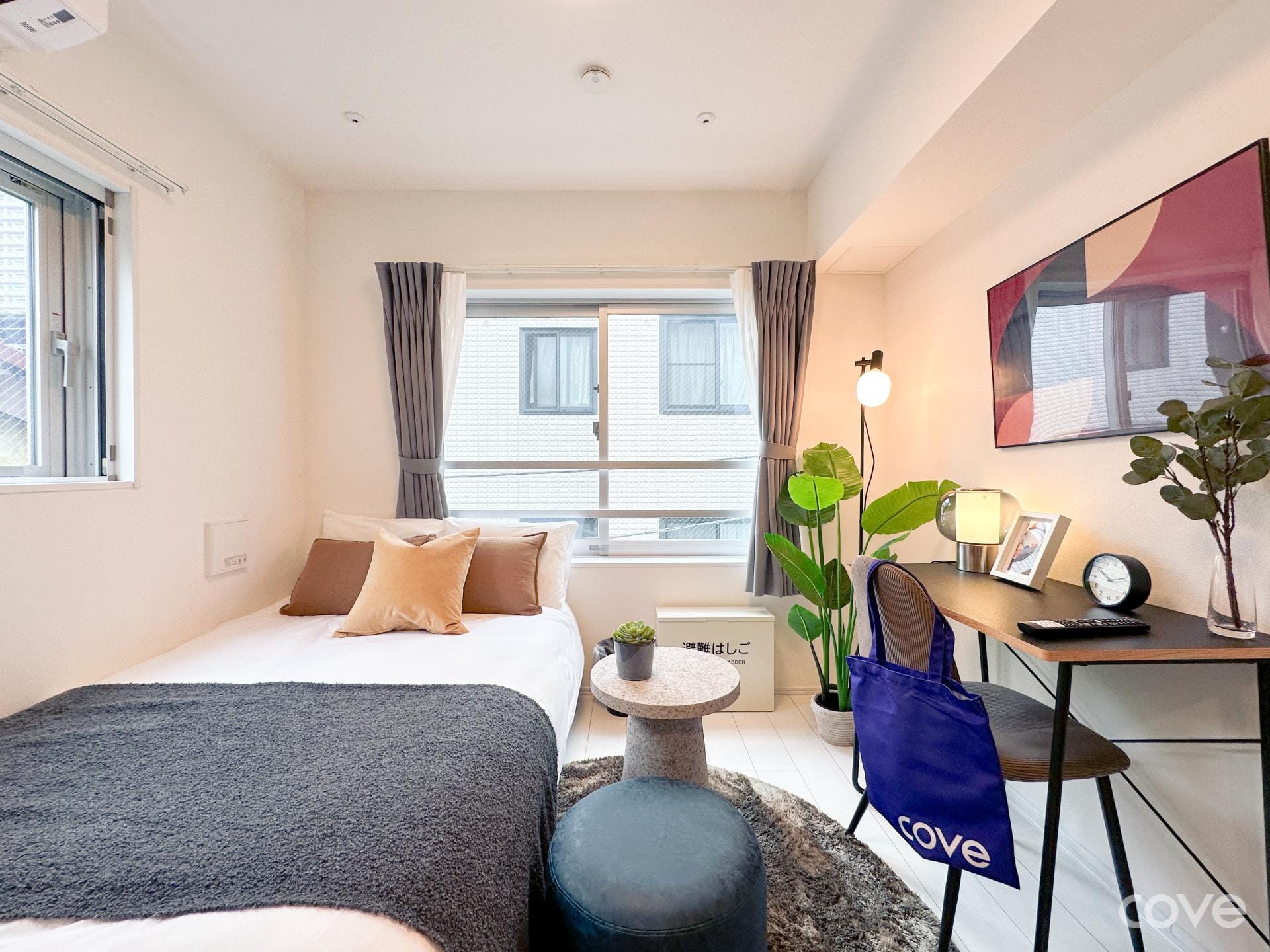
Furniture and appliance inclusion, 家具家電付き (kagu-kaden-tsuki), varies by housing type. Share houses and dormitories provide fully equipped rooms. Private apartments are typically 裸 (hadaka, bare), requiring ¥150,000–¥250,000 initial outlay for refrigerator, washing machine, microwave, and climate control units. Several online retailers now offer 学生セット (gakusei-setto, student furniture/appliance packages) with 12-month installment plans, though these require Japanese bank account and residence card completion, creating catch-22 delays for newly arrived international students.
Rental Contracts for Students: Fixed-Term vs Standard Agreements
The 2026 rental market is defined by contract type divergence. 定期借家契約 (teiki-shakuya-keiyaku, fixed-term contracts) specify precise end dates with no automatic renewal right. 普通借家契約 (futsuu-shakuya-keiyaku, standard contracts) renew indefinitely under identical terms unless landlord demonstrates 正当事由 (seitou-jiyuu, just cause) for termination or rent adjustment.
For landlords in university-adjacent markets, fixed-term contracts enable rent repositioning at two-year intervals to track 基準地価 (kijun-chika, standard land prices) and construction cost increases that rose 1.5% nationwide in 2025, fourth consecutive annual increase. For students, this creates predictable relocation timing but eliminates rent stability through degree completion.
The legal distinction carries procedural weight. Fixed-term contracts require no 更新料 (koushin-ryou, renewal fee) at term end because there is no renewal, only expiration or new contract negotiation. Standard contracts typically impose one-month renewal fees and permit rent increases only through 賃料増額請求 (chinryou-zougaku-seikyuu, formal rent increase request) with documented justification. The 2026 market shows fixed-term penetration at 67% in Shin-Okubo, Takadanobaba, and Waseda-adjacent micro-markets, versus 34% in general Tokyo inventory.
International students face additional contractual complexity. Most private landlords require 連帯保証人 (rentai-hoshounin, joint guarantor) with Japanese residency and documented income, or substitution with 保証会社 (hoshou-gaisha, guarantee company) payment of 50–100% annual rent as non-refundable premium. Several operators now accept 海外保証人 (kaigai-hoshounin, overseas guarantors) for students from designated countries with documented parental income and embassy notarization, though this remains exceptional rather than standard.
Timeline: When to Start Searching for Student Housing in Japan
The 2026 academic calendar imposes rigid search windows. For April intake, the optimal search period opened January 2026 for private apartments, with peak inventory availability February through early March. COE issuance timing, typically 6–8 weeks from application submission, creates tension: students cannot execute binding contracts without 在留カード (zairyuu-kaado, residence card) or at minimum COE with passport, yet desirable inventory contracts within 2–3 weeks of listing.
The practical sequence: secure admission offer with documented enrollment schedule, apply for COE immediately (universities batch-submit for scholarship recipients; self-funded students apply individually through Immigration Services Agency), initiate housing search in parallel with realistic unit availability 4–6 weeks pre-arrival. For October 2026 intake, search window opens July 2026 with identical dynamics.
University dormitory applications operate on separate calendars, typically closing 4–5 months pre-enrollment. Missed deadlines push students immediately into private market search with compressed timelines and reduced negotiation leverage.
For investors in Tokyo’s student-adjacent rental market, these structural patterns create predictable demand concentration. 1K/1R units 20–25 square meters with auto-lock, internet inclusion, and 10-minute station proximity in Waseda, Takadanobaba, Nakano, and Nishi-Waseda micro-markets maintain 4–5% gross yields with vacancy periods rarely exceeding 3–4 weeks between student tenants. The yield compression from central Tokyo’s sub-3% luxury segment makes these peripheral student markets attractive for volume-focused portfolios, though tenant turnover and restoration costs between academic-year leases require operational sophistication distinct from long-term family rental management.
Koukyuu is a private buyer’s advisory for distinguished Tokyo residences in Minato-ku (港区), Shibuya-ku (渋谷区), and Chiyoda-ku (千代田区), focused exclusively on transactions of ¥300 million and above. A licensed 宅建士 (takken-shi, Japan’s licensed real-estate transaction specialist) personally handles every stage of the engagement, from the first consultation to the signing — a continuity most Tokyo agencies do not offer. Begin a private conversation).