


Reviewed by a Koukyuu Takkenshi (宅地建物取引士)
Fact-checked against current Japanese real-estate law, tax rules, and market data by a nationally licensed specialist who oversees luxury transactions across Minato, Shibuya, and Chiyoda. In Japan, a Takkenshi is legally required to sign off on every property transaction, and about 15% of candidates pass the exam each year.
Kyoto Apartment Market Overview: Pricing and Yields in 2026
As of April 2026, new-build whole-building apartments in Kyoto are trading at gross rental yields between 5.0 and 6.7 percent, a meaningful premium over Tokyo’s sub-4 percent new-construction norm. This yield spread reflects both opportunity and structural risk: Kyoto’s landscape preservation ordinances (景観条例, keikan jōrei) severely restrict new supply, while tourism-dependent demand and strict short-term rental regulations create pricing uncertainty for foreign investors unfamiliar with local zoning.
The Higashiyama-ku market illustrates the current pricing tier. A 15-unit wood-frame apartment building completed in March 2026 near Tofukuji Station is listed at ¥286.6 million with a 5.30 percent gross yield. Fushimi-ku, historically Kyoto’s most active investment ward, shows comparable new-build whole-building apartments priced between ¥92.8 million and ¥183 million, with gross yields clustering at 5.0 to 6.66 percent. For context, a similar new-build 一棟アパート (whole-building apartment) in Tokyo’s outer wards (Adachi, Katsushika) would yield 3.5 to 4.2 percent at 2026 market rates.
Condominium (区分所有, kubun shotokuyu) resale prices in Kyoto’s premium zones reflect a different buyer profile. The Laurel Court Kyoto Gosho East complex in Kamigyo-ku, completed in February 2023, shows 2LDK units (65–88 square meters) trading between ¥99.9 million and ¥193.8 million, with implied gross rental yields of only 1.4 to 1.9 percent. This low-yield pricing suggests capital appreciation expectations rather than income-focused investment.
Investment Apartment Yields: How Kyoto Compares to Tokyo
The 5–6.7 percent gross yield range on whole-building kyoto investment apartments reflects a structural advantage over Tokyo’s constrained new-build supply. However, the yield premium comes with specific risks that Tokyo investors do not face at the same intensity.
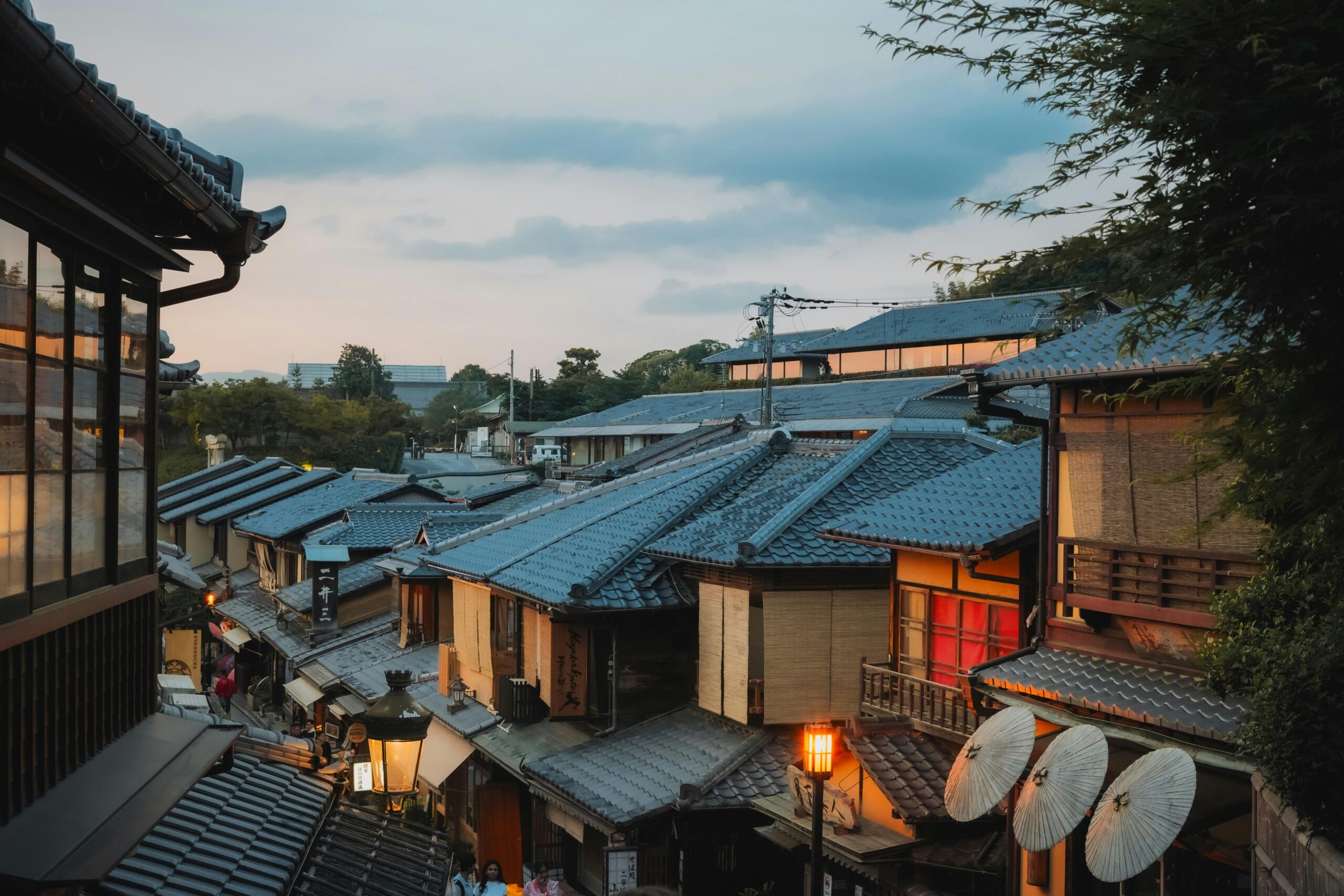
Kyoto’s landscape ordinance framework (京都市景観計画, Kyoto-shi Keikan Keikaku, most recently updated 2022) imposes strict height and design restrictions in central wards. Higashiyama-ku, Nakagyo-ku, and Kamigyo-ku enforce maximum building heights of 10 to 15 meters, effectively capping new residential supply at three to four stories. This regulatory floor under supply pushes developers to pursue smaller, denser sites, raising per-unit construction costs and reducing profit margins unless rents rise. The Higashiyama listing explicitly notes that land parcels exceeding 100 tsubo (approximately 330 square meters) are rare in the ward, positioning the 430-square-meter development site as a scarcity asset.
Tokyo’s outer wards (Adachi-ku, Katsushika-ku, Edogawa-ku) face no equivalent height restrictions, allowing developers to build five to eight-story buildings on the same footprint. This supply elasticity keeps Tokyo yields compressed. Conversely, Kyoto’s regulatory scarcity supports the yield premium, but it also means that if rental demand softens (a material risk given tourism volatility), yields may not compress as quickly as in Tokyo; instead, prices may fall sharply.
Gross rental yield alone does not account for operating expenses. Kyoto apartments in wood-frame construction (木造, mokuzō) in quasi-fire prevention zones (準防火地域, jun-bōka chiiki) face higher insurance costs than Tokyo equivalents. The Fushimi and Higashiyama listings are both wood-frame buildings in such zones. Additionally, Kyoto’s strict building code enforcement and heritage preservation requirements can trigger unexpected renovation mandates or zoning disputes. A licensed real-estate transaction specialist (宅建士, takken-shi) reviewing the 重要事項説明 (statutory pre-contract disclosure) should verify whether any pending landscape ordinance amendments or fire-code upgrades could affect future cash flow.
Condominium Resale Prices and Rental Income in Premium Kyoto Zones
Kyoto residential property in prime locations commands premium prices relative to gross rental yield, a pattern driven by owner-occupancy demand and capital appreciation expectations rather than pure income play.
The Laurel Court Kyoto Gosho East, situated in Kamigyo-ku within walking distance of the Imperial Palace and Kinkaku-ji (Golden Pavilion), achieved rental income of ¥280,000 per month for a 3LDK unit (75 square meters) in September 2025, and ¥225,000 per month for a 2LDK unit (56.5 square meters) in December 2024. These rents imply gross yields of approximately 1.4 to 1.9 percent on the asking prices listed above. By comparison, a similar 3LDK in Azabu (麻布), Tokyo’s most expensive residential ward, would yield 2.0 to 2.5 percent on a ¥200+ million purchase price, reflecting Tokyo’s tighter owner-occupancy demand among ultra-high-net-worth buyers.
The low yield on Kyoto condo resales reflects several factors. First, Kyoto’s residential market is dominated by Japanese domestic buyers and a smaller pool of foreign expatriates, most of whom prioritize proximity to temples, gardens, and cultural institutions over rental income. Second, foreign buyers seeking kyoto residential property often hold for capital appreciation rather than cash flow, betting on long-term tourism recovery and heritage-district gentrification. Third, the supply of premium condominiums in Kamigyo and Higashiyama is extremely limited; only 65 units exist in the Laurel Court building, and competing new supply is negligible due to landscape ordinance constraints.
For a foreign investor targeting kyoto condo pricing, the low gross yield is a warning signal. Unless you expect the property to appreciate at 3 to 4 percent annually (a bet on tourism recovery and yen strength), the after-tax cash flow will be negative or near-zero, even after deducting depreciation and operating expenses. This is a trophy-asset purchase, not an income-generating investment.
Landscape Ordinances and Supply Constraints in Kyoto
Kyoto’s regulatory framework is the single largest factor differentiating kyoto apartment yields from Tokyo’s. The 景観条例 (landscape ordinance) creates a structural supply ceiling that supports prices but also constrains new development velocity.
Under the Kyoto City Landscape Plan (京都市景観計画, revised 2007 and updated 2022), the city is divided into landscape zones with specific height, setback, and design requirements. In the central historic districts (Higashiyama, Nakagyo, Kamigyo, Shimogyo), maximum heights are typically 10 to 15 meters, equivalent to three to four stories. In secondary zones (Fushimi, Kita-ku, Minami-ku), heights rise to 20 to 25 meters, permitting five to six-story buildings. Critically, any building exceeding 1,500 square meters of floor area must undergo a 景観審査 (landscape review) and obtain approval from the Kyoto City Landscape Committee, a process adding 60 to 90 days and significant design costs.
These restrictions mean that new kyoto investment apartments are almost always three to six-story wood-frame buildings with 8 to 15 units, not the eight to twelve-story concrete structures common in Tokyo’s outer wards. Smaller buildings mean higher per-unit land and construction costs, and slower payback periods. Developers compensate by targeting higher rents or accepting lower profit margins. The result is a yield premium, but also a liquidity discount: fewer developers build in Kyoto, fewer investors seek kyoto apartments for sale, and resale velocity is lower than in Tokyo.
The supply constraint is not temporary. Kyoto’s landscape ordinance is a permanent fixture of the city’s planning code, and there is no political appetite to relax it. Foreign buyers considering kyoto investment apartments should model a 10 to 15 year hold period, not a 5 to 7 year exit, given the thinner buyer pool and longer time-to-sale.
Foreign Buyer Guide: Ownership, Taxation, and Depreciation Benefits
Foreign nationals may purchase kyoto apartments for sale without visa, residency, or permanent-residency (永住権, eijūken) requirements. Japanese real-estate law contains no restrictions on foreign ownership of freehold property (所有権, shotokuken). However, foreign buyers must navigate several tax and regulatory hurdles unique to non-resident ownership.
Acquisition and Registration
When a foreign buyer purchases a kyoto apartment, the property transfer is recorded at the 法務局 (Legal Affairs Bureau, hōmukyoku) under a 登記 (touki, legal title registration). The foreign buyer must provide either a Japanese tax identification number (obtained from the 税務署, tax office) or a valid passport number. Most foreign buyers hire a 司法書士 (shiho-shoshi, legal scrivener) to handle the registration process; typical fees range from ¥80,000 to ¥150,000 depending on property value.
There is no foreign-ownership tax, foreign-buyer stamp duty, or acquisition surcharge. The only acquisition-phase costs are the standard 登録免許税 (registration license tax, typically 0.4 percent of assessed value for residential property) and the 司法書士 fee noted above.
Withholding Tax on Rental Income (源泉徴収)
This is the critical tax issue for foreign owners of kyoto apartments. If a foreign owner collects rent from Japanese tenants, the tenant or property manager must withhold tax at 20.42 percent of gross rent paid and remit it to the 税務署 (tax office) on the foreign owner’s behalf. This withholding is mandatory and applies regardless of whether the foreign owner files a Japanese tax return.
Example: A foreign owner receives ¥1 million in monthly rent (¥12 million annually) from a kyoto apartment. The property manager withholds ¥204,200 per month (¥2,450,400 annually) and remits it to the tax office. The foreign owner receives ¥795,800 per month in net rent.The 20.42 percent rate comprises 15 percent national income tax plus 5 percent local resident tax (住民税, jumin-zei), plus a 0.42 percent reconstruction tax (復興特別税, fukko-tokubetsu-zei, in effect through 2037). This rate applies to non-residents under Article 161 of the 所得税法 (Shotokuzei-hō, Income Tax Act).
However, a foreign owner can file a 確定申告 (annual tax return) with the 税務署 and claim deductions for actual operating expenses: property management fees, 固定資産税 (fixed-asset tax), 都市計画税 (city planning tax), depreciation, repairs, insurance, and loan interest. If total deductions exceed gross rent, the foreign owner may claim a loss and potentially recover part of the withheld tax.
Depreciation and Tax Loss Strategy (木造建物)
Wood-frame kyoto apartments offer a significant tax advantage for foreign investors. Under Japan’s 耐用年数省令 (Ministerial Ordinance on Useful Life), wood-frame residential buildings have a statutory useful life of 22 years. This means a new wood-frame apartment can be depreciated at 4.545 percent per year (straight-line method) over 22 years.
Example: A foreign buyer purchases a new wood-frame kyoto apartment for ¥100 million. The building component (approximately 60 percent of value, or ¥60 million) is depreciated at ¥2.727 million per year for 22 years. In year one, the foreign owner can claim a ¥2.727 million depreciation deduction against rental income, even though no cash was spent. If rental income is ¥12 million and operating expenses are ¥3 million, the taxable income calculation is: ¥12M rent minus ¥3M expenses minus ¥2.727M depreciation = ¥6.273M taxable income. After filing the 確定申告, the foreign owner may recover a portion of the 20.42 percent withholding.Both the Higashiyama and Fushimi listings are new wood-frame buildings, making them eligible for this depreciation strategy. A foreign investor holding for 10 to 15 years can generate substantial paper losses in early years, deferring tax liability.
Note: The depreciation deduction applies only to the building component, not land. A qualified 税務代理人 (tax representative or accountant) must allocate the purchase price between land and building based on the 固定資産税評価額 (assessed value) reported by the 法務局.
Fixed-Asset Tax and City Planning Tax (固定資産税・都市計画税)
Kyoto apartment owners pay annual fixed-asset tax at 1.4 percent of the assessed value (固定資産税評価額), plus city planning tax at 0.3 percent, for a combined rate of 1.7 percent. Assessed value is typically 50 to 70 percent of market value.
Example: A ¥100 million apartment has an assessed value of ¥60 million. Annual fixed-asset tax is ¥840,000 (1.4%) and city planning tax is ¥180,000 (0.3%), totaling ¥1.02 million per year.New residential buildings receive a 1/2 reduction on the building component of fixed-asset tax for three years under the 地方税法 (Local Tax Act). After three years, the full rate applies. This reduction applies to both Japanese and foreign owners.
Key Risk Factors: Minpaku Regulations, Liquidity, and Fire Zones
Foreign buyers considering kyoto apartments for sale must understand three material risk factors that differentiate the market from Tokyo.
Minpaku Restrictions (民泊規制)
Kyoto City is among Japan’s most restrictive jurisdictions for short-term rental (minpaku, 民泊) operations. Under the 住宅宿泊事業法 (Jūtaku Shukuhaku Jigyō-hō, Minpaku Law, effective June 2018), Kyoto City’s supplementary ordinance limits minpaku operation to January 15 through March 15 only in most residential zones. This effectively eliminates Airbnb-style income from residential apartments for nine months of the year.
If a foreign buyer intends to generate short-term rental income from a kyoto apartment, the property must be licensed under the 旅館業法 (Ryokan Gyō-hō, Hotel Business Act) rather than the minpaku framework. Obtaining a ryokan license in Higashiyama or Kamigyo is extremely difficult; the city requires proof of community support, compliance with strict design standards, and ongoing oversight by the 保健所 (health department). Most foreign buyers cannot navigate this process without a local 行政書士 (administrative scrivener) and 12 to 18 months of pre-licensing preparation.
The minpaku restriction is a critical deal-killer for investors betting on tourism-driven short-term rental income. If your thesis relies on Airbnb revenue, kyoto apartments are not suitable. Stick to long-term residential tenancy, which is subject to no seasonal restrictions.
Liquidity Risk
Kyoto’s investment apartment market is thinner than Tokyo’s. The listings cited above (Higashiyama 15-unit at ¥286.6M, Fushimi new-builds at ¥92.8M to ¥183M, Laurel Court resales at ¥99.9M to ¥193.8M) have been on market since February through April 2026 with no reported sales. This suggests that price discovery is still ongoing and that buyer demand may be softer than the yield premium implies.
When you eventually exit a kyoto apartment investment, you will face a smaller buyer pool than in Tokyo. The time-to-sale may stretch to 6 to 12 months, and you may need to accept a 5 to 10 percent price discount to close quickly. Factor this liquidity discount into your hold-period and exit-price assumptions.
Wood-Frame Fire Risk in Dense Historic Areas
Both the Higashiyama and Fushimi listings are wood-frame buildings in 準防火地域 (quasi-fire prevention zones). While wood-frame construction is standard in Kyoto (due to landscape ordinance height caps), it carries higher fire insurance costs and stricter lender requirements than concrete or steel-frame buildings.
Insurance premiums for wood-frame apartments in quasi-fire zones typically run 0.5 to 0.8 percent of property value annually, versus 0.2 to 0.3 percent for concrete buildings. Additionally, some Japanese lenders impose higher loan-to-value (LTV) caps on wood-frame properties (60–70% LTV versus 75–80% for concrete), making financing more difficult for foreign buyers.
Verify fire-zone status and insurance costs before committing to a kyoto apartment purchase.
Comparing Kyoto to Tokyo and Other Kansai Markets
For context on how kyoto investment apartments stack up against other Japanese markets, consider the following 2026 benchmarks:
Tokyo outer wards (Adachi, Katsushika, Edogawa): New-build whole-building apartments yield 3.5–4.2 percent gross. No landscape ordinance restrictions. Higher liquidity, larger buyer pool. Lower per-unit construction costs due to taller buildings (6–8 stories). Faster cash-flow payback but lower yield. Osaka (Konohana-ku, Nishi-ku): New-build whole-building apartments yield 4.5–5.5 percent gross. Fewer landscape restrictions than Kyoto but stricter than Tokyo. Moderate liquidity. Growing foreign investor interest due to Expo 2025 infrastructure investment. Yokohama (Tsurumi-ku, Kanagawa-ku): New-build whole-building apartments yield 3.8–4.5 percent gross. No landscape restrictions. Excellent liquidity and large buyer pool. Proximity to Tokyo makes it a second-choice market for Tokyo investors.Kyoto’s 5–6.7 percent yield premium is real, but it comes with liquidity, minpaku, and regulatory constraints that Tokyo and Osaka do not impose at the same intensity. For a foreign investor comfortable with a 10 to 15-year hold and long-term residential tenancy (no short-term rental), kyoto apartments for sale offer an attractive yield. For investors seeking quick exits or tourism-driven income, Tokyo or Osaka are safer bets.
For detailed guidance on structuring a kyoto apartment acquisition, tax planning, and due diligence specific to your visa status and tax residency, consult a qualified 税務代理人 (tax representative) licensed in Japan and a 宅建士 (takken-shi, licensed real-estate transaction specialist) familiar with Kyoto’s landscape ordinance framework. Book a private consultation) to discuss foreign buyer considerations in distinguished Japanese residential markets, including Kyoto, Tokyo, and Kansai options.
Koukyuu is a private buyer’s advisory for distinguished Tokyo residences in Azabu (麻布), Shirokane (白金), and Omotesando, focused exclusively on transactions of ¥300 million and above. A licensed 宅建士 (takken-shi) personally handles every stage of the engagement, from the first consultation to the signing. Book a private consultation) to explore Tokyo properties.