


Reviewed by a Koukyuu Takkenshi (宅地建物取引士)
Fact-checked against current Japanese real-estate law, tax rules, and market data by a nationally licensed specialist who oversees luxury transactions across Minato, Shibuya, and Chiyoda. In Japan, a Takkenshi is legally required to sign off on every property transaction, and about 15% of candidates pass the exam each year.
Japan’s 空き家 (akiya, vacant house) inventory reached 9.00 million units as of the 2023 Housing and Land Survey, published by the 総務省 (Ministry of Internal Affairs and Communications) in April 2024. That figure represents 13.8% of all housing stock in the country, the highest ratio since the survey began. For foreign nationals watching the yen and reading headlines about ¥1 million farmhouses, the numbers are real. What the headlines rarely print is the complete cost picture: renovation bills, agricultural land restrictions, annual holding taxes, and the management burden of owning a remote property from abroad. This article works through all of it, with specific figures from listings active in April 2026.
The Akiya Market in 2026: Scale, Geography, and What the Numbers Mean
The 9 million akiya figure is a national aggregate, and its distribution matters. Prefectures with the highest vacancy rates as of the 2024 Ministry report include Wakayama (和歌山), Tokushima (徳島), Kochi (高知), and Kagoshima (鹿児島), all running between 18% and 21% vacant. Tokyo’s rate is 10.9%, but the capital’s vacancies are concentrated in high-rise rental stock, not transferable rural properties.
The supply pipeline is expanding. The 令和6年度税制改正 (FY2024 Tax Reform), effective January 2024, extended and expanded the 空き家に係る譲渡所得の特別控除 (Special Deduction for Capital Gains on Akiya Transfers) under 租税特別措置法 (Special Taxation Measures Act) Article 35-3. Sellers of inherited vacant houses can now deduct up to ¥30,000,000 from capital gains on qualifying disposals. That incentive is pushing inherited rural properties onto the market through 2025 and 2026 at an accelerating pace, which is why listing volumes on 空き家バンク (akiya bank, a municipal vacant-property registry) platforms have grown noticeably this year.
The 全国版空き家・空き地バンク (National Akiya and Vacant Land Bank), operated under a 国土交通省 (Ministry of Land, Infrastructure, Transport and Tourism) mandate, now aggregates listings from 1,119 participating municipalities as of the FY2025 annual report. Browsing platforms such as allakiyas.com aggregate many of these municipal feeds into a searchable English-language interface, which reduces the language barrier at the discovery stage.
Four Live Listings That Show the Real Price Range
Four representative properties were active on Japanese listing platforms as of April 2026. They illustrate the full spectrum.
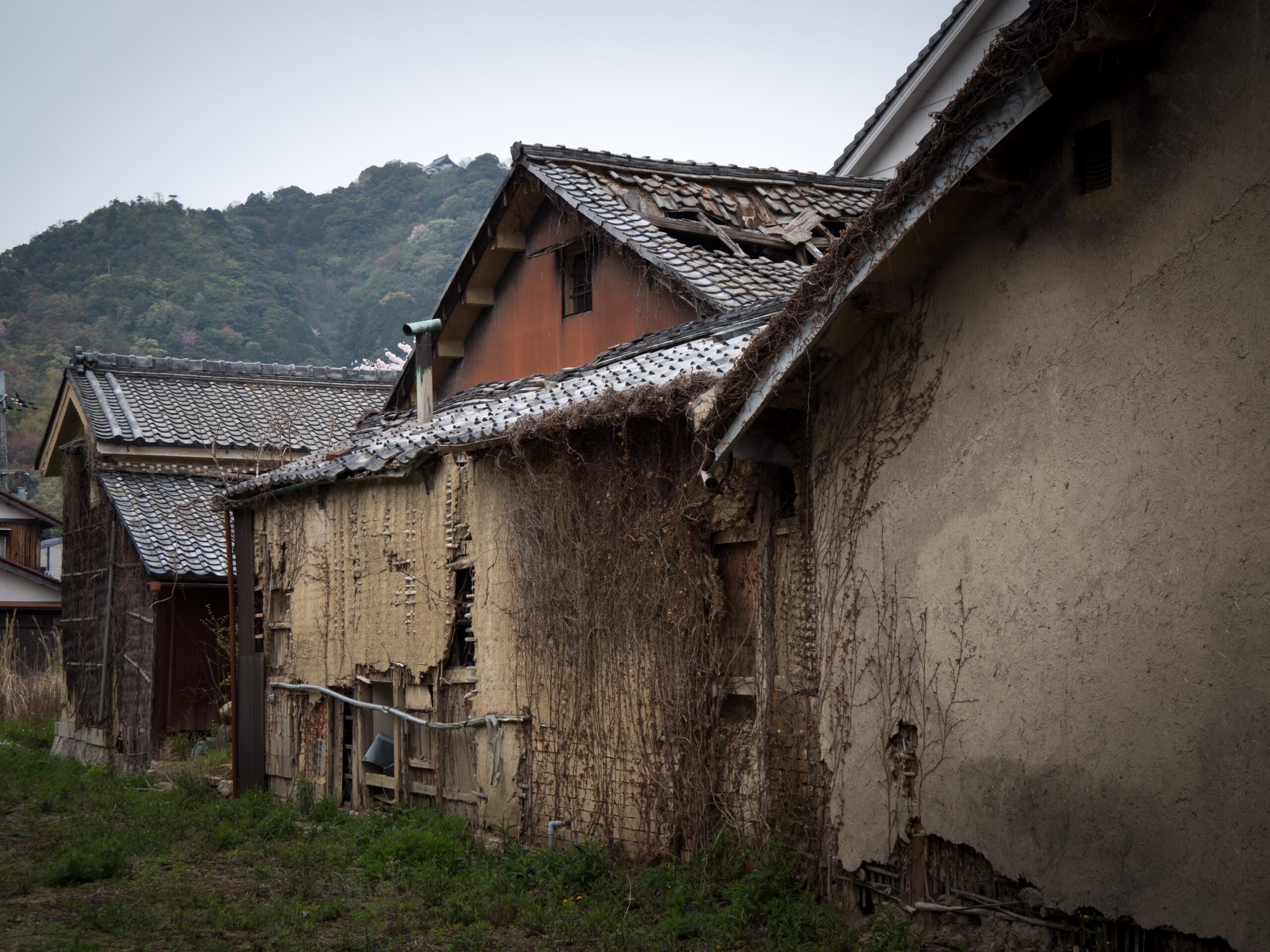
Yuza-machi (遊佐町), Yamagata (山形県): ¥1,000,000. A wood-frame single-storey house built in 1983, with garden included. The list price is real. The caveats are equally real: the septic tank requires replacement, and the structure predates the 新耐震基準 (shin-taishin kijun, the 1981 revised seismic code), meaning it was built under the older, less stringent earthquake-resistance standard. Renovation to habitable standard for a foreign buyer accustomed to modern plumbing and insulation typically runs ¥5 million to ¥15 million on a structure of this age and type. Kawamoto-cho (川本町), Shimane (島根県): ¥700,000. A 1946 wood-frame structure with 77 square metres of floor space, but the land package includes 5,809 square metres of paddy field and 9,744 square metres of forest. The toilet is a pit toilet. Renovation to modern standard on a 1946 structure in a high-humidity San’in region climate is a substantial undertaking. Budget ¥10 million to ¥20 million before the property is functional. Isa City (伊佐市), Kagoshima: ¥4,900,000. A 168-square-metre, seven-room single-storey house on 3,457 square metres of land, of which 2,498 square metres is classified as farmland. The listing explicitly flags that 農地法第3条 (Nōchi-hō, Agricultural Land Act, Article 3) approval is required for the farmland portion of the transfer. That approval is granted by the local 農業委員会 (Agricultural Committee) and is issued only to buyers who will actively farm the land. For most foreign nationals, that approval will not be granted. See the agricultural land section below. Kiyokawa-mura (清川村), Kanagawa (神奈川県): ¥14,500,000. A two-storey renovated house with dual balconies, described as the closest village to Tokyo. Travel time from Shinjuku (新宿) is approximately 90 minutes. This is the outlier in the group: the renovation work has been done, the structure is modern, and the proximity to the capital makes property management and weekend use genuinely practical for a Tokyo-based buyer.For a broader comparison of what different price points buy across Japan’s property market, the Koukyuu overview of how much a house costs in Japan in 2026 provides a useful reference frame across urban and rural segments.
The Agricultural Land Trap: A Specific Risk for Foreign Nationals
The Isa City listing is not an anomaly. A significant share of cheap countryside properties in Japan are bundled with agricultural land, because the original owners farmed the surrounding fields. The legal structure creates a barrier that affects foreign buyers disproportionately.
Under 農地法 (Nōchi-hō, the Agricultural Land Act), purchasing farmland requires approval from the local Agricultural Committee. The committee grants approval only to buyers who demonstrate they will actively cultivate the land. Foreign nationals, particularly those on work visas or living outside Japan, almost never qualify. The 農地法改正 (Agricultural Land Act Amendment), effective April 2023, additionally tightened oversight of foreign-linked entities acquiring farmland near designated sensitive zones.
The practical consequence: when you see a listing priced at ¥700,000 for a house plus 15,000 square metres of paddy and forest, the house and its residential land (宅地, takuchi) may be transferable freely, but the farmland portion requires either separation through a formal subdivision process or Agricultural Committee approval. Separation takes time and legal fees. Approval, for most foreign buyers, will not come.
Residential land classified as 宅地 carries no such restriction. Foreign nationals may purchase 宅地 properties freely, with no visa or permanent residency requirement. The critical step is confirming the land classification of every parcel in a bundled listing before making an offer. A qualified 宅建士 (takken-shi, Japan’s licensed real-estate transaction specialist) will verify this in the 重要事項説明 (juuyou-jikou-setsumei, the statutory pre-contract disclosure meeting), which is a mandatory step in every Japanese property transaction.
For a complete walkthrough of the purchase process as a foreign national, including visa considerations and mortgage access for non-residents, the Koukyuu guide on how to buy homes in Japan as a foreign national covers each stage in detail.
The Full Cost Stack: What Foreign Buyers Need to Model Before Committing
The headline price of a cheap countryside house is the smallest number in the transaction. Below is the full cost stack, using Japanese statutory terminology, as it applies to a foreign buyer in 2026.
Transaction taxes and fees:- 登録免許税 (torokumenkyozei, registration and license tax): 0.4% of the assessed value on ownership transfer.
- 不動産取得税 (fudosan shutoku-zei, real estate acquisition tax): 3% of the assessed value for residential land and housing.
- 仲介手数料 (chuukai tesuuryou, agent commission): capped by law at 3% of the purchase price plus ¥60,000, plus consumption tax, for transactions above ¥4 million.
- 固定資産税 (kotei shisan-zei, fixed-asset tax): 1.4% of the 課税標準額 (kazei hyoujungaku, assessed taxable value), levied annually.
- 都市計画税 (toshi keikaku-zei, city planning tax): 0.3% annually, but this applies only in urban planning zones. Most rural akiya properties are exempt.
- Pre-1981 structures (pre-shin-taishin kijun): renovation to habitable modern standard typically costs ¥3 million to ¥20 million depending on size, condition, and region.
- Demolition, if the structure is beyond repair: ¥1.5 million to ¥5 million for a wood-frame single-storey.
Many participating municipalities offer 移住支援金 (ijuu shienkin, migration support grants) of up to ¥1,000,000 per household for buyers relocating from the Tokyo 23-ward area to designated rural municipalities, under the 内閣府 (Cabinet Office) 地方創生 (regional revitalization) framework for FY2025. Separately, リフォーム補助金 (reform hojokin, renovation subsidies) of ¥200,000 to ¥1,500,000 are available from individual municipalities. Foreign nationals holding a qualifying residence status are eligible for most of these programs. Tourist visa holders and short-stay visitors are excluded.
Running the full numbers on the Kawamoto-cho listing: ¥700,000 purchase price, plus ¥15 million in realistic renovation, plus ¥200,000 in transaction taxes, plus annual fixed-asset tax on a low assessed value, plus travel costs from Tokyo or abroad for management and oversight. The Kiyokawa-mura property at ¥14,500,000, move-in ready, 90 minutes from Shinjuku, presents a materially different risk profile for a Tokyo-based buyer when total cost of ownership is the metric.
Akiya Japan’s regional breakdown at akiyajapan.com covers six prefectures with representative price ranges and is a useful starting point for buyers mapping geographic priorities.
Peri-Urban Akiya: A More Practical Frame for HNW Foreign Buyers
The cheap-house narrative in Japan’s countryside is accurate at the headline level. The strategic question for a high-net-worth foreign buyer is whether a ¥700,000 purchase in Shimane, requiring ¥15 million in renovation and ongoing management from a distance, is a better allocation than a ¥14.5 million move-in-ready property 90 minutes from central Tokyo.
For buyers with a specific lifestyle objective, a rural property makes sense. For buyers interested in yen-denominated asset exposure with more predictable outcomes, peri-urban zones warrant closer attention. Properties in 準都市計画区域 (jun-toshi keikaku kuiki, semi-urban planning zones) within two hours of Tokyo offer lower prices than the 23 wards, manageable renovation scopes on more recently built structures, and access to the 民泊 (minpaku, short-term rental) framework under the 住宅宿泊事業法 (Minpaku-hō, Private Lodging Business Act) for income generation when the property is not in personal use.
The 手付金 (tetsuke-kin, earnest-money deposit, typically 10% of the purchase price) is due at contract signing in Japan, and 登記 (touki, the transfer of legal title recorded at the Legal Affairs Bureau) follows at closing. These mechanics are identical whether the property is in Shimane or Kanagawa, but the due diligence scope differs considerably. A rural property with mixed land classifications, pre-1981 construction, and no municipal sewage connection requires significantly more investigation before the statutory disclosure meeting than a recently renovated residential-only property.
For buyers considering different property types across this spectrum, the Koukyuu guide to types of Japanese houses covers the structural and legal distinctions between traditional minka (民家, farmhouse) construction, postwar wood-frame, and contemporary reinforced-concrete マンション (manshon, Japanese usage for freehold condominium) stock.
What the ¥700,000 Listing Does Not Tell You: A Due Diligence Checklist
Every cheap countryside listing in Japan requires verification across at least six dimensions before a foreign buyer should proceed to offer stage.
Land classification. Confirm that all parcels are registered as 宅地 at the 法務局 (Legal Affairs Bureau). Any 農地 (farmland) classification triggers Agricultural Committee approval requirements. Construction date and seismic compliance. Properties built before June 1981 predate the revised seismic code. Mortgage lenders, including most Japanese regional banks, will not finance pre-1981 structures without a seismic retrofit assessment. Foreign nationals already face restricted mortgage access in Japan; pre-1981 construction narrows it further. Sewage and water. Rural properties frequently rely on 浄化槽 (johkasou, septic tanks) rather than municipal sewage. Confirm the tank’s age, capacity, and compliance with current 浄化槽法 (Johkasou-hō, Septic Tank Act) standards. Pit toilets require full replacement. Inheritance title clarity. A significant share of akiya properties have unclear title because the original owner died without completing 相続登記 (souzoku-touki, inheritance registration). The 相続登記義務化 (mandatory inheritance registration), which took effect April 2024, is pushing resolution of these cases, but title verification remains essential. Agricultural committee approval timeline. If any farmland is included, the approval process typically takes two to three months and is not guaranteed. Factor this into any purchase timeline. Municipal designation. Confirm whether the property sits within a 市街化調整区域 (shigaika chosei kuiki, urbanization control zone). Reconstruction or significant structural changes in these zones require special permission and are sometimes prohibited entirely.The statutory juuyou-jikou-setsumei meeting addresses many of these points formally, but only after an offer is accepted. A qualified professional should review the land registry and municipal records before that stage.
Koukyuu is a private buyer’s advisory for distinguished Tokyo residences in Omotesando (表参道), Aoyama (青山), and Nishi-Azabu (西麻布), focused exclusively on transactions of ¥300 million and above, with a licensed 宅建士 personally handling every stage of the engagement from the first consultation through to signing. Book a private consultation) to begin a confidential conversation.