


Reviewed by a Koukyuu Takkenshi (宅地建物取引士)
Fact-checked against current Japanese real-estate law, tax rules, and market data by a nationally licensed specialist who oversees luxury transactions across Minato, Shibuya, and Chiyoda. In Japan, a Takkenshi is legally required to sign off on every property transaction, and about 15% of candidates pass the exam each year.
Best supermarkets in Tokyo: A ranked guide to the city’s major chains
The fluorescent aisles of a Tokyo supermarket reveal more about the city’s social geography than most real estate maps. Between the budget chains where students fill baskets with 98-yen vegetables and the glass-fronted delis where Hiroo (広尾) residents select imported cheeses, Tokyo’s supermarket landscape mirrors its residential stratification. For those establishing households in the city’s premium addresses, understanding this retail ecosystem becomes part of daily life.
Tokyo supports over 3,000 supermarket locations across its 23 wards, according to 2026 data from the Japan Chain Stores Association. The market divides into distinct tiers: discount operators like OK and Gyomu Super (業務スーパー), mid-range chains including Aeon and Ito-Yokado, and premium retailers such as Seijo Ishii and Kinokuniya. Each serves a different household budget and culinary approach.
Tokyo’s budget supermarket leaders
OK Store: The price benchmark
OK Store operates 140 locations across the Kanto region, with 47 stores concentrated in Tokyo’s 23 wards. The chain built its reputation on a simple model: bulk purchasing, minimal store design, and prices typically 10-15% below standard supermarket rates. A 2026 consumer survey by Nikkei Trendy ranked OK as the most affordable major supermarket chain in Tokyo for the third consecutive year.
The stores stock primarily Japanese products with limited imported selections. Fresh produce arrives daily from regional farms, sold in larger quantities than typical supermarkets. A standard cabbage costs around 180 yen at OK compared to 250 yen at conventional chains. The meat section emphasizes value cuts and family packs, while the seafood counter sources primarily from Tsukiji wholesalers.
OK locations cluster in residential areas rather than premium neighborhoods. The chain maintains significant presence in Setagaya, Suginami, and Nerima wards, with fewer locations in central areas like Minato or Shibuya. Store hours typically run 8:30 AM to 9:30 PM, shorter than 24-hour competitors.
Gyomu Super: Wholesale scale for households
Gyomu Super (業務スーパー) translates to “business supermarket,” reflecting its original focus on restaurant supply. The chain now operates over 180 Tokyo locations, making it one of the most accessible discount options across all wards. According to Tokyo Metropolitan Government retail statistics, Gyomu Super recorded the highest year-over-year customer growth among discount chains in 2026.
The stores carry oversized packaging designed for commercial kitchens but increasingly purchased by cost-conscious households. A 1-kilogram bag of frozen vegetables sells for approximately 300 yen, roughly half the per-unit cost of standard supermarket packaging. The frozen food section spans entire aisles, featuring imported products from China, Thailand, and Vietnam alongside domestic items.
Gyomu Super’s private-label products account for nearly 40% of inventory, enabling aggressive pricing. The chain’s 1-liter carton of milk typically costs 160 yen compared to 220 yen for branded equivalents at conventional supermarkets. Quality varies across categories, with frozen and shelf-stable items generally reliable while fresh produce selection remains limited.
Store locations appear in both residential and commercial districts, often occupying ground-floor spaces in older buildings where rent remains moderate. The Nakameguro (中目黒) location near the Meguro River attracts a mixed demographic of students, young families, and budget-focused professionals.
Mid-range supermarkets: Balancing value and selection
Aeon: Japan’s largest retail operator
Aeon operates multiple supermarket formats across Tokyo, from compact urban Maruetsu stores to sprawling Aeon Style shopping centers. The company recorded ¥8.6 trillion in consolidated revenue for fiscal year 2025, according to corporate disclosure documents, making it Japan’s dominant retail operator.
The standard Aeon supermarket format offers comprehensive selection across all categories: fresh produce, meat, seafood, prepared foods, and household goods. Pricing positions between discount chains and premium retailers, typically 5-10% above OK Store but with broader selection and longer hours. Many Aeon locations operate 24 hours, serving Tokyo’s varied work schedules.
Aeon’s private-label Topvalu brand spans over 5,000 products, from basic staples to organic and premium tiers. The Topvalu Select line features specialty items like grass-fed beef and single-origin coffee at price points below comparable branded products. This tiered private-label strategy allows the chain to compete across multiple market segments within single locations.
The company’s largest Tokyo presence comes through its Maruetsu subsidiary, which operates over 280 stores concentrated in Tokyo and surrounding prefectures. Maruetsu locations appear throughout residential neighborhoods in Minato, Shibuya, and Meguro wards, often within walking distance of major condominium (マンション) developments.
Ito-Yokado: Department store heritage
Ito-Yokado brings department store sensibilities to supermarket operations, maintaining 18 large-format locations across Tokyo. The chain emphasizes fresh food quality and prepared meal options, targeting households willing to pay modest premiums for selection and presentation.
The stores dedicate significant floor space to deli counters and ready-to-eat meals, a category that grew 12% year-over-year in 2026 according to Japan Processed Food Wholesalers Association data. Ito-Yokado’s prepared food section typically offers 80-100 daily items, from traditional Japanese side dishes to Western-style entrees. A typical bento box costs 600-800 yen, positioned between convenience store and restaurant pricing.
Fresh fish counters staff trained fishmongers who break down whole fish and provide preparation advice, a service increasingly rare at standard supermarkets. The meat department similarly emphasizes service, with butchers available to custom-cut portions. This approach appeals to older demographics and serious home cooks willing to pay for expertise.
Store locations concentrate in established residential areas with aging populations, including Kichijoji (吉祥寺), Kinshicho, and Oimachi. The chain faces pressure from both discount operators below and premium retailers above, leading to gradual store count reduction over the past decade.
Premium supermarkets: Imported selection and curated inventory
Seijo Ishii: The import specialist
Seijo Ishii operates 180 locations nationwide, with highest density in Tokyo’s affluent western wards. The chain built its reputation on imported foods, wine selection, and private-label products that emphasize quality over value. According to retail industry analysis from Nomura Research Institute, Seijo Ishii’s average transaction value reaches approximately ¥2,400, nearly double the supermarket industry average.
The stores stock extensive imported cheese, charcuterie, and European packaged goods alongside Japanese staples. Wine selection typically includes 300-500 labels spanning ¥1,000 table wines to ¥10,000+ bottles, with knowledgeable staff providing recommendations. The private-label line features items like truffle-infused pasta sauce and craft chocolate, positioned as affordable luxury.
Seijo Ishii locations cluster in neighborhoods with high concentrations of luxury residential properties: Azabu (麻布), Shirokane (白金), Daikanyama (代官山), and Aoyama (青山). The Hiroo location near the international school corridor stocks particularly extensive imported selections, reflecting its expatriate customer base. Store sizes remain compact, typically 200-400 square meters, focusing on curated selection rather than comprehensive inventory.
Pricing runs 20-30% above standard supermarkets for comparable items, with premiums highest on imported products where the chain leverages direct sourcing relationships. A standard loaf of Seijo Ishii private-label bread costs around 280 yen compared to 180 yen for mass-market brands at conventional chains.
Kinokuniya: Premium produce and specialty items
Kinokuniya International operates six Tokyo locations, each positioned as destination shopping for specialty ingredients and premium produce. The original Aoyama store, opened in 1953, established the template: international products, premium Japanese ingredients, and service standards borrowed from department stores.
The produce section emphasizes presentation and quality over value, with fruits often sold individually rather than by weight. A single Shine Muscat grape bunch might cost ¥3,000-5,000, reflecting gift-market positioning. Vegetables include both standard items and specialty varieties rarely found at conventional supermarkets, from heirloom tomatoes to European salad greens.
Imported products span American, European, and other Asian cuisines, with particular strength in baking ingredients, condiments, and specialty pantry items. The stores stock multiple olive oil varieties, specialty flours, and imported spices that appeal to serious home cooks and expatriates seeking familiar brands.
Kinokuniya locations concentrate in areas with international populations and luxury residential density. The Roppongi (六本木) store serves embassy district residents, while the Setagaya location attracts affluent families in western Tokyo’s residential neighborhoods. Store design emphasizes browsing, with wide aisles and abundant product information in both Japanese and English.
Average transaction values exceed ¥3,000 according to retail industry estimates, positioning Kinokuniya as Tokyo’s most premium mainstream supermarket option. The chain competes less with other supermarkets than with department store food halls and specialty retailers.
Regional chains with Tokyo presence
Life: Kansai operator expanding east
Life Corporation operates over 290 stores nationwide, with growing Tokyo presence following decades of Kansai region dominance. The chain recorded ¥823 billion in revenue for fiscal 2025 according to corporate filings, making it among Japan’s top ten supermarket operators.
Life positions between discount chains and premium retailers, emphasizing fresh food quality and competitive pricing on staples. The stores maintain traditional supermarket layout and selection, appealing to households seeking reliable quality without premium pricing. Private-label products account for approximately 20% of sales, lower than Aeon but growing steadily.
Tokyo locations concentrate in western residential wards including Setagaya, Suginami, and Nerima, where the chain competes directly with established operators like Summit and Ozeki. Store hours typically run 9:00 AM to midnight, with some 24-hour locations in high-density residential areas.
Summit: Sumitomo Group heritage
Summit Store operates 140 locations across Tokyo and surrounding prefectures, backed by Sumitomo Corporation’s distribution network. The chain targets middle to upper-middle households with emphasis on fresh food quality and store cleanliness.
Store design emphasizes bright lighting and wide aisles, creating shopping environments more comfortable than discount operators. Fresh food departments receive particular attention, with produce displays arranged for visual appeal and frequent restocking throughout the day. The prepared food section offers extensive options, from traditional Japanese dishes to Western-style entrees.
Summit locations appear throughout Tokyo’s residential neighborhoods, with notable presence in Meguro, Shinagawa, and Koto wards. The chain maintains particular strength in condominium-dense areas where residents prioritize convenience and quality over lowest prices. Store-level managers maintain significant autonomy over product selection, allowing adaptation to neighborhood preferences.
Grocery shopping in Tokyo: Practical considerations
Location and accessibility patterns
Supermarket density varies dramatically across Tokyo’s 23 wards. Central districts like Minato, Chiyoda, and Chuo feature fewer large-format supermarkets but higher concentration of premium and specialty retailers. Residential wards including Setagaya, Ota, and Nerima support multiple chain locations within walking distance for most residents.
According to Tokyo Metropolitan Government urban planning data, 78% of Tokyo residents live within 500 meters of a supermarket, among the highest rates globally. This density enables daily shopping patterns rather than weekly bulk purchasing common in car-dependent cities. Many households shop 3-4 times weekly, selecting fresh items for immediate consumption.
Station proximity drives supermarket location strategy. Major chains position stores within station buildings or immediate vicinity, capturing commuter traffic during evening rush hours. These locations typically emphasize prepared foods and ready-to-eat items over bulk staples, reflecting grab-and-go shopping patterns.
Pricing dynamics and inflation impact
Japanese supermarket prices remained relatively stable for two decades before recent inflation pressure. The Consumer Price Index for food increased 4.2% in 2025 according to Ministry of Internal Affairs data, the sharpest annual increase since 1981. This inflation particularly affected imported products, energy-intensive items, and processed foods.
Budget chains like OK and Gyomu Super gained market share during this inflationary period, with combined customer counts up 8% year-over-year in 2026 according to industry tracking data. Middle-income households increasingly split shopping between discount chains for staples and conventional supermarkets for fresh items and specialty products.
Premium retailers maintained pricing power through differentiation, with Seijo Ishii and Kinokuniya reporting stable customer counts despite price increases. Their core demographic proved less price-sensitive, prioritizing selection and quality over value.
Operating hours and shopping patterns
Tokyo supermarkets operate longer hours than most global counterparts, reflecting the city’s work culture and transit patterns. Many chains maintain 24-hour operations, particularly in residential areas with significant late-shift worker populations. Even stores with set hours typically remain open until 10:00 PM or midnight.
Evening hours from 6:00 PM to 8:00 PM represent peak traffic, when commuters stop during their journey home. Stores stock prepared food sections heavily during this window, with frequent markdowns on items approaching sell-by dates. Experienced shoppers time visits to capture these discounts, typically arriving after 8:00 PM for 20-30% markdowns.
Weekend mornings attract family shopping trips, with Saturday and Sunday 10:00 AM to noon representing secondary peak periods. Stores schedule fresh fish deliveries and produce restocking to ensure optimal selection during these high-traffic windows.
Specialty and organic options
Natural and organic supermarkets
Tokyo’s organic supermarket sector grew steadily over the past decade, driven by health-conscious consumers and families with young children. Bio c’ Bon, a French organic chain, operates 18 Tokyo locations concentrated in affluent neighborhoods. The stores stock certified organic produce, natural cosmetics, and specialty health foods at premium pricing.
Natural House, a domestic organic retailer, maintains 15 Tokyo stores emphasizing Japanese organic products alongside imported items. The chain positions organic food as health investment rather than environmental statement, appealing to Tokyo’s aging population concerned with longevity and wellness.
Pricing at organic specialists runs 30-50% above conventional supermarkets for comparable items, with premiums highest on fresh produce and meat. A bunch of organic spinach costs approximately 350 yen compared to 180 yen for conventional equivalents. This pricing limits organic specialists to affluent demographics, with limited penetration in middle-income neighborhoods.
International and ethnic supermarkets
Tokyo’s international population supports specialized supermarkets serving specific cuisines and cultural preferences. National Azabu in Hiroo serves the expatriate community with American, European, and other international products rarely found at Japanese chains. The store stocks familiar Western brands, international magazines, and specialty ingredients at significant premiums.
Nishi-Azabu’s Meidi-Ya supermarket similarly targets international residents, with particular strength in Southeast Asian and European products. The store’s cheese counter rivals specialty shops, while the wine selection emphasizes French and Italian labels.
Korean supermarkets cluster in Shin-Okubo, serving both Korean residents and Japanese customers seeking authentic ingredients. These stores stock fresh kimchi, Korean produce varieties, and cooking ingredients difficult to find at Japanese chains. Chinese supermarkets appear in Ikebukuro and other areas with Chinese population concentrations, offering regional Chinese ingredients and fresh produce.
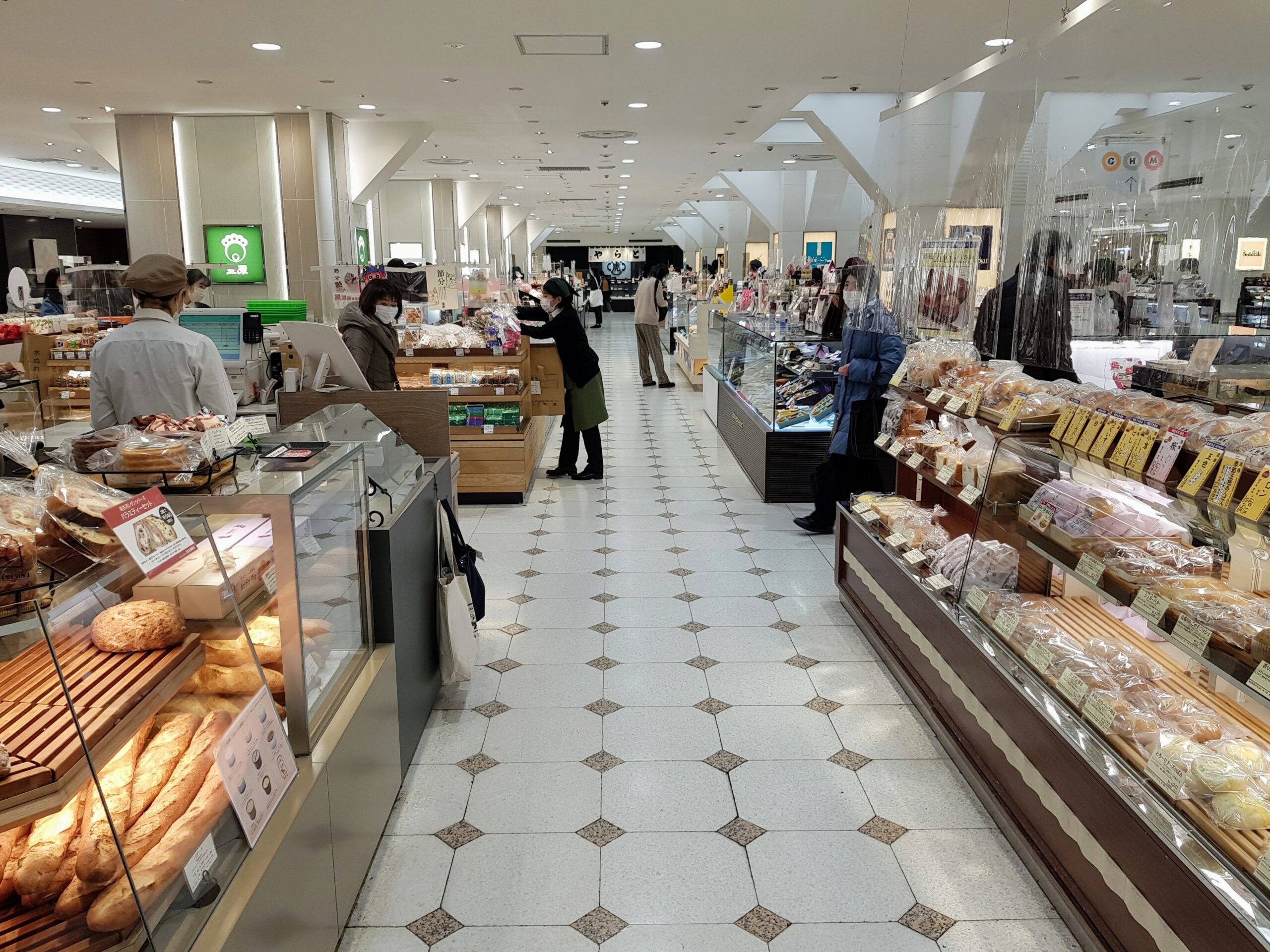
Department store food halls: The luxury alternative
Tokyo’s major department stores maintain elaborate food halls (depachika) in basement levels, offering alternatives to conventional supermarkets for premium products. Isetan Shinjuku’s food hall spans 10,000 square meters across two basement floors, featuring over 300 specialty vendors selling prepared foods, fresh ingredients, and gift items.
These food halls emphasize presentation and seasonal specialties, with pricing reflecting department store positioning. A bento box from a depachika vendor typically costs ¥1,500-3,000, triple supermarket prepared food pricing. The offerings target gift purchases, special occasions, and affluent households prioritizing quality and presentation over value.
Department stores function less as routine grocery sources than occasional destinations for specialty items and entertaining needs. The food halls attract evening crowds purchasing dinner solutions, with particular intensity during gift-giving seasons and holidays.
The biggest supermarket chains by revenue
Japan’s supermarket industry concentrates among several major operators, each pursuing different strategic approaches. Aeon Group dominates with consolidated revenue exceeding ¥8.6 trillion, operating multiple formats from discount stores to premium supermarkets. Seven & i Holdings, parent company of Ito-Yokado, recorded ¥11.8 trillion in consolidated revenue, though this includes convenience stores and international operations.
Life Corporation ranks among the top ten pure supermarket operators with ¥823 billion in annual revenue, while Summit Store generates approximately ¥380 billion through its Tokyo-focused operations. Regional chains like Yaoko and Belc maintain strong positions in suburban markets surrounding Tokyo, though limited presence within the 23 wards.
Discount operators including OK Store and Gyomu Super report lower absolute revenue but higher growth rates, gaining share as price sensitivity increases among Japanese consumers. Premium retailers like Seijo Ishii and Kinokuniya represent small revenue shares but outsized influence on industry trends and consumer perceptions.
Tokyo versus other Japanese cities
Tokyo’s supermarket landscape differs from other Japanese cities in density, format mix, and premium segment size. Osaka and Nagoya support fewer premium retailers, with market share concentrated among value-focused chains. Regional cities feature higher car ownership rates, enabling larger-format stores with extensive parking rather than Tokyo’s compact urban formats.
Tokyo maintains Japan’s highest concentration of imported food retailers, reflecting its international population and affluent demographics. The city supports specialty formats rarely viable in smaller markets, from organic chains to ethnic supermarkets serving specific national communities.
Real estate costs drive Tokyo supermarket formats toward smaller footprints and higher inventory turnover. A typical Tokyo supermarket occupies 800-1,200 square meters compared to 1,500-2,000 square meters in suburban and regional markets. This space constraint necessitates careful product curation rather than comprehensive selection.
Common questions about Tokyo supermarkets
What defines Tokyo’s most popular supermarkets?
Consumer surveys consistently rank OK Store and Gyomu Super as Tokyo’s most popular budget options, while Seijo Ishii dominates premium preferences. Aeon and Ito-Yokado maintain broad appeal across demographics through extensive networks and balanced value propositions. Popularity metrics vary by household income, with clear stratification between discount, mid-range, and premium preferences.
The relationship between Tokyo Central and Don Quijote
Tokyo Central operates as a separate entity from Don Quijote, despite common confusion. Tokyo Central focuses on Japanese and Asian groceries, primarily serving international markets in the United States. Don Quijote (often called “Donki”) operates as a discount variety store chain throughout Japan, including grocery sections but emphasizing general merchandise, cosmetics, and household goods over comprehensive supermarket selection.
Store closures and market consolidation
Tokyo’s supermarket market underwent limited consolidation in 2026, with some independent stores closing due to competition from chains and rising operating costs. Major chains expanded selectively, focusing on high-density residential areas and station-adjacent locations. The overall store count remained relatively stable, with new openings roughly matching closures across the 23 wards.
Cheapest supermarket options in Tokyo
OK Store maintains Tokyo’s lowest average prices across standard grocery categories, typically 10-15% below conventional supermarket pricing. Gyomu Super offers lower per-unit costs on bulk and frozen items but limited fresh produce selection. Big-A, a discount chain with growing Tokyo presence, competes on price with limited selection and basic store environments. These budget options require flexibility on brands and package sizes to maximize savings.
—
For households establishing residence in Tokyo’s distinguished addresses, supermarket selection becomes part of understanding neighborhood character and daily rhythms. Koukyuu tracks these lifestyle considerations alongside property attributes when representing buyers in the city’s premium residential market. The right supermarket often sits within the same few blocks as the right properties.