
The Wealthiest Neighbourhoods in Tokyo: A Guide to the City’s Most Expensive Areas
Tokyo ranks among the most expensive cities in the world for residential real estate. The price gap between the most prestigious address and the most affordable ward exceeds 5x on a per-square-meter basis. For buyers operating at the ¥300M+ (~$2M USD) level, only a handful of addresses consistently command the premiums that define the upper market.
This is a guide to the richest neighborhoods — the addresses where generational wealth, diplomatic presence, and architectural ambition converge. These are the parts of Tokyo where the real estate market operates by its own rules.
Azabu (麻布) — The Most Prestigious Residential Area in Tokyo
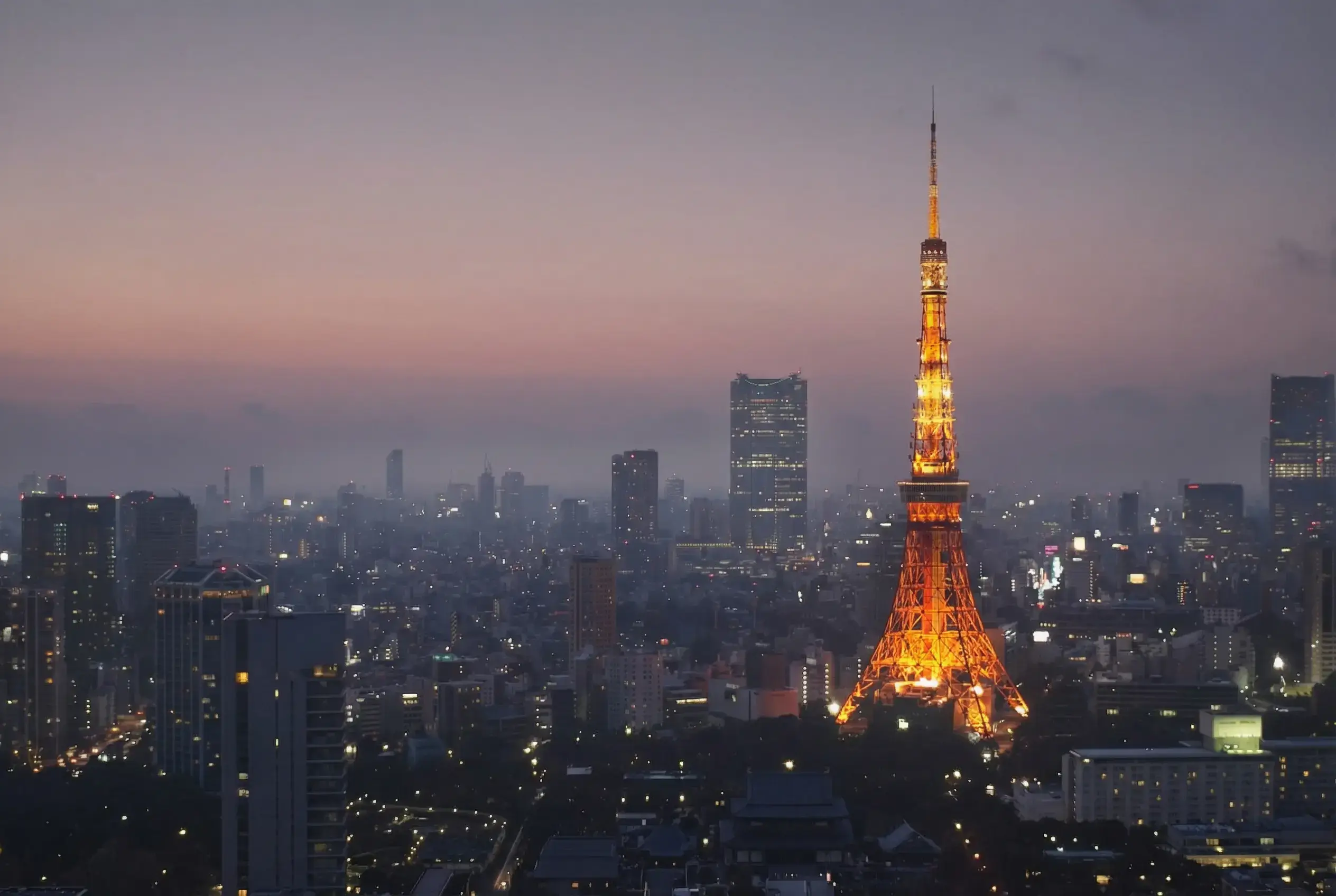
Azabu, located in Minato Ward, holds a claim that few addresses worldwide can match. Residential land prices regularly exceed ¥1.3M per square meter (~$9,000 USD/㎡), with premium blocks in Moto-Azabu pushing well beyond that figure. The iconic Tokyo Tower sits within the neighbourhood’s boundaries, and the diplomatic quarter — home to many embassies including those of Germany, France, and Saudi Arabia — lends a cosmopolitan character.
The area divides into distinct sub-districts. Azabu-Juban (麻布十番) features charming narrow streets lined with cafes and upscale boutiques. Moto-Azabu offers quiet streets and stately residences that define storied old-money wealth. The southern portion, with its proximity to Arisugawa-no-Miya Memorial Park, draws families seeking a quiet residential atmosphere.
The area is particularly favored by wealthy expatriates, high-ranking executives, and diplomats. In 2024, the the Hills development nearby redefined expectations entirely. The Aman Residences penthouse — spanning 1,500㎡ across the top floors of Mori JP Tower (Japan’s tallest building at 330 meters) — reportedly sold for ¥30B (~$200M USD), the most expensive apartment transaction in Japanese history. Average units in the complex traded at approximately ¥2B (~$14M USD).
For buyers seeking a luxurious address with deep historical roots, this address remains the standard against which all others are measured.
Hiroo (広尾) — Quiet Luxury for the International Elite
Hiroo, situated offers something increasingly rare: a tranquil residential area with genuine calm. The area borders adjacent districts, yet maintains serene character.
This upscale area is a popular destination among international families in one of the city’s most popular areas. The International School of the Sacred Heart sits at its center, and several embassy residences reinforce the cosmopolitan identity. The main shopping street features a curated mix of independent retailers, cafes, and specialty grocers — stylish without being performative.
Property prices reflect the status. Resale condominiums regularly exceed ¥1.4M per square meter (~$10,000 USD/㎡). A well-positioned 100㎡ apartment commands ¥150M–¥250M (~$1M–$1.7M USD). The area is also home to an international grocery, an institution among the international community.
For those who live in Tokyo and seek a quiet residential area that balances convenience, schools, and exclusivity, this is a consistent choice.
Aoyama (青山) — Fashion, Culture, and Refined Wealth
Aoyama sits between the commercial core and Akasaka — one of the most affluent areas in all of Japan, and also home to many of the country’s most prominent luxury brands. Flagship stores from Prada, Louis Vuitton, and Comme des Garçons line Omotesando Avenue for upscale shopping. Behind the commercial corridors, residential streets offer low-rise apartments, mature zelkova trees, and blocks that feel curated.
Property averages approximately ¥1.3M per square meter (~$9,000 USD/㎡). The Nezu Museum — housing pre-modern Japanese and East Asian art within a Kengo Kuma-designed space — reflects the taste of residents in the heart of Tokyo’s cultural landscape. Access to the Ginza, Chiyoda, and Hanzomon metro lines connects the area to virtually every business district. For buyers who value proximity to culture and luxury shopping, the area delivers on both.
Ebisu (恵比寿) — Understated Affluence on the Yamanote Line
Ebisu occupies a distinctive position among these districts. The area is upscale without being ostentatious — a place where wealth is expressed through taste. Premier restaurants draw visitors from across the city. The local Garden Place complex houses the Joël Robuchon restaurant and a Westin Hotel — the area is known for its luxury dining, establishing a baseline of quality. It’s a popular spot where the bustle feels refined.
Sitting on the Yamanote Line, the neighbourhood provides seamless access to Shibuya and Shinjuku. Resale condominiums in the 50–80㎡ range regularly approach ¥100M (~$690K USD). The cafe culture here is distinctive — independent roasters, wine bars, and boutique retailers populate the side streets.
Daikanyama (代官山) — Design-Conscious and Discreetly Wealthy
A trendy neighbourhood in western central Tokyo, has earned its reputation as a design-forward enclave. T-Site, the award-winning Tsutaya Books complex, defines the cultural tone. Despite its position minutes from Shibuya’s commercial bustle, the area maintains an almost village-like calm.
Stylish boutiques, and curated home goods stores line the streets. Property here is among the most expensive in the city — average prices approach ¥3M per square meter (~$21,000 USD/㎡). Residences tend toward the discreetly high-end: sleek modern apartments tucked on quiet streets. The Tokyu Toyoko Line connects the area to the central station in a single stop and continues through Nakameguro along the River. For buyers who prioritize design, the area ranks as one of the priciest addresses by per-square-meter pricing.
Akasaka (赤坂) — Political Power and Prime Location
Akasaka sits adjacent to the National Diet Building, the Prime Minister’s residence, and multiple government ministries. This concentration of political power has long attracted Japan’s corporate and diplomatic elite.
Tokyo Midtown, the area’s anchor development, includes the Ritz-Carlton, the Suntory Museum of Art, and premier retail. The State Guest House (State Guest House), a neo-Baroque masterpiece modeled after Versailles, adds historical weight. Four converging metro lines make this one of the best-connected addresses in the capital.
Residential blocks near the local shrine offer a refined living experience with institutional gravitas. High-end residential condominiums regularly trade above ¥1.5M per square meter. For executives whose work centers on the political and corporate corridors, this neighbourhood offers an address of unmatched convenience.
Shirokane (白金) — Old Money and Platinum Street
This district, in Minato Ward, carries a specific social identity. The term “Shiroganer” (シロガネーゼ) describes the affluent women who call this neighbourhood home, and the word has entered popular culture as shorthand for understated wealth.
The signature boulevard (プラチナ通り) is lined with mature ginkgo trees and boutiques. The district is known for its established wealthy residents — the appeal is rooted in continuity. The Happoen Garden, a 17th-century space with koi ponds and teahouses, provides a serene retreat. This is a high-class residential area where tree-lined streets create an atmosphere of permanence.
Roppongi (六本木) — Modern Luxury at Scale
Roppongi carries a dual identity: a vibrant entertainment district and an increasingly popular residential area. Roppongi Hills, the Mori Building development, houses luxury apartments, the Mori Art Museum, and curated retail — a self-contained exclusive residential community. Residences here regularly trade above ¥500M (~$3.4M USD).
The Mori Art Museum, 21_21 Design Sight, and the National Art Center give the area one of the highest concentrations of cultural institutions in the city. Property prices vary by micro-location — a high-floor unit at Roppongi Hills commands premiums that reflect views and brand equity. Average prices in the broader area fall at approximately ¥2M per square meter, though trophy properties exceed this considerably.
Denenchofu (田園調布) — Japan’s Garden Suburb
This area stands apart from every other area on this list. This residential area located in Ota Ward, roughly 10 kilometers away from the bustling city center, was designed in the 1920s to resemble a Western garden suburb, with radially arranged streets emanating from the station on the Tokyu lines.
The area attracts some of Japan’s wealthiest families — business magnates, dynasty heirs, and senior officials who seek a tranquil environment. Single-family homes with gardens, some large enough for tennis courts, define the landscape. Property prices range from ¥25M for older houses to ¥1.6B+ (~$11M USD) for premium estates. The area is particularly popular among the established elite who value space, privacy, and generational permanence.
The Top 3 Most Expensive Neighbourhoods: A Comparison
Among the expensive neighborhoods in Tokyo, three consistently define the ceiling:
| Neighborhood in Tokyo | Ward | Avg. Price/㎡ | Buyer Profile |
|---|---|---|---|
| Azabu (麻布) | Minato | ¥1.3M–¥2.8M+ | International executives, embassy families |
| Daikanyama (代官山) | Shibuya | ~¥3M | Design-conscious UHNW, creative professionals |
| Hiroo (広尾) | Shibuya | ~¥1.4M+ | Diplomatic families, corporate relocators |
These areas command their premiums for different reasons — diplomatic legacy, design culture, educational infrastructure. The right address depends entirely on what a buyer values.
How the Luxurious Neighbourhoods Connect
The premium addresses cluster within two wards: Minato and Shibuya. Together, these account for the majority of ¥300M+ transactions.
Minato Ward — encompassing the key luxury addresses — reported approximately ¥2M per square meter in 2026. Shibuya Ward — — averaged ¥1.5M–¥1.8M.
Foreign buyers now account for 20%–40% of new apartment purchases in premium wards. Knight Frank’s research indicates a million dollars purchases approximately twice as much prime space here as in New York, and three times more than in Hong Kong. The market in these luxurious neighborhoods remains, by global standards, undervalued — a dynamic drawing increasing attention from international capital.
Adjacent areas worth noting: Meguro (目黒), particularly the Nakameguro stretch, offers a blend of old and new with strong price appreciation. The Yamanote corridor continues to define the value hierarchy. Housing Japan’s real estate investment landscape in these expensive districts benefits from limited supply and a market that continues to appreciate. Neighborhoods like those profiled above represent the deepest markets within Tokyo for long-term value. The bustling business district of Marunouchi near Tokyo Station and the Tokyo Stock Exchange sit within easy commute of all these residential neighborhoods, reinforcing their appeal as places where professionals can afford to live at the highest level.
What It Takes to Enter These Areas
Entry points for quality properties in one of the most expensive residential markets in the world:
- Azabu, Aoyama, Shirokane: ¥300M–¥600M (~$2M–$4.1M USD) for 80–120㎡
- Hiroo, Ebisu, Daikanyama: ¥250M–¥500M (~$1.7M–$3.4M USD)
- Roppongi, Akasaka: ¥300M–¥800M (~$2M–$5.5M USD)
- Denenchofu: ¥200M–¥1.6B+ (~$1.4M–$11M+ USD) for detached houses
For those looking for a luxurious living experience in the capital, the gap between global perception and actual pricing represents an opportunity the market is steadily correcting.
Koukyuu represents buyers seeking properties at the ¥300M+ level across these distinguished addresses. For a confidential discussion about current opportunities, begin a private conversation.